DYFI activist stabbed to death in Kasargod
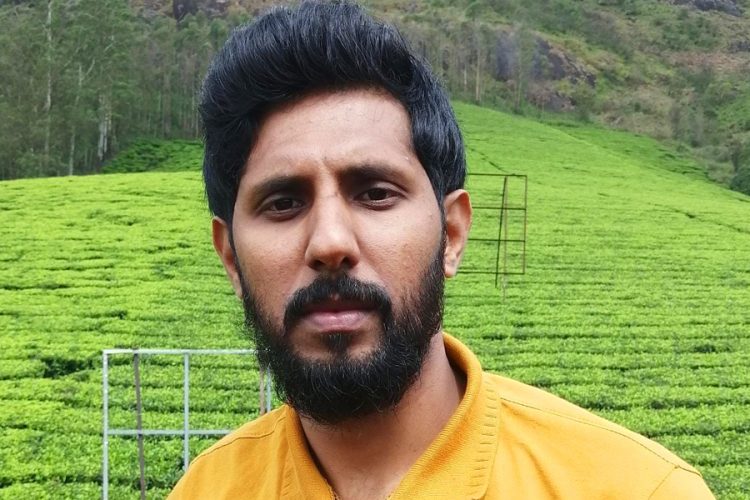
Kanhangad, Dec 24: A 30-year-old Democratic Youth Federation of India (DYFI) activist was stabbed to death allegedly by a group of people at Kalloravi in Kanhangad municipality in this north Kerala district, police said on Thursday.
The deceased, Ouf Abdul Rahman was an active worker of the DYFI, the youth wing of the ruling CPI(M).
According to reports, the activists of Youth League, the youth wing of Indian Union Muslim League (IUML), were behind the incident though the police was yet to confirm it.
Police said the incident took place when Rahman and three of his friends were on their way to Bavanagar in two bikes.
They were intercepted and attacked by the accused and allegedly stabbed Rahman on his chest, they said.
Though local residents rushed him to a private hospital, his life could not be saved, police added.
"The investigation is on and no arrest yet. We cannot say at this moment whether it is a political murder or not.
The deceased person is an active member of DYFI. The accused persons were said to be workers of Youth League," a senior police officer told PTI.
Meanwhile, the ruling CPI(M) on Wednesday alleged that IUML was moving on the path of violence and the party was trying to destroy the peaceful atmosphere in the state.
The state secretariat of the Left party also urged people to protest in a peaceful manner.
However, IUML state leadership rejected the charges and demanded an unbiased probe into the incident.
Senior IUML leader K P A Majeed described the incident as 'unfortunate' and claimed that the party's local leadership here denied involvement of its workers in the crime.
Let the Truth be known. If you read VB and like VB, please be a VB Supporter and Help us deliver the Truth to one and all.
Ordinance issued to increase number of Supreme Court judges from 34 to 38
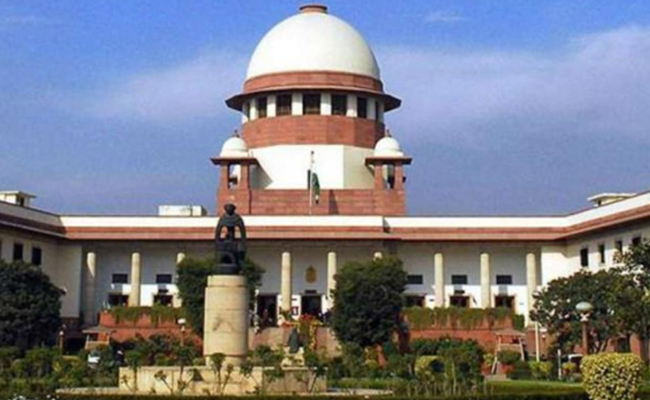
New Delhi (PTI): The government has promulgated an ordinance to increase the strength of the Supreme Court from the present 34 judges to 38, including the Chief Justice of India.
The law ministry notified the ordinance on Saturday, which amended the Supreme Court (Number of Judges) Act, 1956, to increase the sanctioned strength of the top court.
So far, the sanctioned strength of the top court was 34, including the Chief Justice of India (CJI). Now, the number of judges has been increased by four, taking the sanctioned strength to 38.
The top court will now have 37 judges, other than the CJI.
With the apex court having two vacancies at present, and the ordinance coming into force immediately, the Supreme Court Collegium will now have to recommend six names for appointment as judges in the top court.
A bill will be brought in the Monsoon Session of Parliament to convert the ordinance – an executive order – into a law passed by Parliament.
The Union Cabinet had cleared a draft bill on May 5 to increase the number of apex court judges.
The strength of the Supreme Court was last increased from 30 to 33 (excluding the CJI) in 2019.
The Supreme Court (Number of Judges) Act, as originally enacted in 1956, put the maximum number of judges (excluding the CJI) at 10.
This number was increased to 13 by the Supreme Court (Number of Judges), Amendment Act, 1960, and to 17 by another amendment to the law.
The Supreme Court (Number of Judges) Amendment Act, 1986, augmented the strength of judges from 17 to 25, excluding the CJI.
A fresh amendment in 2009 further increased the strength from 25 to 30.
Article 124(3) of the Constitution lists the qualifications required to become a Supreme Court judge.
An Indian citizen who has either served as a high court judge for at least five years, or as an advocate for 10 years, or is a distinguished jurist, can be appointed to the top court.
The strength of the Supreme Court is increased based on the recommendations of the CJI, who writes to the Union law minister. After consulting the finance ministry, the Department of Justice under the law ministry moves the Cabinet with a draft bill.