Educationist, entrepreneur, philanthropist Dr B Ahmed Hajee Mohiudeen passes away
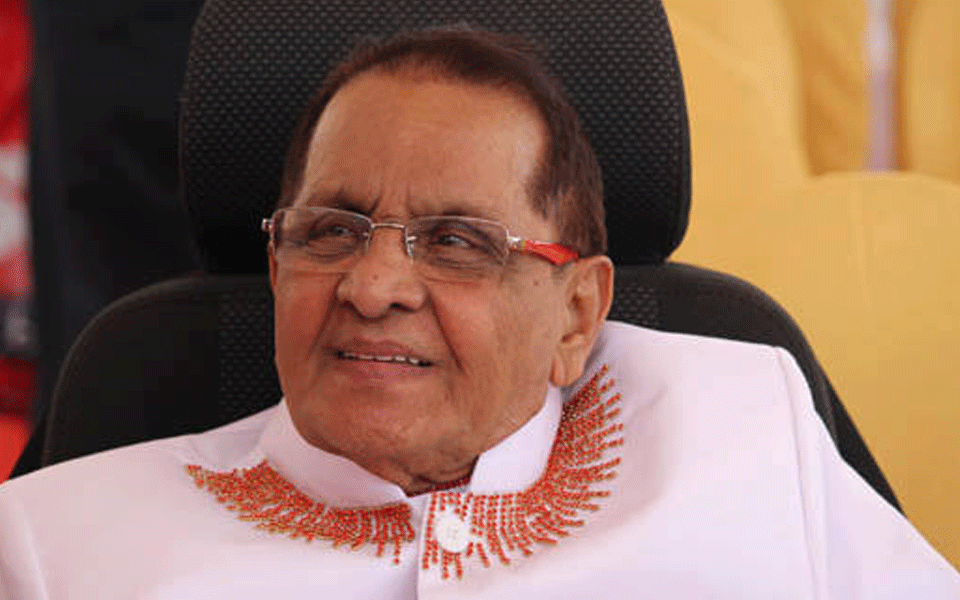
Mangaluru: Dr B Ahmed Hajee Mohiudeen, 86, entrepreneur, philanthropist, educationist and the Founder Chairman of B A Group, Thumbay, passed away at 11:30 am on Sunday, after a short period of illness at a private hospital in Mangaluru.
Former Minister U T Khader informed Vartha Bharati, after consultation with the family of Ahmed haji, his mortal remains will be kept at Thumbay PU College for the public to pay their tribute. Funeral will be held at Thumbay Masjid burial ground after 4 pm today.
Ahmed Hajee was born in 1933 to B. Mohiudeen Hajee and Mariamma in a business family. Ahmed Hajee graduated in Commerce in 1954 and began his career soon after, as a smallscale industrialist in a village called Thumbay on the outskirts of Mangaluru.
He founded the B A Group, in 1957. Today, B A Group has a standing of over five decades in the wood industry and is a well-diversified conglomerate. From a fledgeling company in the 1960s, B A Group is now on the threshold of rapid expansion into such areas as urban housing, education, real estate, healthcare and exports and imports.
B A Industrial Training and Technical Centre is sponsored and managed by Mohiudeen Educational Trust, of which Mohiudeen is the Chairman. The Trust also runs a Kannada and English Medium School, a Pre-University College a Nursery School, a Medium Primary School and Darul Uloom Mohiudeen Arabic College. Ahmed Hajee is the founder president of a number of institutions and trusts in Mangalore and surrounding areas. He is the president of the 80-year-old Badriya Educational Institutions at Mangaluru.
He is also the president of Nav Bharat Night High School, which was established before India's independence. He is one of the Trustees of Islamic Academy of Education, under Yenepoya Group, India. He is a former member of the Adult Education Society, Government of Karnataka. He is also an ex syndicate member of Mangalore University Ahmed Hajee was married to Bee Fathima Ahmed Hajee, and they have three sons Thumbay Moideen (Founder President of Thumbay Group, headquartered at Ajman, UAE), B Abdul Salam (Managing Director & CEO – BA Group) and B M Ashraf (Managing Director - Mohiudeen Wood Works LLC, Ajman, UAE), and a daughter Shabana Faizal, Co-Chairperson of KEF Group.
Let the Truth be known. If you read VB and like VB, please be a VB Supporter and Help us deliver the Truth to one and all.
Congress using hijab issue to pacify minority anger, alleges Karnataka LoP R Ashoka
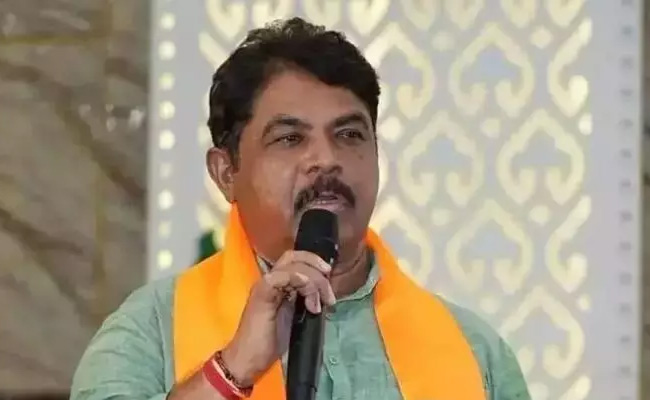
Bengaluru: Leader of Opposition in the Assembly R. Ashoka has accused the Congress government of using the hijab issue to placate what he described as discontent among minority voters after the Davanagere by-election.
In a post on X on Wednesday, Ashoka alleged that the state government, instead of addressing issues such as price rise, corruption, farmers’ distress and law and order, was attempting to retain its minority vote base by reviving the hijab issue.
Referring to the 2022 dress code introduced by the BJP government, which prohibited hijab in schools and colleges, Ashoka said the Karnataka High Court had upheld the policy and emphasised the importance of discipline in educational institutions.
He questioned the Congress government’s move to revisit the issue and asked whether setting aside the court-backed policy to benefit one community could be described as secularism.
Ashoka further alleged that while the government was willing to permit hijab, it continued to prohibit saffron shawls.
He accused the government of dividing students on religious lines rather than treating schools and colleges as spaces of equality.
Drawing a comparison with Mamata Banerjee’s government in West Bengal, Ashoka claimed that excessive appeasement politics had harmed the state and warned that the Congress in Karnataka could face a similar political response.
He said voters in Karnataka would teach the Congress a lesson for what he termed “vote-bank politics” and for compromising constitutional and judicial principles.