Fact Check: Viral claim on Sachar Commission proposals, Owaisi’s demand of implementation is false
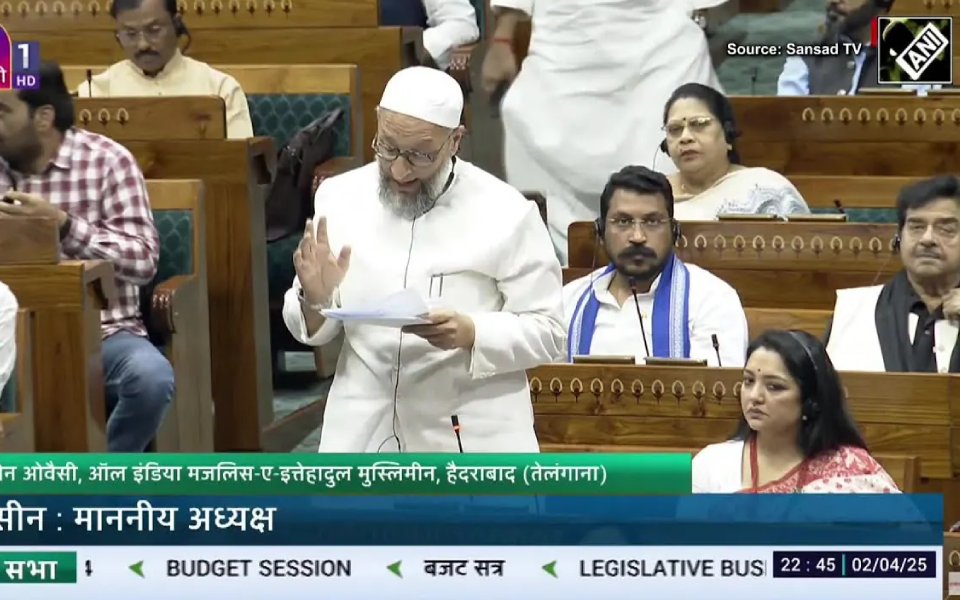
Mangaluru: A viral message widely circulating on WhatsApp and other social media platforms makes several sensational and misleading claims about the Sachar Commission, a committee formed in 2005 by the UPA government to study the condition of Muslims in India.
The message begins by stating that AIMIM leader Asaduddin Owaisi often demands the implementation of the Sachar Commission report in his public speeches. It then questions the intent behind the report and falsely claims that it suggested extreme benefits for Muslims, such as counting one Muslim vote as two, reserving 40% of legislative seats, and allocating 20% of India’s budget to Muslims.
It concludes by praising the BJP for stopping the implementation of this report and warns that had it been implemented, India would have been “turned into a Taliban-style state”.
But is there any truth in these claims? Let’s verify.
What the Viral Message Claims
The message says: Asaduddin Owaisi frequently demands the implementation of the Sachar Commission report.
The Congress-led UPA government formed the Commission in 2005 to favour Muslims and divide the country.
The Commission made 10 shocking recommendations, including:
Double voting rights for Muslims.
Inclusion of Muslims in OBC, SC, and ST quotas.
Allocation of 20% of India’s total budget for Muslims.
Free education for Muslims in IITs, IIMs, and MBBS.
Recognition of Madrasa degrees for IAS and judiciary jobs.
Reservation of 30–40% of Parliament and Assembly seats for Muslims.
50% government jobs for Muslims.
Cash benefits up to Rs 10 lakh for Muslim youth.
Reserved constituencies for Muslims in areas where they are above 25%.
Reality Check: What Was the Sachar Commission?
The Sachar Committee (formally called the Prime Minister’s High-Level Committee) was established in March 2005 under the leadership of Justice Rajinder Sachar, a former Chief Justice of Delhi High Court. It was commissioned by the Manmohan Singh-led UPA government, with support from Sonia Gandhi, to study the social, economic and educational condition of Muslims in India.
It was not a policy-making body. It only studied data and submitted a report in 2006 that highlighted the marginalisation of Muslims in various sectors.
The report included recommendations to improve inclusion, but none of the exaggerated and communal claims made in the viral message were part of the actual report.
Fact-Checking the Main Claims
Claim 1: Owaisi demands implementation of Sachar Commission
Partially True.
Asaduddin Owaisi has, on several occasions, asked the government to act on the findings of the Sachar Committee, especially regarding Muslim backwardness in education and employment. However, he has never demanded double voting rights or unconstitutional benefits. The viral message misrepresents his position by linking him to fake recommendations.
Claim 2: Muslim vote should count as two votes
False.
This is a completely fabricated claim. The Sachar Commission report makes no mention of altering the value of votes based on religion.
Claim 3: Reservation of 30–40% of seats for Muslims
False.
The report never recommended political reservations based on religion. It simply pointed out that Muslims are underrepresented in politics and governance.
Claim 4: 20% of national budget for Muslims
False.
No such recommendation exists. The Commission only advised that existing development schemes should better include all backward communities, including Muslims.
Claim 5: Free education in elite institutions
False.
The report focused on universal access to primary and secondary education. It did not propose religion-based free seats in IITs, IIMs or MBBS.
Claim 6: Madrasa degrees should be valid for IAS or judiciary
Misleading.
The Committee encouraged the modernisation of madrasas and the inclusion of modern subjects. It did not recommend that traditional religious degrees be accepted for IAS or judgeship.
Claim 7: 50% jobs for Muslims
False.
This claim is baseless. The report asked for elimination of discrimination in hiring, but did not call for job quotas based on religion.
Claim 8: Cash handouts to Muslim boys and girls
False.
There is no mention in the report of giving Rs 5–10 lakh to Muslims. It suggested schemes for educational support and skill development for poor Muslims, similar to what exists for other communities.
Claim 9: Reserved constituencies for Muslim-majority areas
False and unconstitutional.
Indian laws do not allow electoral reservation on the basis of religion. The Sachar report did not recommend this either.
What the Sachar Report Actually Found
The report offered hard data that showed:
Low literacy levels among Muslims.
Poor access to bank credit and government schemes.
Under-representation in government jobs and police.
Very poor socio-economic indicators, similar to or worse than Dalits and Adivasis.
The report did not blame any community or recommend any religion-based advantage. It simply asked the government to treat Muslim poverty and exclusion as a developmental issue, just like other backward groups.
Conclusion
The viral message makes a series of false, exaggerated, and communal claims about the Sachar Commission. It also falsely attributes these demands to Asaduddin Owaisi, when in reality, his support for the report is based on its developmental focus, not on any of the fabricated proposals listed in the message.
The Sachar Report is a data-driven document aimed at improving policy decisions. It does not promote any anti-Hindu or pro-Muslim bias, nor does it recommend the extreme measures mentioned in the viral post.
Verdict: False. The viral message grossly misrepresents the Sachar Commission's findings and intentions. It is part of an attempt to spread communal misinformation.
Let the Truth be known. If you read VB and like VB, please be a VB Supporter and Help us deliver the Truth to one and all.
Jharkhand: 3 arrested for 'raping' 2 women in Gumla

Gumla (PTI): Three persons were arrested on Monday for allegedly raping two women at a village in Jharkhand’s Gumla district, police said.
All the three accused have been remanded to judicial custody, Gumla Sadar Police Station officer-in-charge, Mahendra Karmali, told PTI.
According to police, one of the women had been called to Gumla Sadar by her boyfriend on Sunday for an outing.
“She arrived at the spot accompanied by a female. The woman’s boyfriend then called a friend, and they took the two women to a secluded place in Sisai police station area in the evening, forcibly made them consume alcohol before raping them,” the officer said.
The accused later called another man to the spot, who also allegedly raped the women, he said.
“The women later reached the Sadar Police Station and lodged a complaint on Sunday night. Police conducted raids and nabbed the three accused on Monday,” he added.
Further investigation is underway.