Five tourists stranded atop waterfall in Karnataka's coastal district rescued by locals

Mangaluru, May 26 (PTI): Five tourists who were stranded atop the Eragundi waterfall were rescued safely by the locals, police said on Monday.
The incident occurred on Sunday at Paladka in Puttige village of Moodbidri taluk of Dakshina Kannada district, they said.
According to police officials, the visitors had reportedly ignored warnings from local residents and climbed to the upper portion of the waterfall, but due to sudden raise in water levels in the river, the tourists were marooned and cried for help.
Thanks to swift action by local residents, ropes were used to pull all five individuals to safety. Fortunately, no casualties or injuries were reported.
District authorities had earlier cautioned people against visiting waterfalls and hilly terrains during periods of intense rain.
However, the tendency of some tourists who disregard these advisories continues to pose challenges for local communities and rescue teams, the officials added.
Heavy monsoon rains are lashing Karnataka's coastal belt for the past three days severely disrupting normal life in Dakshina Kannada district, promoting authorities to issue a red alert and deploy disaster response teams.
The red alert for the coastal Karnataka will remain in force for the next five days, the IMD said.
Heavy Rain in Dakshina Kannada Dist #Tourists Rescued from #Waterfall . At Erugundi Falls near Paladka in Puthige village of Moodbidri, The tourists had climbed onto rocks at the top of the waterfall when the water level suddenly rose, trapping them. #Mangaluru #KarnatakaRains pic.twitter.com/9Xz6yg8YaR
— sudhakar (@naidusudhakar) May 26, 2025
Let the Truth be known. If you read VB and like VB, please be a VB Supporter and Help us deliver the Truth to one and all.
Ordinance issued to increase number of Supreme Court judges from 34 to 38
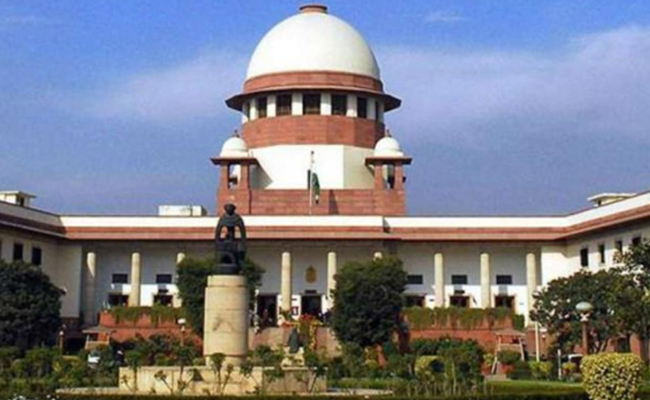
New Delhi (PTI): The government has promulgated an ordinance to increase the strength of the Supreme Court from the present 34 judges to 38, including the Chief Justice of India.
The law ministry notified the ordinance on Saturday, which amended the Supreme Court (Number of Judges) Act, 1956, to increase the sanctioned strength of the top court.
So far, the sanctioned strength of the top court was 34, including the Chief Justice of India (CJI). Now, the number of judges has been increased by four, taking the sanctioned strength to 38.
The top court will now have 37 judges, other than the CJI.
With the apex court having two vacancies at present, and the ordinance coming into force immediately, the Supreme Court Collegium will now have to recommend six names for appointment as judges in the top court.
A bill will be brought in the Monsoon Session of Parliament to convert the ordinance – an executive order – into a law passed by Parliament.
The Union Cabinet had cleared a draft bill on May 5 to increase the number of apex court judges.
The strength of the Supreme Court was last increased from 30 to 33 (excluding the CJI) in 2019.
The Supreme Court (Number of Judges) Act, as originally enacted in 1956, put the maximum number of judges (excluding the CJI) at 10.
This number was increased to 13 by the Supreme Court (Number of Judges), Amendment Act, 1960, and to 17 by another amendment to the law.
The Supreme Court (Number of Judges) Amendment Act, 1986, augmented the strength of judges from 17 to 25, excluding the CJI.
A fresh amendment in 2009 further increased the strength from 25 to 30.
Article 124(3) of the Constitution lists the qualifications required to become a Supreme Court judge.
An Indian citizen who has either served as a high court judge for at least five years, or as an advocate for 10 years, or is a distinguished jurist, can be appointed to the top court.
The strength of the Supreme Court is increased based on the recommendations of the CJI, who writes to the Union law minister. After consulting the finance ministry, the Department of Justice under the law ministry moves the Cabinet with a draft bill.