Ganesh Poojary from Kundapur featured in Forbes India’s Top 100 People Managers list
Syed Beary prepared us for life, not just exams, says Poojary
An inspiring story of a Primary school drop out becoming one of the best Managers in the Country
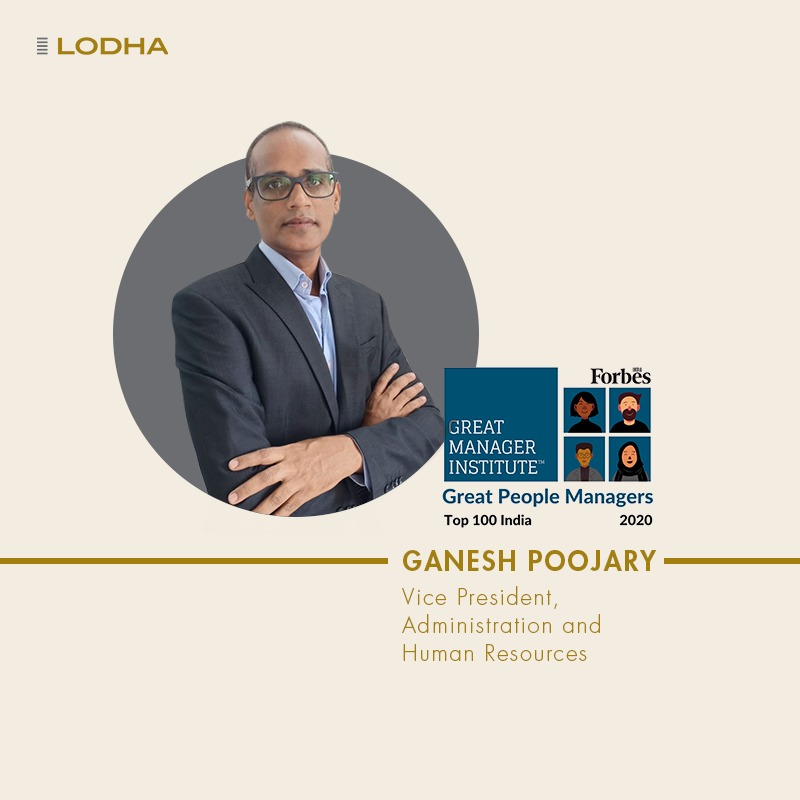
Syed Beary prepared us for life, not just exams, says Poojary.
An inspiring story of a Primary school drop out becoming one of the best Managers in the Country.
Ganesh Poojary, from Kodi-Kundapur, now serving as the Vice President, Administration and HR Services at the Prestigious Lodha Group has been featured as one of the top 100 great people managers of India. The list is curated by 'Great Manager Institute' annually, under the banner ‘Great People Managers study’ the largest of its kind, in partnership with Forbes India.
Born and brought up in Kodi village of Kundapur Taluk in Udupi district, Ganesh Poojary's is a unique success story of winning against hard ships through consistent struggle and hard work.
A primary school drop-out at one point, today, his school Haji K Moidin Beary High School, where he was its first batch student, takes pride in calling him its alumni. Taking note of the latest accomplishment of Ganesh, the Chairman of his school, Syed Mohammed Beary, expressed his happiness over the news and congratulated Ganesh on featuring in Forbes India’s Top 100 people managers.
“We feel extremely happy and elated to know that our very own student Ganesh Poojary who completed his SSLC from our school in Kodi, has been recognized and bestowed such a great honour. Ganesh Poojary was from the first batch of students and was studious right from the start. After completing SSLC he left for Mumbai & started working and studying together. He gained success step by step and today he has been recognised as one of the 100 great people managers in India. One of his admirable traits is that he never forgot his roots and constantly kept in touch with both his birthplace Kodi and his school. Being an extremely nice human being, he was always concerned about the development and growth of his alma mater” Syed Beary said in a statement.
“We hope that his success story will inspire and motivate many more of our village students to aim high, work hard and achieve success. May his tribe increase” he added.
Ganesh Poojary also spoke in detail to Vartha Bharati in an interview and shared insight on various aspects of his life, career and his latest feat. During the interview, Ganesh also credited his success to Syed Mohammed Beary and his constant efforts throughout his schooling phase, that he believes shaped him into what he is today.
Here are the excerpts from the interview with Ganesh Poojary.
Q: You are featured in 100 great people Managers by Forbes India. How did you react when the news was broken to you?
A: It was unexpected to be featured in Forbes 2020 considering the level of assessment/evaluation. Over 6000 managers participated through their existing organisation nominations. I am very excited to be part of Forbes 2020, it’s like a dream come true for me and my family.
Q: Tell us briefly about your roots, childhood and your native place.
A: I belong to Kodi-Kundapaura , born and brought-up in this village. A place well developed today with roads and power. During my childhood, even transportation and commutations were very tough and there were no proper channels of commutations to the village. Today it is known for Kodi Beach and Great Education Institutes run by Bearys Group for all level of educations.
I did my primary schooling in Soans Hiriya Prathamika School Kodi, and secondary education from Haji K Moidin Beary High school. Post SSC I moved to Mumbai for further studies, did my junior college from Kannada Bhavan Junior College Fort, Mumbai and graduation from St.Xavier’s College Mumbai. I completed both Junior College and Bachelor Degree in night colleges while working during day time for a fix 9.30 am to 6.30 pm work. I then did my Masters (MBA) from Symbiosis Institute of Management Studies.
Mumbai has taught me a lot during my studies, the Mumbai air has so much of energy , people there won’t get tired, I used to start my days with morning 7.30am train travel with 2 hours travel time for office, once office work is done at 6.30pm , then college till 9.30 pm and head back to home with 2 hours travel again.
Q: You are the first batch student of Kodi Haji K Moidin Beary High school. Can you share some memories of that time and how it helped shaping your personality ?
A : I must thank Mr Syed Beary for taking so much pain and starting high school in Kodi. The year they started the school, they literally had to visit every house in Kodi to get children admitted in the school. As it was the first year, people had no confidence and also due to religious reason.
Mr. Beary took personal interest and motivated people to get children admitted in the school. We were few who took admission in Kodi Haji K Moidin Beary High School since our parents had nothing to lose. We had taken 11 years to complete our primary school, whereas you require only 7 years to complete it ( laugh). I mean I was a drop out four times in primary schooling level, and I feel no shame in sharing this. Because there are still a few like me struggling in school, and my story might inspire them to pursue their studies.
Mr. Beary knew that he got few unproductive kids, still, he kept motivating us to excel. I cant believe that we cleared SSC in a single attempt though we took 11 years to complete primary schooling. All credit goes to Mr. Beary and his efforts. He was visiting Kodi every month, meeting kids personally, understanding our difficulties, aligning teachers to us, and directing them to focus more on each individual’s difficulties. He had not prepared us for the exam but he had prepared us for life. And inspired us to live a better life.
Q: Tell us about your career and the nature of the work you are doing now.
A: Today I am leading Administration and Human Resource Management Services at Lodha Group, a group that recognised my managerial skill, did all level of assessment to qualify for Forbes 2020, and assisted them to carry nomination process as per their parameter to feature in Forbes 2020 India’s top 100 great managers. I’m thankful to Lodha Group and HR Team efforts.
Prior to joining Lodha I was with Star TV for 4.6 years under the capacity of Vice President – Administration, Aditya Birla Group for 14 years as Head & Chief Manager – Corporate Administration.
► What are the qualities that made you a great People Manager ?
This was only possible because of the great team around me, they helped me to learn many things. Though I lead vertical, I was never an instruct passer and close the work. But I keep myself open for my team to share their way of doing things and adapt it based on its efficiency level. I believe every member of the team are unique. They come out with vibrant thoughts and hence keeping yourself open and hearing them out will help in many ways. They feel they are included in every decision making. We might get different thoughts or ideas to do the same thing in a much better and efficient way.
Q: What's your advice to young managers?
A: No manager is a great manager unless you have a great team around you. Work towards developing them for tomorrow, spend/invest time on team. Interact with the team at all levels. When you meet your team more often, you will learn their capabilities and areas to work. This will help you to enhance team productivity and business productivity. Be open to learning from the team. When you lead a team, you have one way of doing things, if you keep yourself open for 30-40 or 100 of team, you will learn 30/40 or 100 ways of doing things, which may be the most cost / operational efficient one.
Let the Truth be known. If you read VB and like VB, please be a VB Supporter and Help us deliver the Truth to one and all.
Allen, Raghuvanshi, Green power KKR to 29-run win over GT
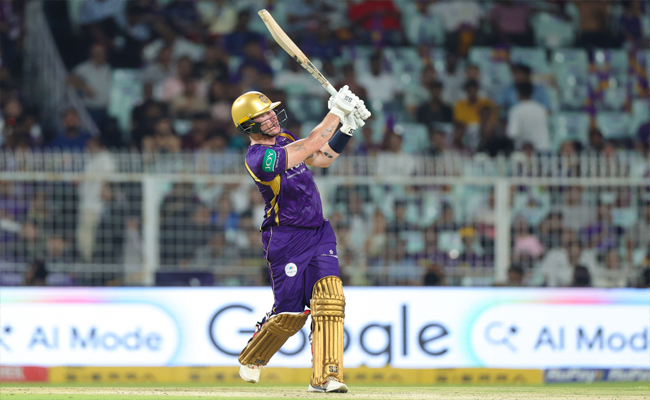
Kolkata (PTI): Finn Allen blasted a 35-ball 93, while Angkrish Raghuvanshi hit an unbeaten 44-ball 82 as Kolkata Knight Riders kept their playoff hopes alive with a 29-run win over Gujarat Titans in the IPL match here on Saturday.
Sent in to bat, Allen went on a six-hitting spree, smashing 10 maximums and four boundaries to add 95 off 41 balls with Raghuvanshi (82).
Raghuvanshi then shared another 108 off 53 balls with Cameron Green (52 not out) to power KKR to a challenging 247 for 2.
In reply, GT could manage 218-4, riding on skipper Shubman Gill's 49-ball 85 and a 35-ball 57 from Jos Buttler. Opener Sai Sudarsan was retired hurt but returned to make a 28-ball 53 not out.
Sunil Narine (2/29) claimed two wickets and Saurabh Dubey snapped one for KKR.
For GT, Mohammed Siraj (1/50), Sai Kishore (1/38) were the wicket-takers.
Brief Score:
KKR: 247 for 2 in 20 overs (Finn Allen 93, Angkrish Raghuvanshi 82 not out, Camero Green 52 not out; Mohammed Siraj 1/50).
GT: 218 for 4 in 20 overs (Shubman Gill 85, Sunil Narine 2/29).