Inclusion of Udupi in Special Action Force will not tarnish district’s image: G Parameshwara
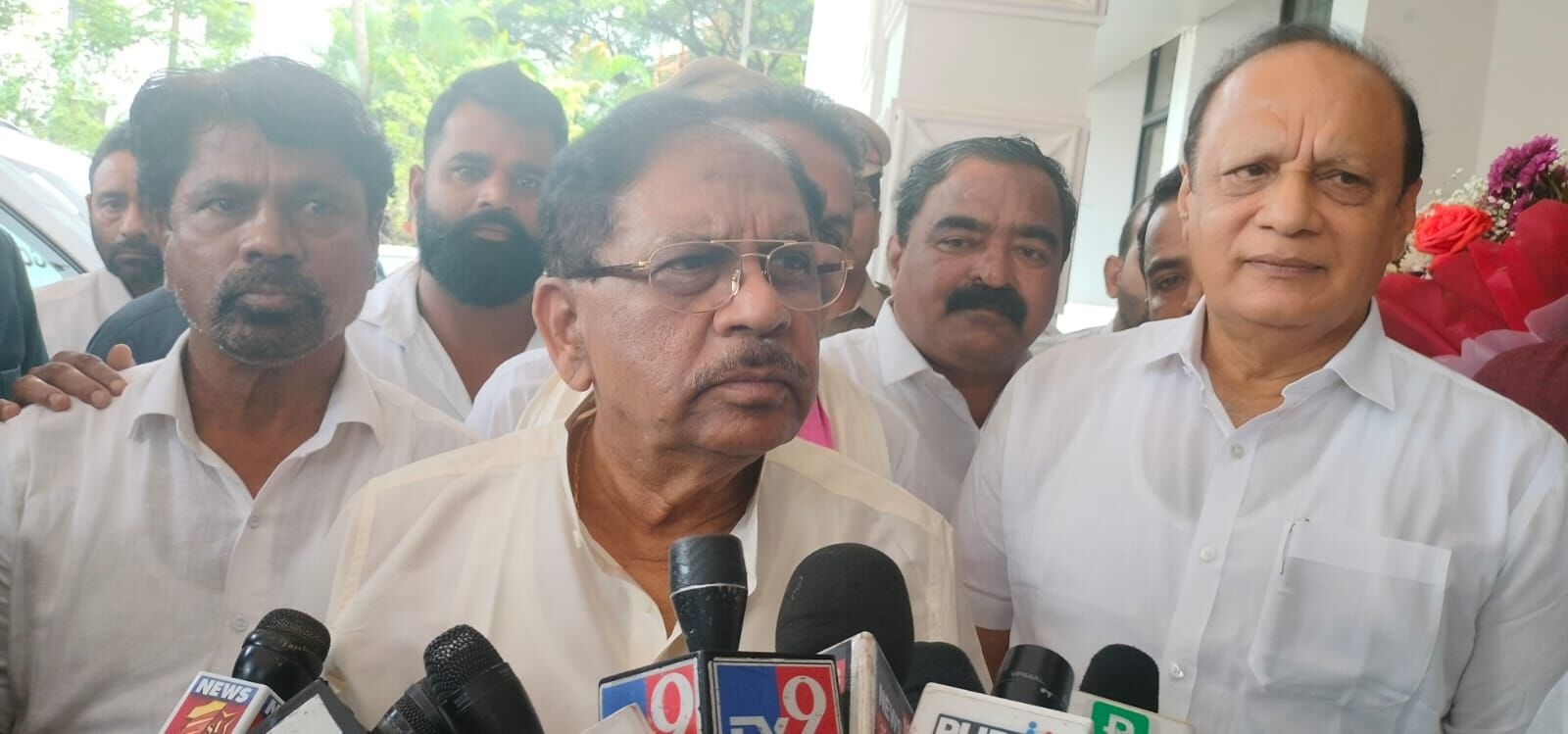
Udupi: Karnataka Home Minister Dr G Parameshwara has clarified that the inclusion of Udupi in the recently formed Special Action Force (SAF) to prevent communal tensions along the coastal belt does not imply that the district is communally sensitive. He stated that the measure was taken purely for precautionary purposes based on recent incidents in the region.
Speaking to reporters at the Udupi guest house on Saturday after offering special prayers at the Kollur Mookambika Temple earlier in the day, the Minister responded to objections raised by MLA Yashpal Suvarna over Udupi’s inclusion in the SAF.
"I have already appealed to the public to ensure that this force remains unused. If no communal incidents take place, the need for such a task force becomes irrelevant. Whether it is necessary or not should be decided by the people themselves. If there is no need, doesn’t that mean communalism is gone?" he said with a smile.
He stressed that the move does not affect the dignity or image of Udupi district. “When we set up the ANF headquarters in Karkala to tackle Naxal activity, did anyone say Udupi’s prestige was hurt? Many were killed by Naxals back then. Just because there is a police presence, does that mean the area has lost its honour?” he asked.
The Minister also clarified that the SAF will be under the jurisdiction of the Mangaluru Police Commissioner, while the IGP will oversee three districts.
Responding to a question on the caste census, Dr Parameshwara said the state cabinet has already decided to conduct a fresh survey due to complaints from several communities and organisations regarding the inaccuracy of data in the earlier report.
“The current caste data is over ten years old. In the past decade, the population has grown by 1.5 crore, and many have pointed out that the earlier data doesn’t reflect this. Therefore, the state government has decided to conduct a new caste census on scientific grounds,” he said.
He also noted that the Union government’s census does not include data on social, educational, or economic backwardness, which is why the state is conducting its own enumeration.
On his temple visit, the Minister clarified that it was personal. “This is not an official visit. Visiting temples is part of our tradition. I went to seek the blessings of Mookambika Devi. Why I went and what I prayed for is not something you should ask or I should disclose,” he said.
Let the Truth be known. If you read VB and like VB, please be a VB Supporter and Help us deliver the Truth to one and all.
Shivakumar opposes ‘One Nation One Election’, calls it ‘unworkable’
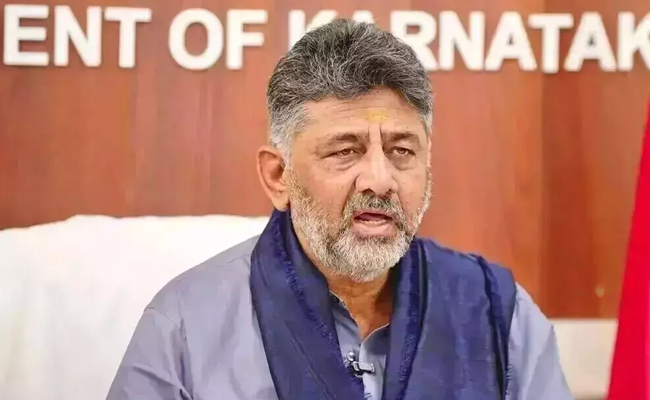
Bengaluru (PTI): Karnataka Deputy Chief Minister D K Shivakumar on Saturday strongly opposed the central government’s proposed ‘One Nation One Election’ initiative.
Shivakumar expressed his views at a dialogue on ‘One Nation One Election’ organised by the Joint Parliamentary Study Committee.
He said the plan is a politically motivated, power-centralising scheme that would seriously damage India’s federal structure by weakening states and poses a threat to the democratic system, according to a statement from his office.
As KPCC president and deputy CM of Karnataka, he categorically rejected the proposal, stating that it is being crafted to suit the convenience of those in power at the Centre.
Shivakumar said that the Karnataka Legislative Assembly had already passed a resolution opposing ‘One Nation One Election’ and read out the resolution at the meeting.
He firmly stated that it is “not a workable plan” and added that it is “practically impossible.”
“If a government falls midterm due to political instability, a no-confidence motion, or loss of majority, what is the solution?” he asked.
“Elections are held at different times in different states for different terms. Karnataka had its election in 2023, while Tamil Nadu and Kerala had theirs in 2021, and Punjab and Telangana in 2022 and 2023, respectively. How can these elections with varying schedules be synchronised?” he asked.
He added that the proposal is a ploy to suppress the voices of regional and Opposition parties.
He also said the Karnataka government does not agree with the proposal and remains committed to the position of the Congress party’s national leadership.