India's largest underground LPG storage facility completed in Mangalore; All details here
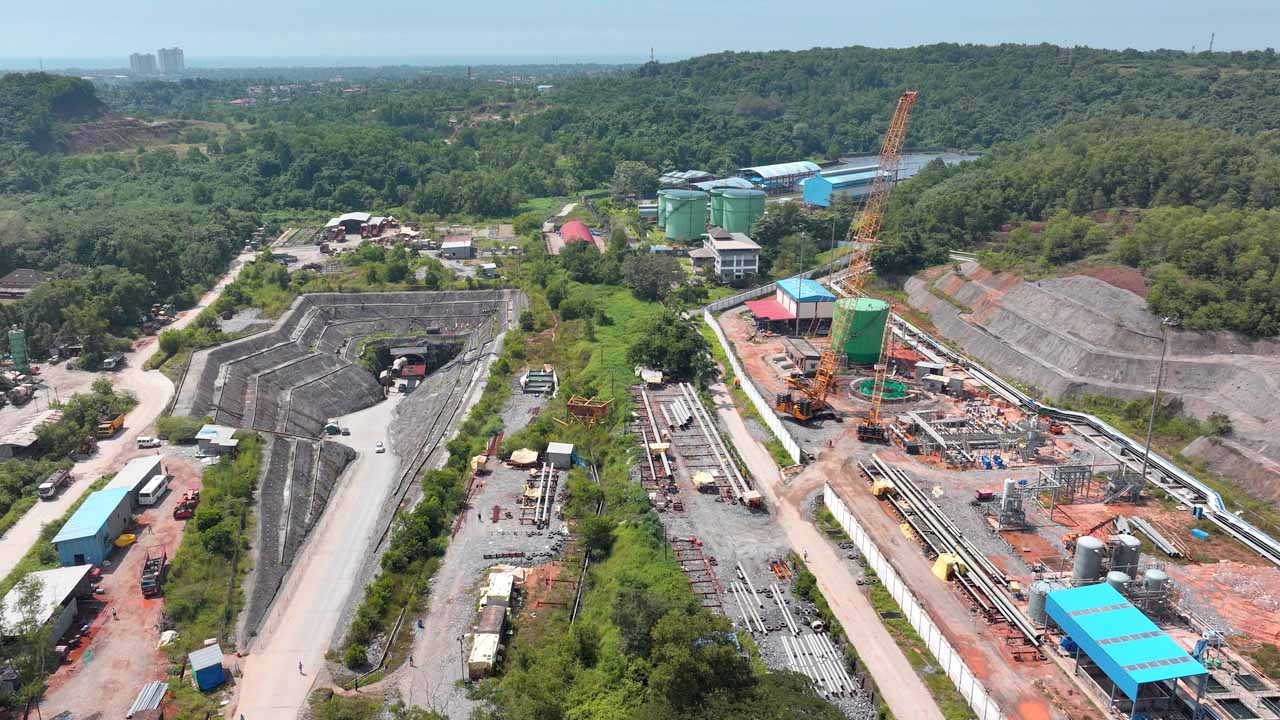
Mangalore, Karnataka – June 18, 2025: India’s largest underground LPG storage cavern, near Mangalore, has been successfully completed, marking a major step forward in the country’s energy infrastructure. Built by Megha Engineering and Infrastructures Limited (MEIL) for Hindustan Petroleum Corporation Limited (HPCL), the project is now fully ready for operation following the successful completion of all testing phases on June 6, 2025.
This underground facility, with a storage capacity of 80,000 metric tonnes, is part of the Mangalore LPG Import Facility (MLIF) and is designed to support uninterrupted LPG distribution across southern and central India. The storage cavern will serve as a critical reserve in case of emergencies, such as supply disruptions during wartime or natural disasters.
As reported by The Hindu in September 2023, during a visit by the Karnataka Legislative Council Assurance Committee, HPCL officials assured that the 80,000 metric tonne LPG cavern is a safe and secure storage facility. Responding to safety concerns, HPCL General Manager (Projects) Ramana Murthy had stated that the cavern is being constructed to withstand natural disasters and external threats, with safeguards in place to prevent ecological damage as well.
He had highlighted that underground storage is inherently safer and that the design follows the successful model used in Visakhapatnam. Additional safety mechanisms, including pipeline monitoring by line walkers, have also been put in place.
What Is This Cavern and How Was It Built?
The storage cavern is carved deep within granitic gneiss rock at a depth of 141 metres below mean sea level. The engineering behind the project follows the principle of hydraulic containment, meaning the surrounding groundwater pressure helps keep the LPG sealed safely within the rock chamber. The shaft extends up to 164.5 metres, ensuring a secure vertical layout for storing and transporting gas.
The construction was carried out using the drill-and-blast method, which required high-level geological assessments and precision engineering. The entire structure includes:
An access tunnel of 1.1 kilometres to remove debris and provide entry
Two main storage caverns (Cavern S1 at 220 metres and Cavern S2 at 225 metres)
Upper and lower water curtains totalling over 13 kilometres of vertical and inclined boreholes to manage water pressure and prevent gas leakage
Operation shaft of 6.5 metres in diameter equipped with submersible LPG pumps, fill lines, and safety instruments
Connecting tunnels measuring 486.2 metres to link various compartments
Overall structure embedded in hard rock for long-term durability and safety
How Is It Tested for Safety?
Before beginning storage operations, the facility underwent a critical procedure known as the Cavern Acceptance Test (CAT). Conducted from May 9 to June 6, 2025, this test involved:
Pressurisation: Filling the cavern with air to increase pressure up to 8.310 kg/cm².
Stabilisation: Closing all vents for over 100 hours to monitor for leaks while observing pressure, geological and instrument data.
Depressurisation: Gradually reducing the pressure to ensure the structure remains airtight.
All stages were completed successfully, confirming the readiness of the facility to safely store LPG.
Strategic Importance: Why This Project Matters
The Mangalore LPG cavern is not just a storage site—it is a strategic energy reserve. In situations like war, economic blockades, or natural disasters where international LPG imports might be disrupted, this cavern can act as a buffer to ensure that supply to key regions is not cut off.
The facility will receive imported LPG via the New Mangalore Port and supply it to the Mangalore LPG Bottling Plant, and also to road and rail tankers. A network of cross-country pipelines will further carry the gas to Mysore, Bengaluru, and Hyderabad, ensuring smooth distribution, a report in Economictimes.in stated.
The project is seen as a vital step in India’s efforts to enhance energy security. With the growing domestic demand for clean fuel and the push for increased use of LPG in rural and urban households, infrastructure like this plays a crucial role.
Let the Truth be known. If you read VB and like VB, please be a VB Supporter and Help us deliver the Truth to one and all.
Injured Phil Salt returns home for scans

New Delhi (PTI): Royal Challengers Bengaluru opener Phil Salt has returned to England for scans on a finger injury sustained last month.
The injury has kept Salt out of RCB's last three matches, with compatriot Jacob Bethell stepping in at the top of the order.
The 29-year-old is reported to have "damaged a finger on his left hand" while diving to save a boundary at deep backward square leg during RCB's defeat to Delhi Capitals at the M. Chinnaswamy Stadium on April 18.
"Salt, who is centrally contracted by the ECB, has since returned home at the request of England's management and has undergone scans on his finger," ESPNCricinfo reported.
According to the report, both RCB and Salt are hopeful of a speedy recovery and the opener can return to India later this month.
Salt had enjoyed a strong start to the season, amassing 202 runs in six innings at an impressive strike rate of 168.33.
RCB are currently second on the points table behind Punjab Kings. They take on Lucknow Super Giants (LSG) on Thursday next.