Inflation in Electricity bills in Bhatkal: HESCOM assures Vartha Bharati of rectifying all errors
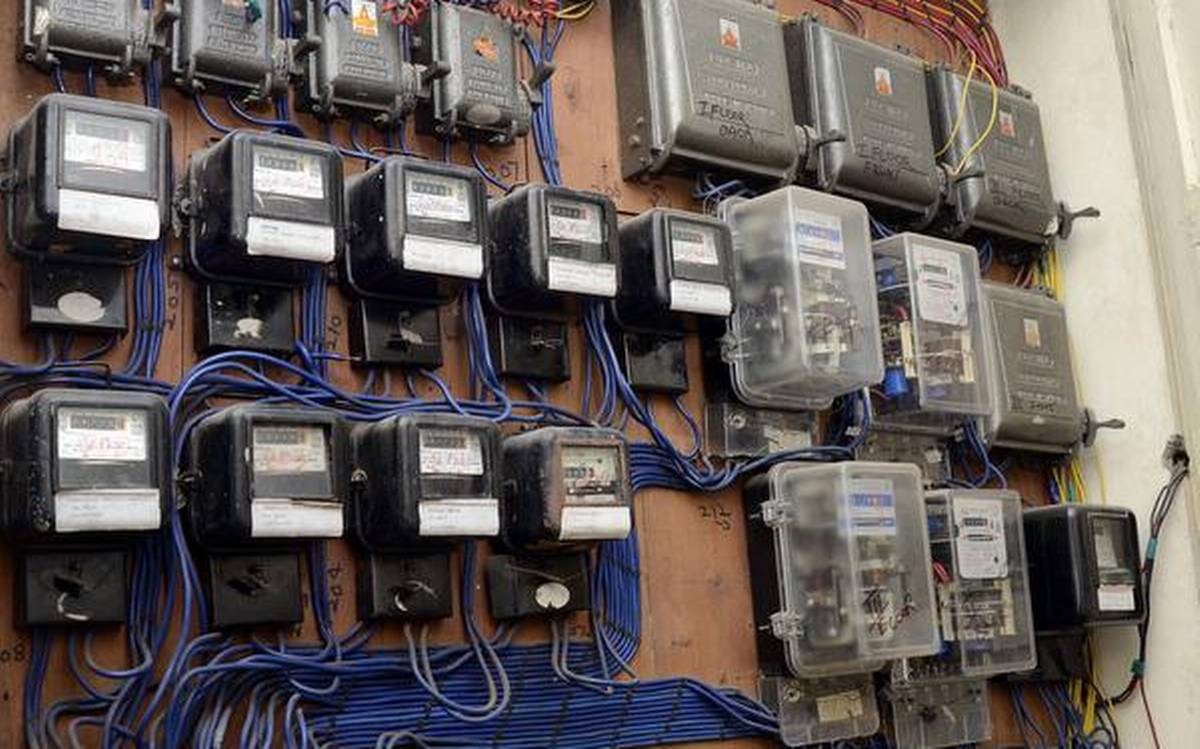
Bhatkal: In what has come as a relief for the people of Bhatkal who received inflated electricity bills during the COVID-19 lockdown period, the HESCOM has assured it will rectify all the errors made by its systems.
A local organization led by a team of social activists including Abu Hajar, Ruwaifa Kola, and Rabee Ruknuddin and guided by local leaders had carried a campaign to identify the households which had received inflated bills during the lockdown.
The campaign was launched after residents raised initial complaints on social media groups about their grievances.
In the campaign, the activists studied electricity bill cycles of 31 houses of various areas in Bhatkal and concluded that there was unprecedented inflation in the bills. A virtual press conference was subsequently called by the organization detailing their findings of the study.
A report was published in Vartha Bharati over the issue on Sunday covering the issue. The HESCOM officials were unavailable for any comment on the matter while publishing the report.
On Monday, after repeated attempts, Vartha Bharati sub-editor Ismail Zaorez reached out to the Managing Director of the power supply company who took note of the report and materials of the study provided to him and took up the matter with Assistant Engineer of Bhatkal Division directing him to look into the matter.
The In-Charge Assistant Engineer, Mr. Kamble soon contacted Vartha Bharati over the matter and assured that all the grievances and errors that had resulted in inflation of bills will be rectified. Kamble admitted that the systems of HESCOM had failed to apply the slab system on the bills during the lockdown period as bills of three months were issued at once.
Kamble said some of the issues were already rectified and the consumers whose issues were not rectified yet, can visit the HESCOM office. He assured that the slab system will be applied on their bills and the consumers will be asked to pay the sum of the amount with an actual meter reading of the respective months.
On being asked about the commercial entities being charged exorbitantly even when the shops and factories were completely closed due to the lockdown, Kamble said “As the shops were closed, we were unable to visit and check the meter readings. We had to issue average bills for them. Now since the shops are open, we will visit them and new bills according to their actual meter reading will be issued with them. They need not panic about it all the issues will be sorted”.
Kamble was also of the opinion that the consumption of households had naturally gone up as people, due to the lockdown had remained at homes, which automatically escalated the usage of appliances like fans, ACs, and TVs. He however said there was an error in the application of the slab system on bills and that had resulted in inflation of bills.
“People can visit HESCOM offices, and all their grievances will be sorted. This is our assurance” Kamble told Vartha Bharati over a phone call.
Let the Truth be known. If you read VB and like VB, please be a VB Supporter and Help us deliver the Truth to one and all.
Prateek Yadav, Mulayam Singh Yadav's younger son, dies at 38
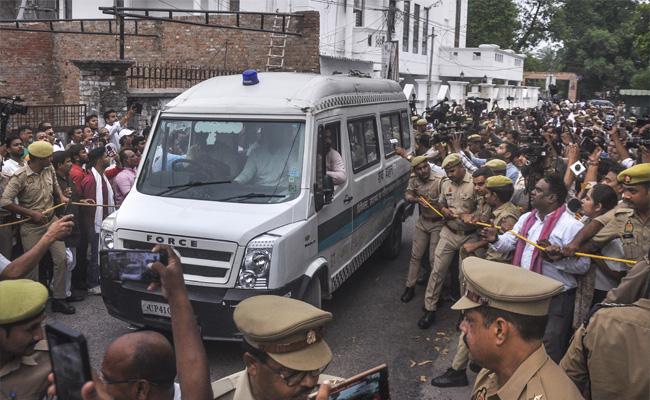
Lucknow (PTI): Prateek Yadav, the younger son of Samajwadi Party founder Mulayam Singh Yadav, has died at the age of 38 after falling ill with cardiac-lung complications early Wednesday.
Prateek, a fitness enthusiast who chose to stay away from the spotlight notwithstanding the fact that he belonged to a prominent political family, was declared brought dead at the civil hospital here, family and friends said.
Aparna Bisht Yadav, his wife, is a BJP member and vice chairperson of the State Women's Commission. She was out of town and rushed back home Wednesday afternoon.
SP chief and stepbrother Akhilesh Yadav were among those who expressed their shock at the death.
"He was a very good young man who wanted to achieve something through his own hard work. Sadly, he is no longer among us," he said.
Asked about the circumstances surrounding the death, the SP chief said the family would follow all legal procedures.
"Whatever the law says and whatever the family decides, we will abide by that," Akhilesh Yadav said, adding that he had met Prateek about two months ago and had advised him to take care of his health and continue expanding his work.
Prateek died due to "cardiorespiratory collapse caused by massive pulmonary thromboembolism", according to the provisional postmortem report prepared at the King George's Medical University (KGMU) here.
The condition refers to a large blood clot blocking arteries of the lungs, leading to sudden failure of heart and lung functions, sources at KGMU said.
The postmortem report also mentioned six antemortem injuries to his chest, under his right arm, right forearm, right elbow joint, over the elbow and left wrist.
While injury '1' was present over the chest, the injury '2' was present over posteromedial aspect of right arm, injury '3' was over medial aspect of right arm, while injury '4' was below the right elbow. Injury '5' was over the posterior lateral aspect of right elbow while injury '6' was on dorsum of left wrist, the report said, adding that ecchymosis was present underneath in the injuries.
"Injuries 1, 2, and 3 are about five-seven days old. Injuries 4, 5, and 6 are about one day old," the report added.
Prateek had been battling deep vein thrombosis (DVT), pulmonary embolism and recent cardiac complications, said a senior doctor who treated him.
"He was my old follow up (patient) for last five-six years for hypertension and DVT. Recently he developed sudden onset of breathlessness and chest discomfort. He was also diagnosed with pulmonary embolism about three weeks back," Ruchita Sharma, associate director, Department of Medicine, Medanta Hospital, told PTI on phone.
Prateek's mother Sadhna Gupta, who died in 2022, was Mulayam Yadav's second wife. He was in his teens when the two got married.
As speculation swirled about the circumstances leading to the sudden death, Civil Hospital Director Dr G C Gupta said, "We ran the necessary SOPs, and after confirmation, we informed senior officials and police."
Asked about reports claiming that Prateek was found unconscious in the kitchen, Gupta said, "Various things are being said, but I can't say anything for sure."
The doctor said a driver from Prateek's residence had come to the hospital around 5.30 am seeking emergency help, following which an Emergency Medical Officer accompanied him back to the residence and took Prateek to hospital.
As news of the death came in, the SP and the BJP cancelled their political programmes in Uttar Pradesh.
SP leader and Prateek's uncle Shivpal Singh Yadav described the death as "extremely sad" and prayed for peace to the departed soul.
"The demise of Shri Prateek Yadav Ji is extremely heartbreaking! May God grant peace to the departed soul. Humble tribute!" the SP said in a post on X.
The BJP said district-level protests planned by women workers across the state on Wednesday have been postponed following Prateek Yadav's demise.
"The sudden demise of Shri Prateek Yadav Ji, son of former Chief Minister of Uttar Pradesh, 'Padma Vibhushan', the late Mulayam Singh Yadav Ji, and husband of Smt. Aparna Yadav Ji, Vice-Chairperson of the Uttar Pradesh State Women's Commission, is extremely heartbreaking. Humble tribute," Uttar Pradesh Chief Minister Yogi Adityanath posted on X.
State Congress chief Ajay Rai also expressed his grief at the "sudden demise" of the Yadav family member.
"I'm really shocked. He was a young man... I extend my condolences to the bereaved family in this hour of grief and stand by them," said Congress UP in-charge Avinash Pande.
Mourners, including supporters of both the SP and the BJP, started gathering outside the family's Vikramaditya Marg residence soon after news of his death spread. Police tightened security and erected barricades in the area.
The chief minister and some state ministers also visited the residence to pay their last respects.
Dhirendra Yadav, national secretary of the Samajwadi Shikshak Sabha, who stood outside the residence, said he had known Prateek for years.
"I still can't believe that someone as fit as him has passed away so suddenly," he said.
The last rites will be performed on Thursday, priest Mahendra Sharma said.
Around 2.20 pm, Shivpal Yadav reached the residence along with other family members, including Akhilesh Yadav, his wife Dimple Yadav and relatives from the family's native Saifai village.
The nameplate outside the house bears the names "Shri Mulayam Singh Yadav", "Smt Sadhna Yadav", "Prateek Yadav", "Aparna Yadav" and "Shine and Blush", the names of the couple's daughters.
The large black iron gate with golden motifs remained shut with only close relatives and friends being allowed inside.
According to advocate Vishwanath Chaturvedi, on whose PIL the Supreme Court had ordered a CBI probe into the disproportionate assets case against Mulayam Yadav, the late SP patriarch had publicly acknowledged in court in 2006 that Prateek was his son and Sadhna his wife.
Although Mulayam and Sadhna had been together for years, the statement in court was the first public acknowledgement of their relationship, he said.
On January 19 this year, Prateek openly accused his wife of ruining his family ties in a lengthy Instagram post and said he would seek a divorce from her at the earliest. However, on January 28, he announced reconciliation with his wife.
In a video he posted on Instagram, Prateek said, "On January 19, I had a serious dispute with my wife Aparna, following which I made two posts on social media. However, the matter has now been resolved mutually after discussions, and there is no longer any dispute between us."
He also posted a caption in the video: "Haters, go to hell."