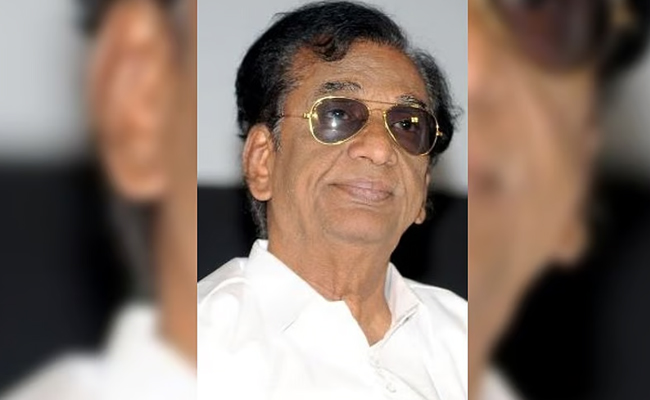
‘Kolnad Friends’ organise blood donation camp in memory of Late Safwan Kolnad; 62 units collected
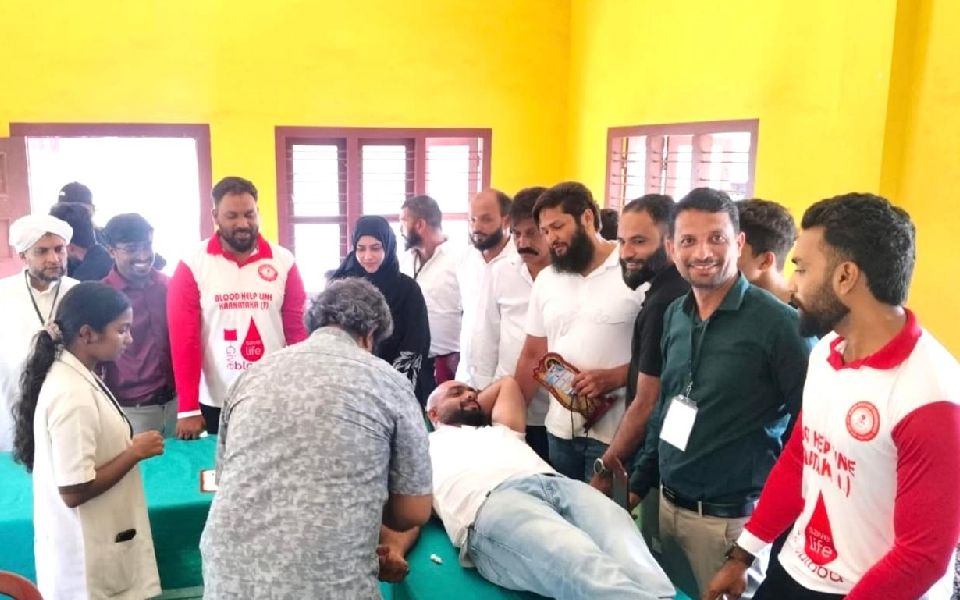
Mulki: A public blood donation camp was successfully organised on Sunday in memory of Safwan Kolnad, a 25-year-old youth who tragically passed away on May 10, 2025, due to sudden cardiac arrest in Dubai. The camp was held at Mahila Samudaya Bhavan, located near the Kolnad Government School, and was jointly conducted by Kolnad Friends Kolnad (R) and Blood Helpline Karnataka (R), in collaboration with Wenlock District Hospital, Mangalore.
The event began with a dua and blessings from Sharif Darimi Al-Haitami, Khatib of Shafi Juma Masjid, Kolnad. The program was presided over by Manjunath B.S., Circle Inspector of Mulki Police Station.
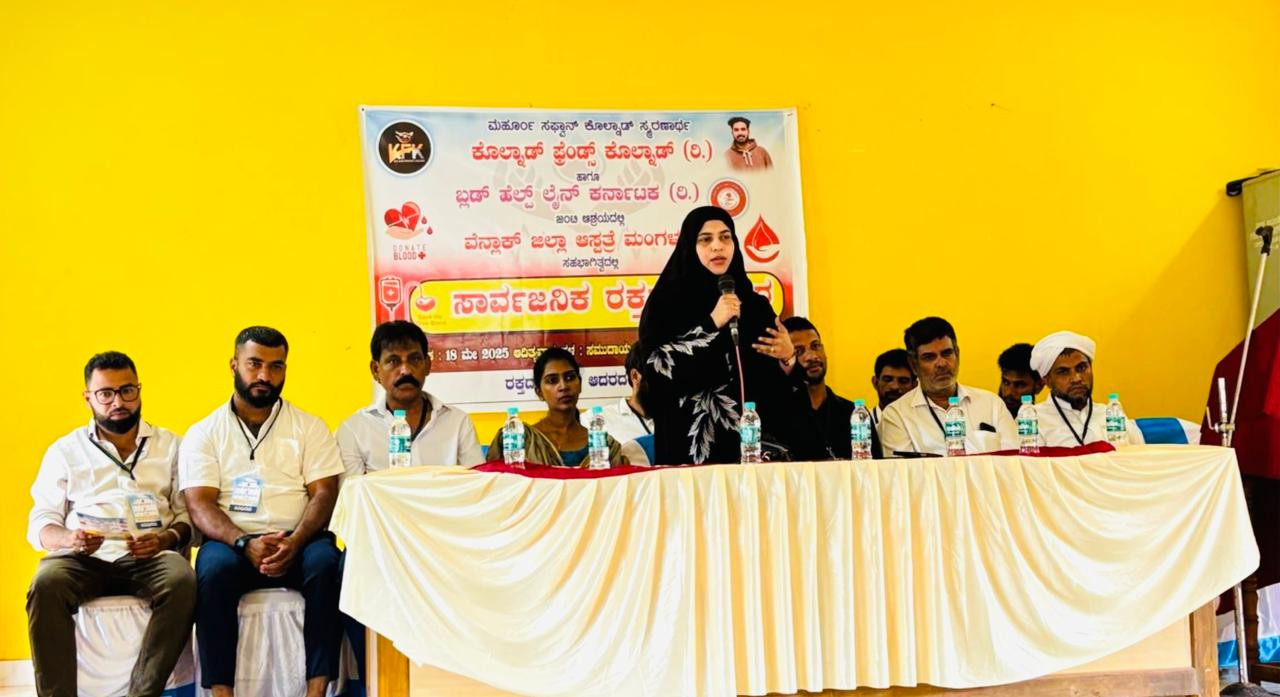
Dr. Ayisha Suhana, Consultant Ophthalmologist and Chief Eye Surgeon at Srinivas Institute of Medical Sciences and Research Centre, Mukka, was the chief guest. In her address, she highlighted the critical importance of blood donation and how a single unit of blood can help save up to three lives. She also explained how regular blood donation contributes to better health by reducing the risk of heart attacks, strokes, and certain cancers, while also controlling cholesterol, blood pressure, and iron levels. She advised donors to stay hydrated and avoid strenuous activity after donating blood.
As a tribute to the late Safwan Kolnad, Dr. Ayisha Suhana announced that she will perform five free cataract surgeries with premium intraocular lens implantation for underprivileged patients. She has conducted similar charitable surgeries in the past, in association with NGOs including the Naushad Haji Suralpady Memorial Charitable Trust (R).
This was the second blood donation camp organised by Kolnad Friends Kolnad (Reg) Charitable Trust, and a total of 62 units of blood were collected, including 52 male and 10 female donors. The organisation continues to serve as a ray of hope for underprivileged patients, providing financial assistance for dialysis and cataract surgeries, and also supporting economically weaker students.
During the event, both Manjunath B.S. and Dr. Ayisha Suhana were felicitated by the organisers. The program concluded with remarks from Yasir Arafat and a vote of thanks delivered by Abbas Ali.
Let the Truth be known. If you read VB and like VB, please be a VB Supporter and Help us deliver the Truth to one and all.
Ordinance issued to increase number of Supreme Court judges from 34 to 38
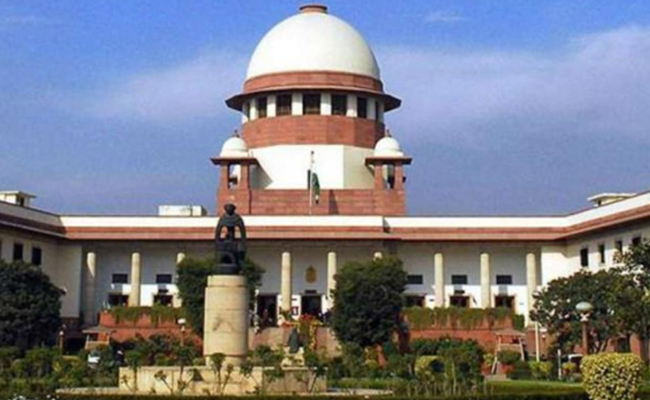
New Delhi (PTI): The government has promulgated an ordinance to increase the strength of the Supreme Court from the present 34 judges to 38, including the Chief Justice of India.
The law ministry notified the ordinance on Saturday, which amended the Supreme Court (Number of Judges) Act, 1956, to increase the sanctioned strength of the top court.
So far, the sanctioned strength of the top court was 34, including the Chief Justice of India (CJI). Now, the number of judges has been increased by four, taking the sanctioned strength to 38.
The top court will now have 37 judges, other than the CJI.
With the apex court having two vacancies at present, and the ordinance coming into force immediately, the Supreme Court Collegium will now have to recommend six names for appointment as judges in the top court.
A bill will be brought in the Monsoon Session of Parliament to convert the ordinance – an executive order – into a law passed by Parliament.
The Union Cabinet had cleared a draft bill on May 5 to increase the number of apex court judges.
The strength of the Supreme Court was last increased from 30 to 33 (excluding the CJI) in 2019.
The Supreme Court (Number of Judges) Act, as originally enacted in 1956, put the maximum number of judges (excluding the CJI) at 10.
This number was increased to 13 by the Supreme Court (Number of Judges), Amendment Act, 1960, and to 17 by another amendment to the law.
The Supreme Court (Number of Judges) Amendment Act, 1986, augmented the strength of judges from 17 to 25, excluding the CJI.
A fresh amendment in 2009 further increased the strength from 25 to 30.
Article 124(3) of the Constitution lists the qualifications required to become a Supreme Court judge.
An Indian citizen who has either served as a high court judge for at least five years, or as an advocate for 10 years, or is a distinguished jurist, can be appointed to the top court.
The strength of the Supreme Court is increased based on the recommendations of the CJI, who writes to the Union law minister. After consulting the finance ministry, the Department of Justice under the law ministry moves the Cabinet with a draft bill.