Kota PSI suspended, five officers transferred over police brutality in Mehendi event

Udupi: Concerning the case of police brutality, in which the police reportedly barged into an ongoing Mehendi function at the Kotathattu Barikere Koraga Colony and subjected the members of the Koraga community to unwarranted violence on Monday night, the Kota Station PSI Santhosh B. P has been suspended.
The Udupi District Superintendent of Police N. Vishnuvardhan informed that based on the investigative report concerning the case reported by the Koraga community and after reviewing the statements provided by him, the IGP of the West Division has suspended the Kota PSI, he said.
“The five police personnel who participated in the incident have been transferred from the Kota Police Station”, he informed.
On Monday night, during the Mehendi function of an individual named Rajesh which was occurring at Kotathattu Barikere Koraga Colony, the police reportedly arrived at the event site based on a complaint provided by an individual, and subjected the people attending the function to unwarranted beating using their lathi at Brahmavara Taluk, and thus subjected them to police brutality, it is learned.
Due to the beatings received from the police lathi, including children and women, approximately ten guests attending the Mehendi function were injured.
As there has been widespread condemnation against police brutality, Minister Kota Srinivas Poojary has reportedly notified the senior police officials to take strict action against the guilty police personnel.
Let the Truth be known. If you read VB and like VB, please be a VB Supporter and Help us deliver the Truth to one and all.
Ordinance issued to increase number of Supreme Court judges from 34 to 38
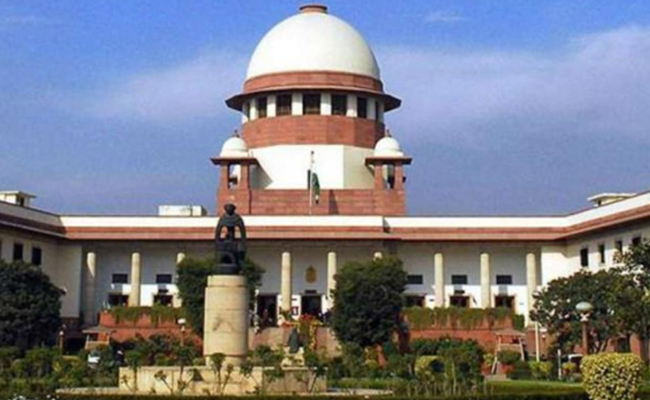
New Delhi (PTI): The government has promulgated an ordinance to increase the strength of the Supreme Court from the present 34 judges to 38, including the Chief Justice of India.
The law ministry notified the ordinance on Saturday, which amended the Supreme Court (Number of Judges) Act, 1956, to increase the sanctioned strength of the top court.
So far, the sanctioned strength of the top court was 34, including the Chief Justice of India (CJI). Now, the number of judges has been increased by four, taking the sanctioned strength to 38.
The top court will now have 37 judges, other than the CJI.
With the apex court having two vacancies at present, and the ordinance coming into force immediately, the Supreme Court Collegium will now have to recommend six names for appointment as judges in the top court.
A bill will be brought in the Monsoon Session of Parliament to convert the ordinance – an executive order – into a law passed by Parliament.
The Union Cabinet had cleared a draft bill on May 5 to increase the number of apex court judges.
The strength of the Supreme Court was last increased from 30 to 33 (excluding the CJI) in 2019.
The Supreme Court (Number of Judges) Act, as originally enacted in 1956, put the maximum number of judges (excluding the CJI) at 10.
This number was increased to 13 by the Supreme Court (Number of Judges), Amendment Act, 1960, and to 17 by another amendment to the law.
The Supreme Court (Number of Judges) Amendment Act, 1986, augmented the strength of judges from 17 to 25, excluding the CJI.
A fresh amendment in 2009 further increased the strength from 25 to 30.
Article 124(3) of the Constitution lists the qualifications required to become a Supreme Court judge.
An Indian citizen who has either served as a high court judge for at least five years, or as an advocate for 10 years, or is a distinguished jurist, can be appointed to the top court.
The strength of the Supreme Court is increased based on the recommendations of the CJI, who writes to the Union law minister. After consulting the finance ministry, the Department of Justice under the law ministry moves the Cabinet with a draft bill.