Kotekar Cooperative Bank robbery case: Plot hatched 6 months ago; 3 visits before the robbery
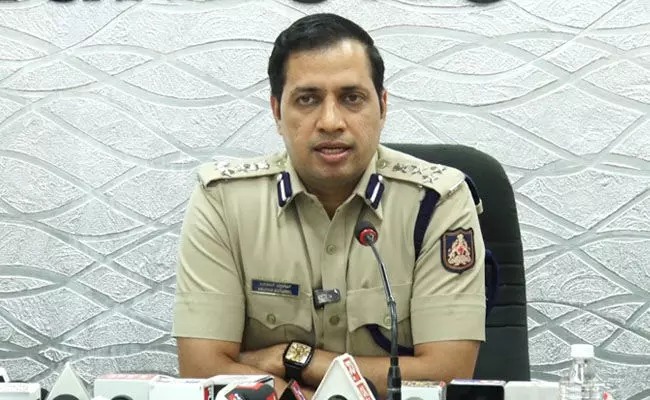
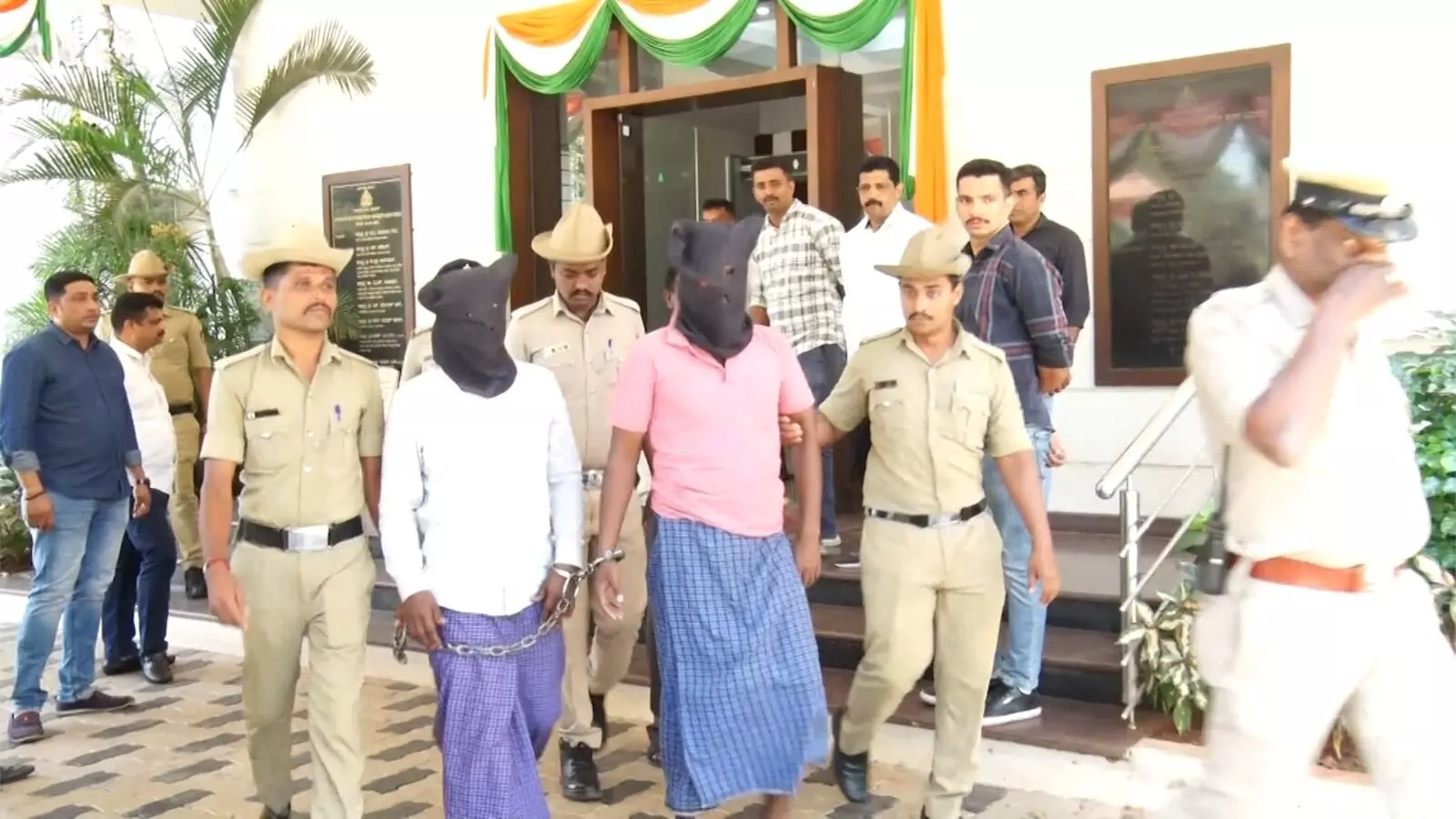
Mangaluru: Mangaluru police have taken into custody the father of the accused in connection with the robbery at Kotekar Agricultural Cooperative Bank. Police have intensified the investigation after arresting three key suspects along with the stolen gold jewellery. During the investigation, it was revealed that the prime accused, Murugandi Tevar, had planned the robbery nearly six months ago, as informed by Police Commissioner Anupam Agrawal.
The Police Commissioner shared the details in a press conference at his office on Monday. He mentioned that Shashi Thevar, a Mangaluru native residing in Mumbai, had identified Kotekar Bank as suitable for the robbery, citing a lack of security. Accordingly, Murugandi Thevar visited Mangaluru in August, October, and November of 2024 to survey the bank. He chose January 17 as the day for the heist. On the day of the robbery, three accused arrived by car from Mumbai, while two others arrived by train. The accused reached the location at 12:20 PM, waited for a while, and then broke into the bank around 1:10 PM before fleeing, the Commissioner explained.
During the investigation, the accused confessed that Shashi Thevar, a local resident, had assisted them in the robbery. The police are now searching for him and four other suspects, said Commissioner Anupam Agrawal.
Mangaluru Police crack state's biggest robbery case
The robbers stole 18.674 kg of gold and ₹11,67,044 on the day of the heist. Through coordinated operations with Tamil Nadu and Mumbai police, Mangaluru police recovered 18.314 kg of gold, ₹3,80,500 in cash, two pistols, three live bullets, a Fiat car, and a fake number plate. Several teams led by ACPs Dhanya and Manoj worked continuously for four days across Tamil Nadu and Mumbai, traveling over 2700 km, the Police Commissioner stated.
The arrested prime accused MurugaThevar is also linked to other major robbery cases in Mumbai, with cases filed against him in Mulund and two other police stations. Another accused, Joshua Rajendran, has cases in Mumbai and Gujarat.
Kannan Mani has a case registered against him in Mumbai, and Murugandi Thevar's father, Shanmug Sundaram, has been arrested for assisting in hiding the stolen gold in his house, as informed by the Police Commissioner.
In the press conference, DCs Siddharth Goyal, Ravishankar, and ACPs Dhanya Nayak, Manoj were present.
After the robbery, the accused Murugandi Thevar and Joshua Rajendran fled towards Kerala through Talapady Gate in a Fiat car, while the other four suspects left via Mangaluru Railway Station. Three of them traveled by auto, and one by bus. Murugandi and his team, who headed towards Mumbai, had planned to escape to Tamil Nadu from there. The plan was to sell the stolen gold in the black market in Mumbai after dividing it equally.
The police's priority was not only to arrest the suspects but also to recover the gold jewellery belonging to approximately 1600 customers that had been stored at the bank. As a result of the operation carried out by the teams, the jewellery was seized before the accused could sell it, Police Commissioner Anupam Agrawal added.

Let the Truth be known. If you read VB and like VB, please be a VB Supporter and Help us deliver the Truth to one and all.
Argument over bike accident leads to murder, triggers mob violence, arson in Ahmedabad; 2 held

Ahmedabad (PTI): A man was killed in a violent altercation triggered by a motorcycle accident in Dhandhuka in Gujarat's Ahmedabad district on Saturday, after which several shops were set on fire, a police official said.
Two men from different communities clashed this afternoon after their motorcycles collided, which intensified when members of one group went to the house of the other individual involved in the accident, he said.
"During the confrontation, Dharmesh Gamara (30) was stabbed in the leg with a knife. He later died due to excessive bleeding. Following his death, tensions flared, and a group of people set ablaze seven to eight roadside shops. Several properties were damaged," Ahmedabad Rural Superintendent of Police Om Prakash Jat said.
Videos circulating on social media showed small shops engulfed in flames, with thick black smoke rising in the area.
Police and fire brigade teams rushed to the scene and brought the situation under control, Jat told PTI.
"The fires have been doused," he said, adding that house-to-house combing and patrolling were underway in the area to identify those involved in the arson.
Two persons identified as Samir and Rizwan have been arrested for alleged involvement in the killing of Gamara, while 15-20 persons have been detained in connection with the arson, police said.