Let Billava candidate get opportunity in Lok Sabha elections: Vasantha Bangera
Interview : Shibi Dharmasthala
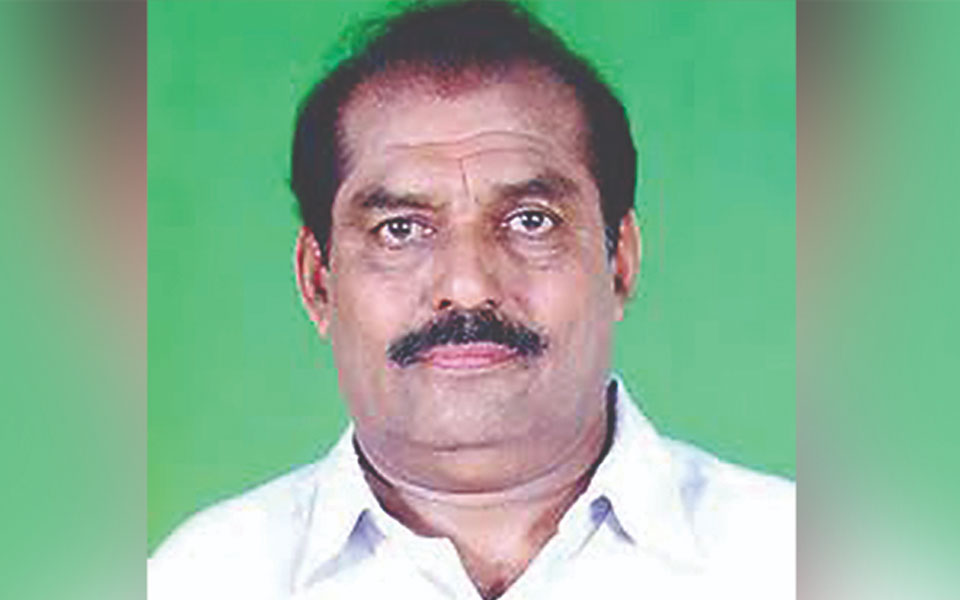
Former MLA of Belthangady, DK district’s senior Congress leader K.Vasantha Bangera shared his views with Varatha Bharti regarding various issues like the political developments taking place in the district, the party's defeat in the previous election and the party's preparation for the upcoming Lok Sabha elections.
What is the reason for the Congress’ defeat in the previous election?
Bangera : The Siddaramaiah-led Congress government had planned great pro-public programs, and even they have reached to people. A government with such good programmes has never come in the past.
But, the party ‘s MLAs and office bearers have failed in educating people that they implemented these all people friendly projects. Following which, people were forced to believe the BJP's propaganda. This is the most important reason for the Congress’ defeat.
Congress supporters from the backward classes seem to have gone far from the party in the last election. What do you say about this?
Bangera: The backward communities were always with the Congress Party in the DK district. The party made schemes on behalf of them. But the district in-charge minister and a few others have failed in effectively implementing such projects. The Congress government has been unable to aware people against the BJP’s misconduct it is doing in the name of safeguarding Hindus and by telling that the Congress is attracting Muslims. Even the communities which were supporting Congress earlier had been left out of the party. But this is not the permanent thing. People now know the truth. The people of the district will again turn towards the Congress.
Who could be the party candidate for upcoming election, you too a ticket aspirant?
Bangera: Neither I am an aspirant for Lok Sabha ticket, nor I have any intention to contest the election. I will work on behalf of the party candidate. Party has not decided its candidate yet. Already three to four aspirants are there in the party. Party will choose a candidate after surveying the district’s situations. Janardhan Poojary, who comes from Billava Community, has contested the Lok Sabha polls.
If the Billava community, which is the largest community in the district, is given opportunity in future too; it is possible that the voters of that community would again support Congress. Party has to consider this. It needs to keep track of the aspirations of the people in the district and continue.
Are you satisfied with the activities of the coalition government?
Bangera: The coalition government is continuing all the projects taken by the erstwhile Siddaramaiah government. Besides, special programmes like farmers’ loan waiver have been taken up. Such benefits reach people directly. The government will smoothly continue its journey as both the parties are moving further by cooperating with each other.
How is the preparation for the upcoming election?
Bangera: The previous election has taught many lessons to the party. By keeping these things in mind, preparations for the next election must be started. Significantly, we have to face the malicious campaigns of the BJP by giving befitting replies to them. People must be made aware of the achievements of the government. If the former MLAs and party functionaries work together, the Congress will have the opportunity to win the Lok Sabha constituency again. The preparations have already begun for that.
What programmes have been planned to bring back the communities which have maintained distance from the party?
Bangera: The backward and underprivileged communities in the district are not distant from the Congress. Due to the propaganda, it could have been a bit complicated in the last election. The Congress has always worked on behalf of these people. It is true that the injustice meted out to backward classes in the previous election. Congress must give more opportunities to them in the future.
Only then the party can get their confidence back. This can be done in the next election. For that, party leaders need to go to the people. All people must be taken into confidence and proceed.
Let the Truth be known. If you read VB and like VB, please be a VB Supporter and Help us deliver the Truth to one and all.
Belagavi youth’s murder case projected as road accident, cracked in Uttara Kannada; Three arrested

Karwar: Uttara Kannada police have cracked a murder case in which a Belagavi youth was killed and his body burnt inside a car to make it appear like a road accident.
Addressing a press meet in the city, Superintendent of Police Deepan M.N. said three accused from Old Hubballi have been arrested in connection with the case. The crime was a pre-planned act driven by personal enmity, he said.
The case came to light on April 8 morning when a car (KA-04/MJ-8996) was found completely burnt in a roadside ditch near Talekumbri bus stand in Yellapur. Only charred human remains were found inside the vehicle. Initially, it was suspected to be an accident caused by overspeeding, and a case was registered at Yellapur police station based on a complaint filed by the deceased’s father, Jagannath Dhapale.
However, the father later expressed suspicion that his son’s death was not accidental, prompting a detailed investigation.
Taking the matter seriously, two special teams were formed under the leadership of Yellapur Inspector Ramesh Hanapur. On analysing technical evidence and CCTV footage, police found that it was a planned murder.
The accused have been identified as Abdul Raheem Basheer Ahmed Mujawar (32), Maulasab Bavahan Wada (36) and Dadapeer alias Aftab Mehboob Saab Balasangi (22), all chicken traders from Old Hubballi.
Police have seized the car used in the crime along with two scooters. The accused have been remanded to judicial custody.
Investigations revealed that the accused killed Nitesh Dhapale due to personal enmity and later set the car on fire along with the body to project it as an accident.
SP Deepan M.N. appreciated the efforts of Inspector Ramesh Hanapur, PSIs Rajashekhar Vandali and Siddappa Gudi, and the entire team for solving the complex case.