Man arrested for threatening toll gate operator with gun while refusing to pay toll charges
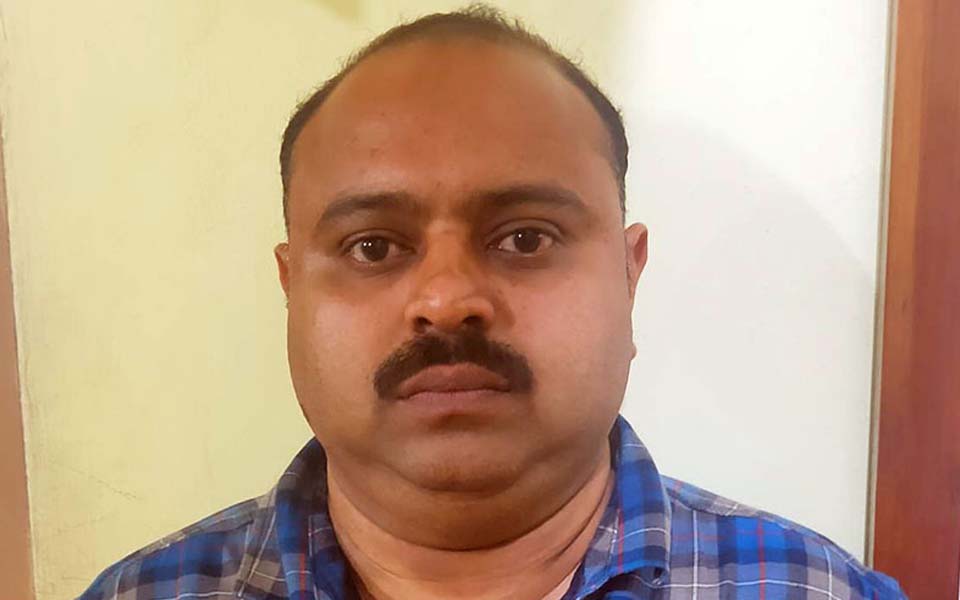
Mangaluru: Local police on Thursday arrested one person for allegedly threatening the toll gate operator with a pistol while refusing to pay toll charges at the NITL Toll gate in Surathkal here.
The arrested person has been identified as Rafiq (36), a resident of Kasargod in Kerala. Police have also seized pistol from the accused.
According to the reports the accused who arrived at the toll gate from Kasargod Kerala with a vehicle of Kerala registration argued with the toll gate operator woman at around 12:40 in the afternoon. Noticing the argument between the two, another operator intervened and asked Rafiq to pay toll charges to which Rafiq replied “I dare you to collect toll fee from me. I will shoot you if you come near me” with pistol pointed at the operator.
Surathkal Police registered a case under section 502 of IPC and colomn 25 of Indian Arms Act and arrested the accused. His car and pistol was also seized by the police.
Let the Truth be known. If you read VB and like VB, please be a VB Supporter and Help us deliver the Truth to one and all.
Bengaluru: ISRO receives 1.5 lakh satellite collision alerts from US
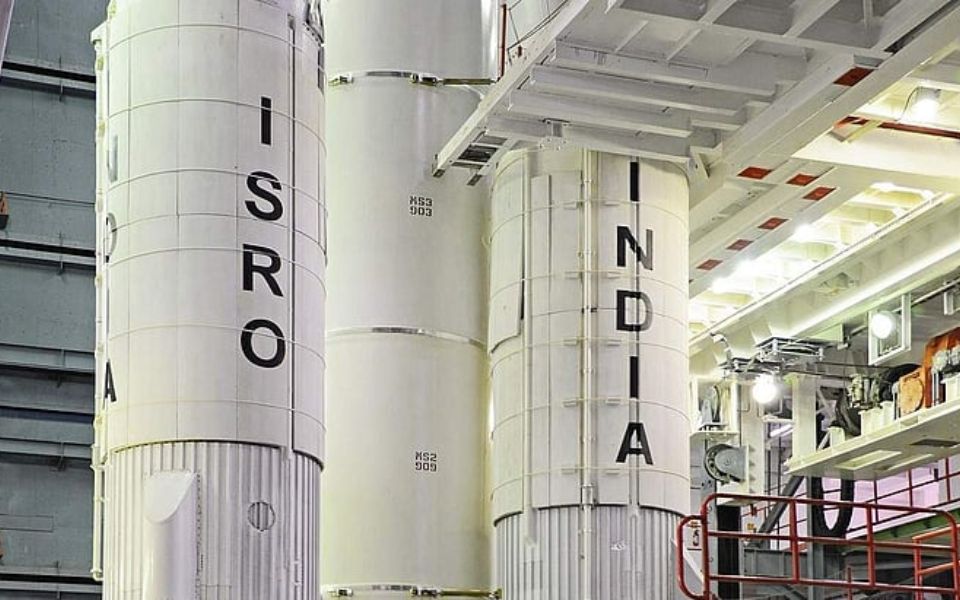
Bengaluru: The Indian Space Research Organisation (ISRO) received over 1.5 lakh space debris and collision alerts for its Earth-orbiting satellites from the United States-led Combined Space Operations Centre, according to the Indian Space Situational Awareness Report for 2025 (ISSAR-2025), as reported by The New Indian Express.
The report was released by ISRO on Thursday for the public to assess. It was announced on April 8 during the international conference on spacecraft mission operations-2026, in Bengaluru.
According to ISRO, a total of four collision avoidance manoeuvres (CAM) were carried out for Geostationary Earth Orbit (GEO) satellites, while 14 CAMs, including one for the NASA-ISRO Synthetic Aperture Radar (NISAR), were performed for Low Earth Orbit (LEO) satellites.
ISRO said that, wherever possible, collision avoidance requirements were being met by adjusting orbit maintenance manoeuvres to avoid exclusive CAMs. All manoeuvre plans were subjected to close approach risk analysis to prevent potential collisions with nearby space objects.
They accounted revising 82 manoeuvre plans to avoid post-manoeuvre close approaches with other space objects for LEO satellites, while two manoeuvre plans were modified for GEO satellites for the same reason.
Conjunction assessment and collision risk mitigation were also being followed for deep-space missions. Citing the case of Chandrayaan-2 orbiter, ISRO scientists said 16 orbital manoeuvres were carried out in the lunar orbit and on two occasions (January 1 and July 24, 2025), the orbits were readjusted to avoid collisions with NASA’s Lunar Reconnaissance Orbiter (LRO).
ISRO said the first such coordinated collision avoidance effort with NASA dates back to October 18, 2021. Since then, technological interventions have been strengthened for early detection of objects in orbit. ISRO scientists added that for spaceflight security, they have also been coordinating with many agencies, particularly for Chandrayaan-2 with Firefly Aerospace, Intuitive Machines and iSpace.
The ISSAR-2025 report also detailed how the IRNSS-1D, the fourth of the seven Indian Regional Navigation Satellite System satellites, was raised to a graveyard orbit nearly 600 km above the geostationary belt and made inactive. ISRO said this was the first-ever disposal of an Indian satellite operating in an inclined geosynchronous orbit.
Similarly, the Cartosat-2A satellite, launched in 2008, was moved to a graveyard orbit after becoming non-operational in 2025.
Following the objective for a debris-free space environment, the Technology Experiment Satellite and POEM-4 re-entered Earth’s atmosphere through natural decay. Additionally, two upper stages of the SSLV-D3 mission, the Velocity Trimming Module (VTM) and the solid stage (SS3), also re-entered the atmosphere.
ISRO reported that eight debris objects from the PSLV-C3 mission re-entered the atmosphere in 2025, while 33 remained in orbit as of 31 December 2025. The total number of Indian objects re-entering the atmosphere in 2025 was 12.