Mangaloreans want environmental friendly development; demand saving trees during NHAI work
Mangaluru: Environmental activists from the city have opposed all developmental projects that involve felling of trees and which lead to an ecological imbalance. They were expressing their opinions on the National Highway Authority of India's (NHAI) decision to cut down 99 trees for the expansion of a stretch of the highway, from KPT to Nanthoor, at a grievance redressal meeting organized at the Range Forest Office at Hoige Bazar in Mangaluru on Monday.
"The city struggles to get water in the summer and fears floods in the rainy season. We have the disasters that happened at Shirur and Wayanad before our own eyes, this monsoon. We don't oppose any developments but we are against any developments that destroy trees. Let the development happen along with the conservation of trees", the activists demanded.
Assistant Conservator of Forests (ACF) Clifford Lobo said that NHAI had identified 99 trees to be felled in the 350 metre stretch of the highway. As the regulations mandated seeking of public opinion when more than 50 trees were cut down, the current meeting was being held, he said.
ALSO READ: Moodbidri: PU student goes missing, complaint lodged
National Environmental Conservation Federation (NECF) Convenor Shashidhar Shetty objected to the cutting down of hundreds of trees along the stretch of the road even before any expansion works ensued. He said that the NHAI was not following the green policy and the trees could be shifted to a different location. A notice had been issued against the forest department by the National Green Tribunal (NGT) for its negligence in connection with the Shirur landslide, he said. "Rs 17 crore green cess collected by Mangaluru City Corporation during 2004-2017 isn't being used for providing a green cover to the city. It is used for some other purpose", he accused.
Corporator Manohar Kadri opposed the opinions of the environmental activists who were allegedly silent on the vast number of trees cut down during the building of apartments in the city. He said that the current extension work was of paramount importance as the traffic congestion in Nanthur junction was even affecting ambulances carrying patients in critical conditions.
Harish Raj, a NECF representative, sought information about the places where trees where being planted for the ones cut down in the name of development. "Where will the trees that can be transferred from the location be shifted to?" he asked. Activist Kishor Attavar highlighted the need of a ring road to alleviate the traffic issues in the Nanthoor junction.
Seeking public cooperation for places to plant more trees in the next three years for those cut down for the project, ACF Clifford Lobo assured that he would personally inspect how many trees among the ones marked for felling could be saved or translocated.
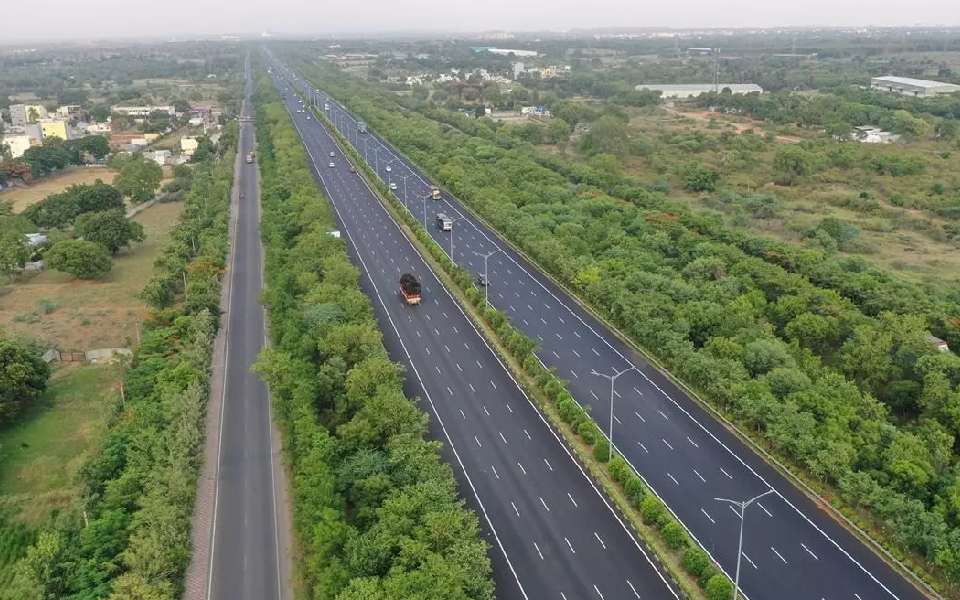
NHAI Manager Chandrashekhar said that the KPT-Nathur road would be 40 metre wide in the middle, along with an 8 metre wide service road. "The highway will go across an underpass and the vehicles travelling towards Bengaluru will take the service road. All necessary structural designs including underground sewage system has been planned in the underpass to avoid clogging", he said.
Bhuvan, a youth attending the meeting, said that it was of no use if a tree was planted in Vamanjoor for the one that was cut in Mangaluru as a tree also sheltered a vast amount of birds and insects. "Mangaluru has only 6.2% of tree cover while the actual amount essential for an urban area is 33%. So we must plan for planting more trees while trying to conserve the existing ones", he said.
Referring to the politicians' dreams to make a Singapore out of Mangaluru, environmental activist Jeeth Milan Roche reminded attendees that Singapore had 44% tree cover while Mangaluru had only 6.2%. "2 lakh people die due to air pollution every year in the country. And it’s wrong to say that trees cause accidents on the road. Trees must be saved, and caution must be exercised about pot holes and unscientific projects", he added.
Range Forest Officer (RFO) Rajesh Baligar, NHAI site engineer Naveen and plantation expert Ashika were present.
Let the Truth be known. If you read VB and like VB, please be a VB Supporter and Help us deliver the Truth to one and all.
8 children between ages of 1 and 14 dead after mass shooting in Louisiana, police say

Shreveport(US) (AP): A gunman in Louisiana killed eight children in shootings at two different homes early Sunday in the nation's deadliest mass shooting in more than two years, police in Shreveport said.
The victims ranged in age from one to about 14 years old, said Shreveport police spokesperson Chris Bordelon. A total of 10 were shot and some of the children were related to the suspect, Bordelon said.
The gunman later died after a chase with officers who fired at the suspect, Bordelon said. The suspect stole a car while leaving the scene of the shootings and was followed by police, according to Bordelon.
Police did not release the name of the suspect but did say he was an adult male. The shootings were the result of a “domestic disturbance,” Bordelon said.
Officials said they were still gathering details at the crime scenes south of downtown Shreveport — the two homes and a third location.
“This is an extensive scene unlike anything most of us have ever seen,” he said.
It was the deadliest mass shooting in the US since eight people were killed in a Chicago suburb in January 2024, according to a database maintained by The Associated Press and USA Today in partnership with Northeastern University.
At a news conference outside the residence where one of the shootings occurred, officials appeared stunned, requesting patience and prayers from the community as they sorted through multiple crime scenes.
“I just don't know what to say, my heart is just taken aback,” Shreveport Police Chief Wayne Smith said. “I cannot begin to imagine how such an event could occur.”
“This is a tragic situation — maybe the worst tragic situation we've ever had,” said Tom Arceneaux, mayor of the city in northwestern Louisiana with about 180,000 residents. “It's a terrible morning.”
Louisiana State Police say their detectives have been asked by Shreveport police to investigate. In a statement, state police say no officers were harmed in the shooting that involved an officer after a police pursuit into Bossier City on Sunday morning.
State police are asking anyone with pictures, video or information to share it with state police detectives.
Louisiana Gov Jeff Landry said in a statement that he and his wife were heartbroken. “We're deeply grateful to the law enforcement officers and first responders working tirelessly on the scene,” he added.