Mangaluru: City Top cop issues guidelines for new year celebrations
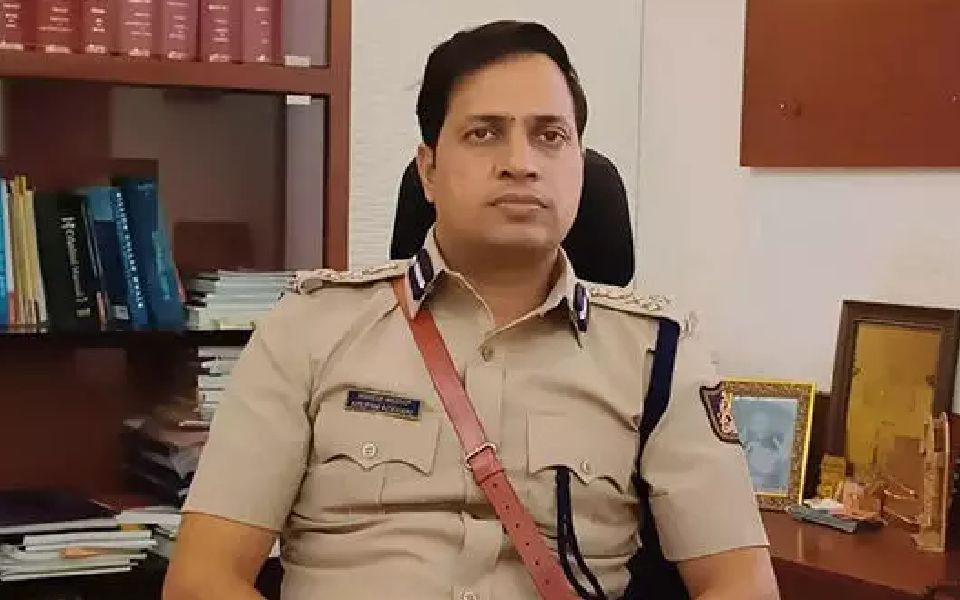
Mangaluru: Mangaluru Police Commissioner Anupam Aggarwal has issued guidelines in public interest for New Year Celebrations within the Mangaluru City Police commissionerate.
The guidelines are as follows:
-
"All hotels, restaurants, clubs, resorts and other establishments planning to organize New Year celebrations must obtain prior permission from the Mangaluru City Police Commissioner's Office. Applications must be submitted by 5 pm on December 23," the statement
-
The New Year program must be completed by 12 midnight. The program cannot be continued after that. New Year festivities without prior permission will not be allowed. Legal action will be taken against those who violate these rules. Organizers must strictly follow the rules as per the licenses and permissions obtained from the relevant departments.
-
If any COVID-19 or other health related government instructions are implemented, the organizers must strictly follow them.
-
Written permission from the Excise Department must be obtained for the sale and distribution of alcohol.
-
Smoking and drinking alcohol are strictly prohibited in public places, bus stands, parks, stadiums, railway stations and other public areas.
-
Legal action will be take cause disturbance in public places.
-
Prior permission should be obtained for using sound recording systems, loud speakers. The sound level should comply with the Noise Pollution Rules 2000 and the directions of the Supreme Court. DJ is strictly prohibited.
-
The organizers should take additional measures to prevent any mishap. Individual parking arrangements should be made.
-
The managers of hotels, clubs or special events where New Year celebrations are held should not serve alcohol to individuals below the age of 18. Minors should not be allowed to enter such events unless accompanied by their parents.
-
Obscene dances, semi-nude performances, gambling and other obscene activities are strictly prohibited.
-
Special task forces will be deployed to prevent harassment, violence or obscene activities against women in the name of festivals.
-
Disturbing caused to residences, hotels, hostels or compounds is also prohibited during this time.
-
Smoking, drinking, or indecent behavior in public spaces such as parks, bus stands, and railway stations is banned. Strict action will be taken against those disturbing public peace, engaging in harassment, or performing obscene acts.
-
A rapid task force comprising traffic police and experts has been formed to keep a watch on those who drive after drinking alcohol. This task force will be operational in all areas of Mangaluru city. Appropriate legal action will be taken against those who drive in an inebriated state.
-
Spontaneous activities, wheeling, drag racing, speeding and loud noise-producing activities are strictly prohibited. Special teams will be deployed to prevent these incidents.
-
Consumption of alcohol, obscene acts, other obscene displays in other public places or on the seashore are strictly prohibited.
-
Burning of fireworks in a manner that disturbs the peace of the public on the pretext of New Year celebrations is prohibited.
-
Organizers should coordinate necessary fire-fighting equipment, emergency medical vehicles and other security measures.
All these guidelines have been issued in the interest of public safety and law and order, the Commissioner said in a statement.
Let the Truth be known. If you read VB and like VB, please be a VB Supporter and Help us deliver the Truth to one and all.
ED searches: Karnataka CM Siddaramaiah accuses Centre of targeting Cong leaders
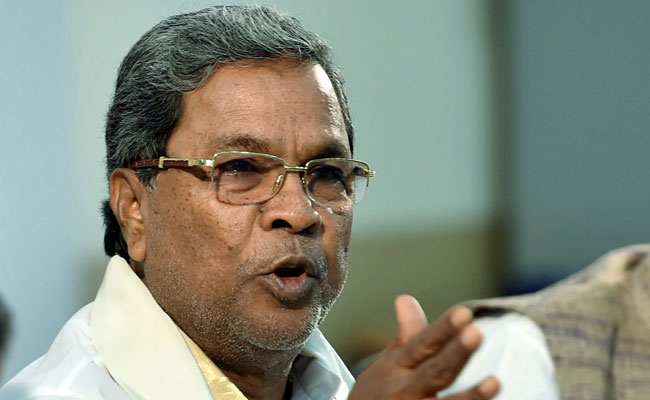
Chamarajanagara (Karnataka) (PTI): Karnataka Chief Minister Siddaramaiah on Tuesday accused the central government and its agencies of consistently targeting Congress members by using searches on their properties, and questioned why similar action is not taken against BJP leaders.
He was reacting to searches conducted by the Enforcement Directorate on Monday on several individuals, among them the sons of Karnataka Congress MLA N A Haris and the grandson of former Union Cabinet minister K Rahman Khan, in connection with a cryptocurrency-linked money laundering case.
"The central government always targets Congress leaders. Will they raid the houses of BJP leaders?" Siddaramaiah said in response to a question. More than a dozen premises in the city were searched as part of the operation carried out by the ED under the provisions of the Prevention of Money Laundering Act (PMLA).
The premises searched comprised those of Mohammed Haris Nalapad and Omar Farook Nalapad, the sons of the MLA; Aqeeb Khan, the grandson of veteran Congress leader K Rahman Khan; and an alleged crypto hacker, Srikrishna Ramesh, alias Sriki, officials said.
The money laundering case stems from Karnataka Police FIRs and charge sheets filed in a 2017 case involving the hacking of national and international websites, theft of bitcoins, and the sale of these stolen virtual digital assets (VDAs) through crypto platforms by the alleged hacker Sriki and his associates.
Mohammed Haris Nalapad, Omar Farook Nalapad, and Aqeeb Khan are alleged to be beneficiaries of the proceeds of crime generated through this crypto-linked activity, officials added.