M’lru: Activists submit memorandum to city's top cop against growing number of moral policing cases
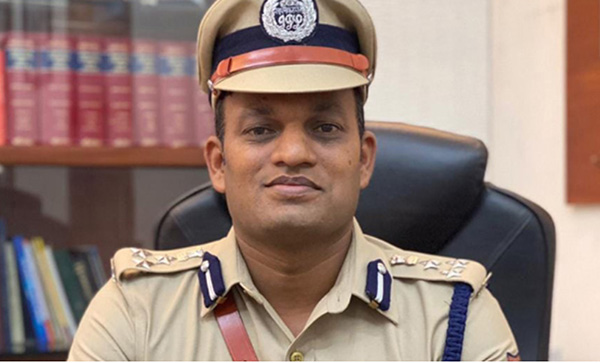
Mangaluru: Citizens Forum for Mangalore Development and the Karwane e Mohabbat Team on Monday submitted a memorandum to the city’s Commissioner of Police against the growing incidents of politically and communally motivated vigilantism and moral policing in the city and the district. Vidya Dinker and Shabeer Ahamed submitted memorandum on behalf of two NGO’s.
“In the name of preventing ‘Love Jihad’ and cattle trafficking, innocent citizens are being targeted by enforcer-goons belonging to politically motivated strong-arm outfits. What we see is a worrying daily replay of provocative statements, public shaming, incessant harassment, brutal violence, and infringement of legitimate rights of citizens. Such incidents are reported in the media, shared on social media, lead to tense situations and bring back the climate of fear that had our region in its grip in the not so distant past” the memorandum stated.
It also added that both the state government and the police department have acknowledged the fact that the district is communally sensitive and that it had been reeling under the negative impact of communalism for decades.
“There is a long history of brutal vigilantism and (im)moral policing in this region, particularly targeted at the minority communities and those who don’t conform to the purported code of conduct imagined by anti-social outfits. As a result of continuous efforts on the part of right-thinking citizens and a few district administrators and police officials, we had been able to enjoy a short phase of relative peace in the region. A resurgence of the bad old trend is unacceptable and must be curbed” the memorandum added.
“We must point out that we have brought to the notice of your predecessors time and again that the Hon’ble Supreme Court guidelines must be put in place to bring vigilantism and lynching under control. Refer to our letter of July 6th, 2019 on the matter, several follow up visits in person, your response dated September 12th, 2019, and our detailed reply of November 4th, 2019 (attached) seeking clarity on specific measures taken by your department to implement the Tehseen Poonawala Guidelines set out and concerted preventive action to ensure no instances of lynching, mob violence or cow vigilantism take place here. To this last, we have not had a written response till date, nor any indication of implementation of the Hon’ble Court’s guidelines” it further added.
“However, irrespective of the directions issued by the Hon’ble Supreme Court and through the Circular dated 03/09/2018 issued by the Director-General and Inspector General of Police, Karnataka, individuals and leaders of political parties and other outfits have not been deterred from openly advocating violence against minorities from public platforms on the pretext of cow protection. For example, on 29/06/2019, in response to an incident of cow vigilantism, a prominent political leader in the district called for cow vigilantes groups to deal with cow thieves with swords. He said (translated into English), “The stand of the police department in these cases has become questionable. They are saving the cow thieves and are harassing people who tried to stop the cow thieves. We are ready to lay down our lives for the sake of cows and for the sake of Hindutva... If the police cannot take appropriate action against them then we are ready to handle the issue. We know how to deal with these cow thieves. We know how to reply [to] them with their own swords which they use for stealing the cows”. No action has been taken against him for his statements. Speeches such as these that have been made aplenty in the past in the Dakshina Kannada region, encourage violent acts of vigilantism, not only against minorities but also against policemen. We are once again hearing more such provocative hate speech in the district” it noted.
“We now earnestly urge all the institutions of governance like the District Administration and the Police Department to take serious note of this current resurgence and come up with an immediate and effective response to curb the anti-social forces, establish rule of law and restore the civil rights of the people. Any delay and negligence on the part of the administration will only result in matters getting out of hand yet again. We hope you realize the gravity of the situation and immediately take positive steps to implement the Court's detailed directions in a sincere manner. We also seek that immediate steps be taken for identification of the groups orchestrating this lawlessness and those involved in perpetrating these incidents of (im)moral and/or communal policing, vigilantism, violence and communal hate crimes, including hate speech” the memorandum concluded.
Let the Truth be known. If you read VB and like VB, please be a VB Supporter and Help us deliver the Truth to one and all.
Delhi High Court advocate jumps to death from high-rise CP hotel

New Delhi (PTI): A 26-year-old Delhi High Court advocate died after allegedly jumping from the 15th floor of a hotel in New Delhi's Connaught Place area, police said on Monday.
The police said they were informed about the incident at The Royal Plaza hotel around 9.15 pm on Sunday. The deceased was identified as Rajesh Singh, a practising advocate at the Delhi High Court who had checked into the hotel the previous evening.
"A police team rushed to the hotel and found that the victim, identified as Rajesh Singh, a resident of Mahavir Enclave, had allegedly jumped from the 15th floor of the building," a police statement said.
"The family members of the deceased have been informed about the incident. As per their statement, no foul play is suspected in the matter," it said.
A police officer privy to the investigation said that a purported suicide note was also found, in which the advocate did not blame anyone. The police said he was staying alone in the room.
Teams from the crime department and the forensic science laboratory (FSL) were called to inspect the scene. Relevant exhibits were lifted and seized, and CCTV footage from the hotel premises was examined, the police said.
A police source said that it is suspected that the victim was depressed over some issues. Furthe