Mangaluru: Police book anti-Israeli protesters for 'unlawful assembly', contravention of orders
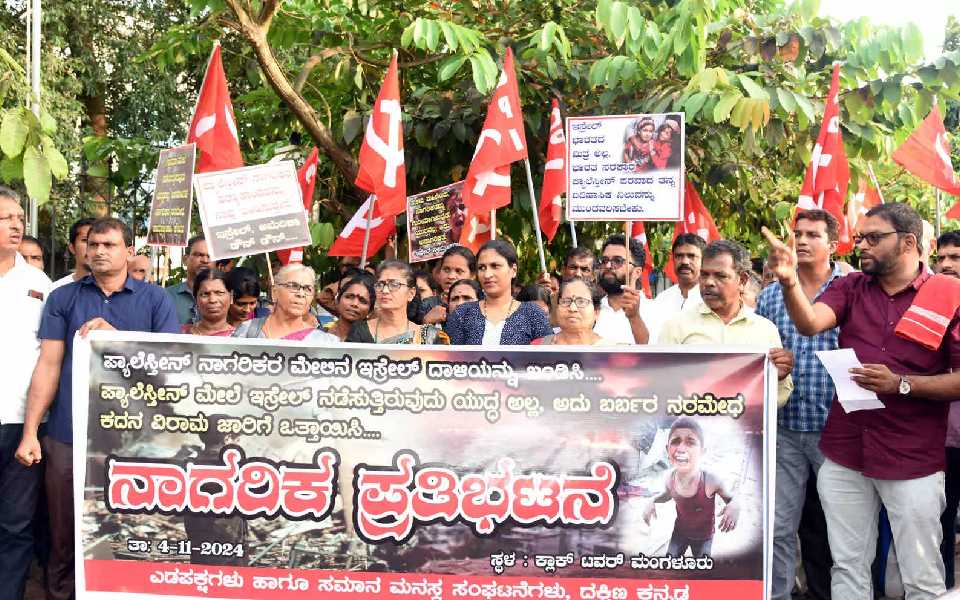
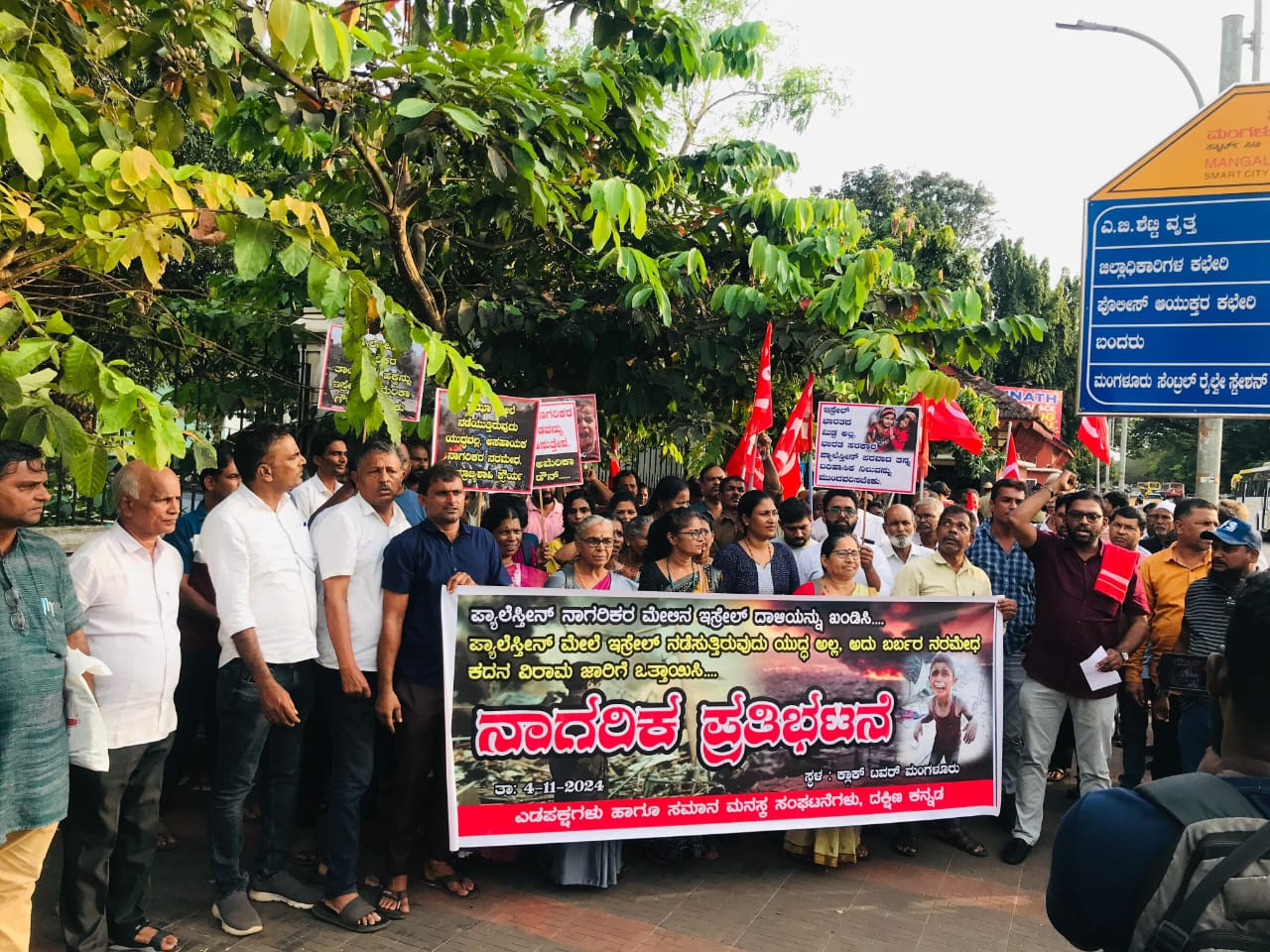
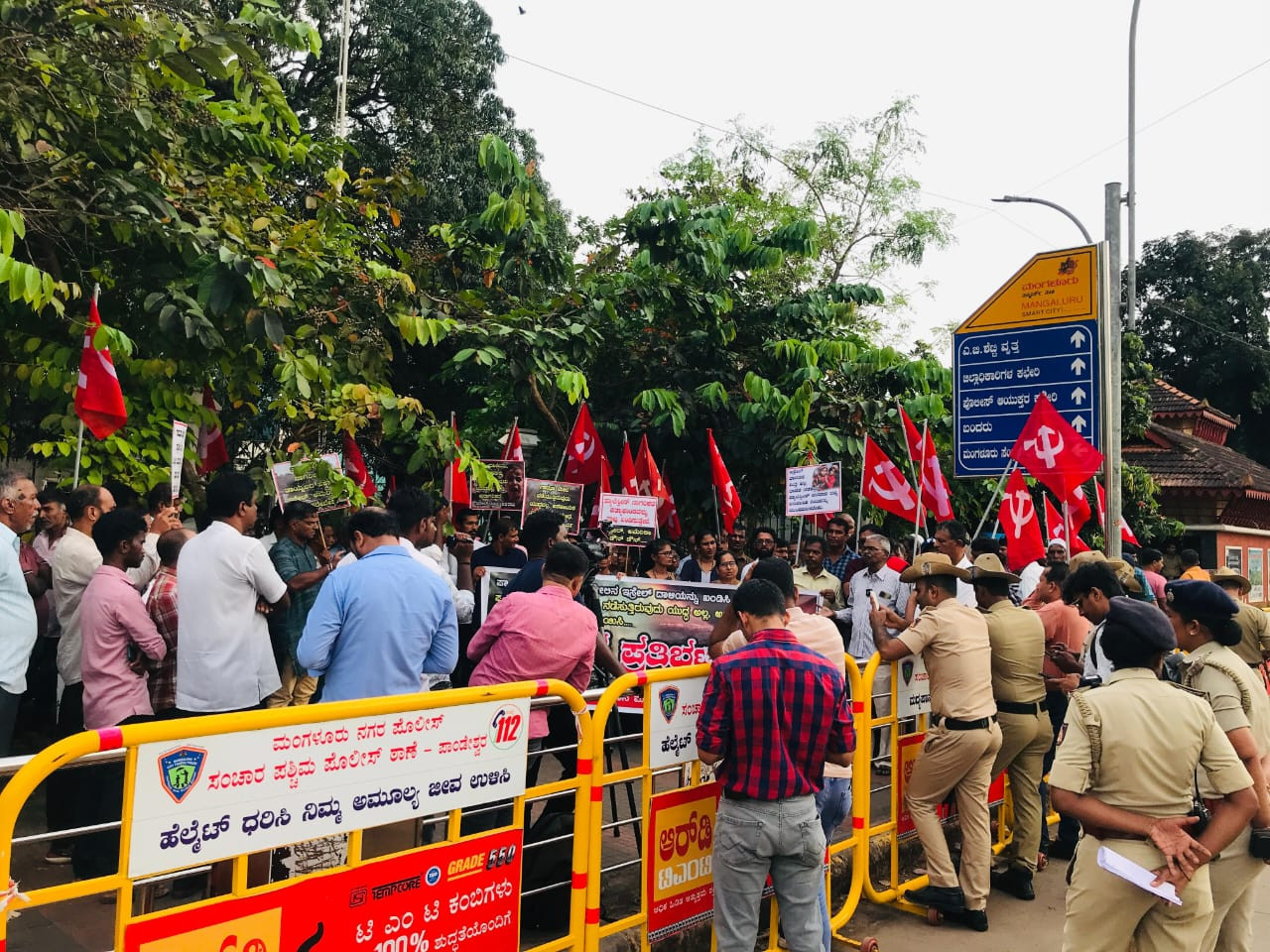
Mangaluru: An FIR had been registered against members of CPI-CPM and like-minded organizations for protesting against Israeli attacks on Palestinians near clock tower in Mangaluru city limits, a report stated on Wednesday.
On Monday, CPM-CPI and like-minded organizations had organized a protest against Israel's continued assaults on the civilians in Gaza and other parts of Palestine. Terming the attacks a genocide, the protesters had demanded a cease-fire to the year-long conflict. Condemning US assistance to the brutal conflict that has taken the lives of more than half a million people, they had urged the Indian government to continue its historical pro-Palestinian policy and stop helping Israel.
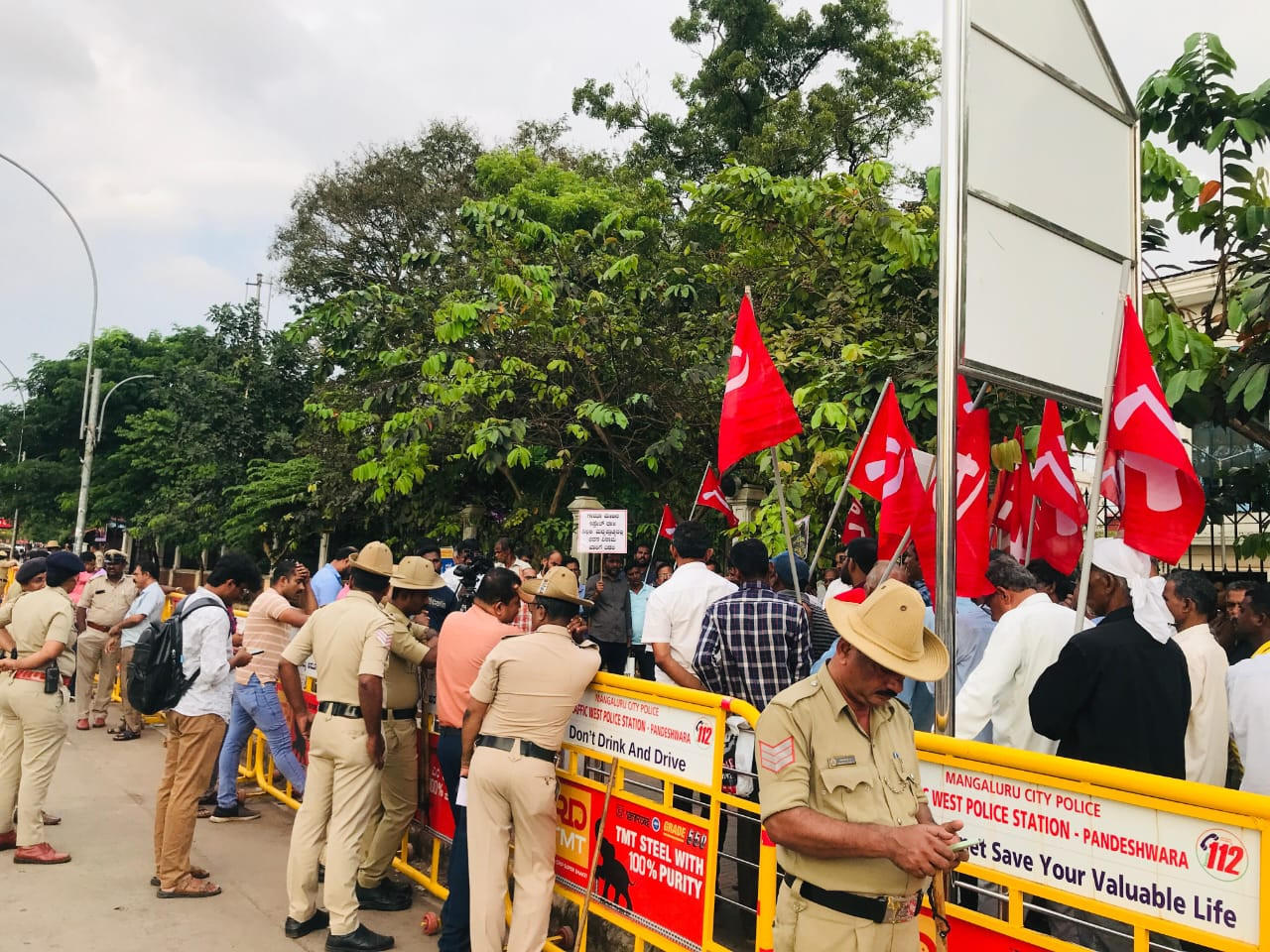
However, as the Mangaluru DCP had denied permission for both the protest and using of mike, the protest was held without using any microphones. Based on a complaint filed by ASI Praveen K, an FIR has been registered at the Mangalore South Police station against the protesters for unlawful assembly and contravention of orders.
The complaint states that the protesters had raised slogans and made speeches despite the denial of permission for the same. Along with CPI leaders Munir Katipalla and Sunil Kumar Bajal, the FIR also names Nagesh Kotian, Vasanth Achari, Yadav Shetty, Sukumar Rao, Imthiyaz, Santhosh Bajal, Yogesh Jeppinamogaru, Hayavadana Rao and Seetharama Berinje.
Responding to the FIR, CPM leader Vasanth Achari stated that every citizen of the country had a right to protest. The current action of the police had made democracy seem meaningless, he said. "Protesting against violence, wherever it might happen, is essential. Siddaramaiah led Congress government is making a mistake in such matters. This makes it clear that when the BJP declares open support to Israel, Congress is indirectly doing the same. We feel doubts regarding the existence of a Congress government in the state. When the leftist parties were engaged in protest against Israeli atrocities, the Congress government should have provided protection, and not try to silence them by registering cases. This is highly condemnable", he stated.
Let the Truth be known. If you read VB and like VB, please be a VB Supporter and Help us deliver the Truth to one and all.
Mamata betrayed Bengal's women by conspiring with parties like Cong: BJP chief
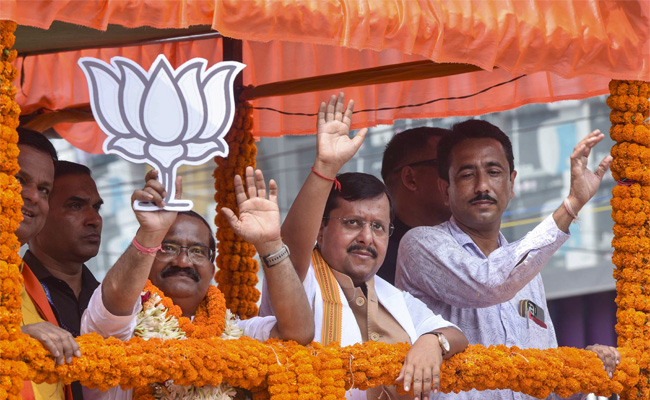
Balurghat (WB) (PTI): BJP president Nitin Nabin on Sunday blamed West Bengal Chief Minister Mamata Banerjee and opposition parties such as the Congress for the setback to the implementation of women's reservation in legislatures.
Addressing a rally in support of BJP candidate Bidyut Roy in Balurghat, Nabin said removing the TMC from power had become essential to drive out infiltrators from Bengal, prevent demographic change and safeguard national security.
"Despite being a woman, Mamata Banerjee betrayed the women of Bengal by conspiring with parties like the Congress so that the women's reservation bill could not be passed in the Lok Sabha," he alleged.
Urging women voters in the state to "teach her a lesson", he claimed that the TMC government had failed to ensure the safety and security of women, citing incidents such as those at RG Kar hospital and the medical college in Durgapur.
A Constitution Amendment Bill to implement 33 per cent reservation for women in legislatures in 2029 and increase the number of Lok Sabha seats to 816 was defeated on Friday.
Nabin also accused the chief minister of protecting infiltrators and said the BJP, if voted to power, would ensure good governance.
"Infiltrators will be driven out, and every bona fide citizen will be able to live peacefully in a secure environment if the BJP comes to power," he said.
Nabin said Prime Minister Narendra Modi had delivered on promises and prioritised national security, citing the abrogation of Article 370 and surgical strikes against Pakistan-backed terrorists.
"We need a government in Bengal which will ensure the state's well-being and security in every aspect," he said.
Appealing to voters to back the BJP, Nabin said, "If not now, then never."
"Let it be a historic victory. A new dawn will come, and after May 4, a government that will look after the aspirations of mothers, sisters, youth, the elderly and farmers will be installed in Bengal," he said.
At another election rally at Ratua in Malda district, Nabin claimed that time has come for the chief minister to “bid goodbye”.
Alleging deterioration in law and order, he said women were unsafe “from Park Street to Kamduni, and from R G Kar to Durgapur Medical College”, while there were many “unreported cases”.
He also alleged the involvement of ruling party leaders in various illegal activities.
“Wait for a few days. Members of the ‘bhaipo (nephew) syndicate’ of the TMC will be on the run, and caught one by one with legal action taken against them,” Nabin asserted.
He was referring to allegations by state BJP leaders about extortion syndicates “patronised by top TMC leaders” running into crores of rupees.
“At least one minister had been jailed, while many officials are behind the bars. Those involved in corruption would face strict action after May 4,” the BJP chief said.
Promising employment and welfare measures, Nabin said a BJP government would create job opportunities for the youth and ensure support for farmers.
He also assured the people of transparent recruitment based on merit, implementation of the Seventh Pay Commission, and direct transfer of benefits to bank accounts without “cut money” (commission).
Referring to the ‘Sabka Sath Sabka Vikas’ slogan of the Narendra Modi government, Nabin said “there will be inclusive growth involving all sections of society under the double engine government.”
“There will be no appeasement for one particular community, which caused change in the demography in several border districts of Bengal,” he said.
Nabin also took part in a programme of the ‘Balmiki Samaj’ – an outfit of backward Hindu castes – where he stressed on the need for inclusive growth.
Earlier, the BJP president led a colourful roadshow covering around 2 km in Balurghat town and adjoining areas of Dakshin Dinajpur district.