Minister Dinesh Gundu Rao visits flood-affected Adyapadi, orders survey of River Phalguni

Mangaluru: Dakshina Kannada District In-charge Minister Dinesh Gundu Rao visited the flood-affected area of Adyapadi under Kandavara Gram Panchayat administration in Bajpe on Friday morning to assess the situation.
During his visit, locals informed the minister that the annual floods in River Gurupura (Phalguni) have been severely disrupting their lives, with villages in Adyapadi and nearby areas getting inundated every year. The recurring floods have also caused extensive damage to fields and plantations.
In response to the plight of the residents, Minister Dinesh Gundu Rao directed Dakshina Kannada Deputy Commissioner Mullai Muhilan to provide immediate relief to the affected citizens. To address the issue more permanently, he called for a comprehensive survey and study of the area by experts to understand the flood situation better.
The minister emphasized the importance of experts conducting a detailed study of River Phalguni during flood conditions to gain insights into the recurring problem and devise effective solutions for the residents of Adyapadi.
Deputy Commissioner Mullai Muhilan, KPCC General Secretary Inayath Ali, and Congress leader AC Vinay Raj accompanied Minister Dinesh Gundu Rao during the visit to Adyapadi. The minister assured the locals that the government is committed to finding a long-term solution to the flooding problem in the area.
Let the Truth be known. If you read VB and like VB, please be a VB Supporter and Help us deliver the Truth to one and all.
Ordinance issued to increase number of Supreme Court judges from 34 to 38
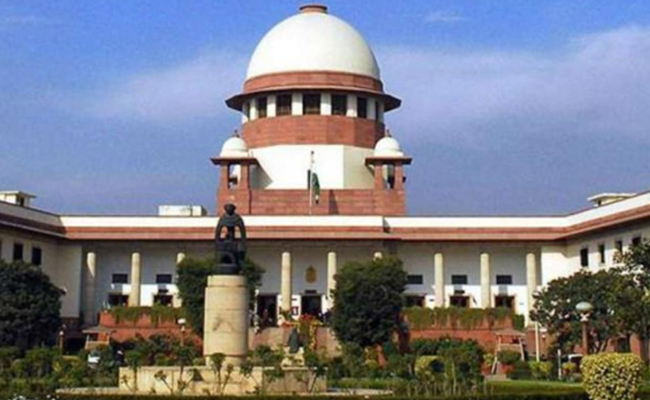
New Delhi (PTI): The government has promulgated an ordinance to increase the strength of the Supreme Court from the present 34 judges to 38, including the Chief Justice of India.
The law ministry notified the ordinance on Saturday, which amended the Supreme Court (Number of Judges) Act, 1956, to increase the sanctioned strength of the top court.
So far, the sanctioned strength of the top court was 34, including the Chief Justice of India (CJI). Now, the number of judges has been increased by four, taking the sanctioned strength to 38.
The top court will now have 37 judges, other than the CJI.
With the apex court having two vacancies at present, and the ordinance coming into force immediately, the Supreme Court Collegium will now have to recommend six names for appointment as judges in the top court.
A bill will be brought in the Monsoon Session of Parliament to convert the ordinance – an executive order – into a law passed by Parliament.
The Union Cabinet had cleared a draft bill on May 5 to increase the number of apex court judges.
The strength of the Supreme Court was last increased from 30 to 33 (excluding the CJI) in 2019.
The Supreme Court (Number of Judges) Act, as originally enacted in 1956, put the maximum number of judges (excluding the CJI) at 10.
This number was increased to 13 by the Supreme Court (Number of Judges), Amendment Act, 1960, and to 17 by another amendment to the law.
The Supreme Court (Number of Judges) Amendment Act, 1986, augmented the strength of judges from 17 to 25, excluding the CJI.
A fresh amendment in 2009 further increased the strength from 25 to 30.
Article 124(3) of the Constitution lists the qualifications required to become a Supreme Court judge.
An Indian citizen who has either served as a high court judge for at least five years, or as an advocate for 10 years, or is a distinguished jurist, can be appointed to the top court.
The strength of the Supreme Court is increased based on the recommendations of the CJI, who writes to the Union law minister. After consulting the finance ministry, the Department of Justice under the law ministry moves the Cabinet with a draft bill.