New twist to Malpe fishermen missing case?
Phones of two missing fishermen rang!: Police denied news
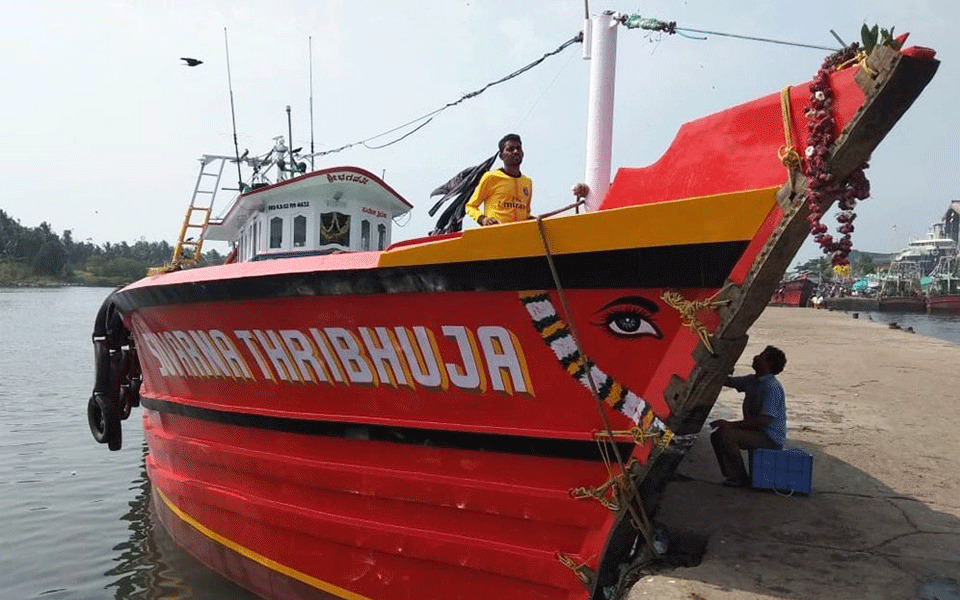
Udupi, Jan 31: As a ray of hope, it is said that the mobile phones of two fishermen among seven who were missing in the sea and disconnected from the outside world while fishing in the deep sea, rang twice, but when tried again, they were not reachable. It was almost 45 days that the fishermen were missing, but the phone ringing triggered hope among their family members. It was not once, the phones rang twice.
But the police denied such development. They said that there was not technical evidence to prove it. They have already verified it and found it was a fake news.
When Malpe Fishermen Association secretary Gopal RK, he said that they have also got such message, but it was not justified. Everything was rumour. So they could not confirm it, he said.
According to a report from Uttara Kannada, daughter of Lakshman of Kumta called his father over mobile on Wednesday at 7.30 pm and then the phone rang. When she called once again, it was not reachable. " I only called Ravi Manley alias Pandu of Bhatkal. Then it was ringing.
Later I got the message that the incoming calls are restricted" said Pandu Mogera, father-in-law of Harish who is also missing. "I tried to call the same number on Thursday morning at 8 and it was ringing. We have brought this into the notice of Karwar DySP, Coast Guard and Uttara Kannada fishermen leaders", he said.
Protest within week
We have warned union minister Ananth Kumar Hegde that we will start our protest if the missing fishermen were not traced by Jan 26. No one has taken the missing of seven fishermen seriously. Condemning this negligent attitude, fishermen in Dakshina Kannada and Uttara Kannada districts would intensify their protest, Pandu Mogera said.
Let the Truth be known. If you read VB and like VB, please be a VB Supporter and Help us deliver the Truth to one and all.
Udhayanidhi accuses BJP of not releasing funds for TN
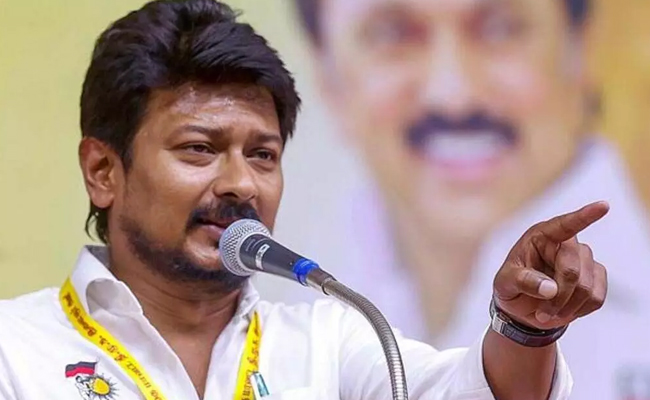
Gobichettipalayam (PTI): Tamil Nadu deputy chief minister Udhayanidhi Stalin on Saturday charged the BJP government at the Centre with not releasing funds to the state and accused it of "snatching" TN's rights.
Addressing a poll rally at Gobichettipalayam in the western Erode district, the DMK youth wing chief claimed the Centre has not released funds to the tune of Rs 3,000 crore for education.
"They (union government) have snatched all our rights," he charged.
With regard to the Centre's proposal for delimitation, he said chief minister M K Stalin was the first person in the country to raise the voice against the union government's move. He claimed that it was a "huge victory" for the INDIA alliance, as the bill was defeated for lack of majority after the opposition voted against it in the Lok Sabha.
Listing out various welfare measures implemented by the DMK government, he said the existing "Kalaignar Magalir Urimai Thogai" (monthly financial assistance for women) will be doubled to Rs 2,000 if DMK was voted to power again.
The deputy chief minister charged that the BJP and AIADMK have tried to stall it by moving the court. "At present more than 1.3 crore women have benefited from the scheme", he said.
"Similarly, the breakfast scheme for the government school students will be extended till Class VIII", he said adding "more than 35 lakh college students across the state will be getting free laptops once the DMK government is formed".
Udhayanidhi also pointed out at the "Illatharasi" poll promise, providing Rs 8,000 worth of coupons to non-income tax paying women where they could buy or replace any household appliances of their choice.
Elections to 234 Assembly seats in Tamil Nadu will be held on April 23 and the results declared on May 4 following counting of polled votes.