PFI Day, Unity March held at Ullal

Ullal: “The BJP government at the centre has surrendered to the ideology of the RSS. The BJP government is looking at us as its enemy,” PFI National General Secretary Anees Ahmed has said. He was addressing a huge public gathering at the Ullala’s Ombathukere organised by Popular Front of India to mark PFI Day and Unity March.
He said PFI is not a small child and doesn’t need any lessons from RSS. Anees said, “Sometimes leaders who say they are secular also make unnecessary comments.”
A large number of Hindus in India are opposed to RSS ideologies, he said.
He said the PFI is proud of its nation. “One must understand who the real traitors are before declaring anyone anti-national.
“Amit Shah's relationship with Modi is not in good terms. They are not eligible to give people their legal rights. Their aim is to create disturbance within societies. The PFI would never bow to their ideologies,” Anees hit out at BJP.
Speaking on the occasion, Shafi Bellary, said the PFI Day was a day of exploited communities.
He said, “The country is under the dictatorship of Hindutva and fascism.
Out of fear, the fascist forces did not allow PFI Day to be held in Jamakhandi, he said.
SDPI State Committee member Ananda Mittabile spoke. PFI District President Ijaz Ahmed greeted and addressed the gathering.
The Unity March was held in the afternoon. PFI President Yasir Hassan presided over the event. Shafi Ballare, Ayyub, Majeed Tumbe, Akram Hassan were the chief guests.
The Unity March rally was held from Abbakka Circle. Safwan was in charge of command. PFI activists attended the Unity March event. Police force was present everywhere.


Let the Truth be known. If you read VB and like VB, please be a VB Supporter and Help us deliver the Truth to one and all.
Ordinance issued to increase number of Supreme Court judges from 34 to 38
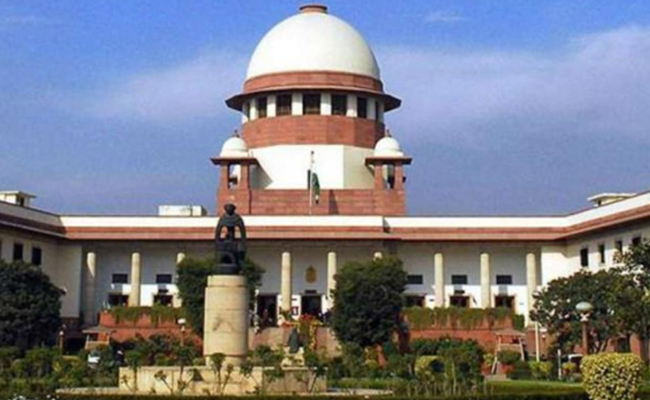
New Delhi (PTI): The government has promulgated an ordinance to increase the strength of the Supreme Court from the present 34 judges to 38, including the Chief Justice of India.
The law ministry notified the ordinance on Saturday, which amended the Supreme Court (Number of Judges) Act, 1956, to increase the sanctioned strength of the top court.
So far, the sanctioned strength of the top court was 34, including the Chief Justice of India (CJI). Now, the number of judges has been increased by four, taking the sanctioned strength to 38.
The top court will now have 37 judges, other than the CJI.
With the apex court having two vacancies at present, and the ordinance coming into force immediately, the Supreme Court Collegium will now have to recommend six names for appointment as judges in the top court.
A bill will be brought in the Monsoon Session of Parliament to convert the ordinance – an executive order – into a law passed by Parliament.
The Union Cabinet had cleared a draft bill on May 5 to increase the number of apex court judges.
The strength of the Supreme Court was last increased from 30 to 33 (excluding the CJI) in 2019.
The Supreme Court (Number of Judges) Act, as originally enacted in 1956, put the maximum number of judges (excluding the CJI) at 10.
This number was increased to 13 by the Supreme Court (Number of Judges), Amendment Act, 1960, and to 17 by another amendment to the law.
The Supreme Court (Number of Judges) Amendment Act, 1986, augmented the strength of judges from 17 to 25, excluding the CJI.
A fresh amendment in 2009 further increased the strength from 25 to 30.
Article 124(3) of the Constitution lists the qualifications required to become a Supreme Court judge.
An Indian citizen who has either served as a high court judge for at least five years, or as an advocate for 10 years, or is a distinguished jurist, can be appointed to the top court.
The strength of the Supreme Court is increased based on the recommendations of the CJI, who writes to the Union law minister. After consulting the finance ministry, the Department of Justice under the law ministry moves the Cabinet with a draft bill.