Political leaders from South were deprived of opportunities by Hindi politics, claims Kumaraswamy
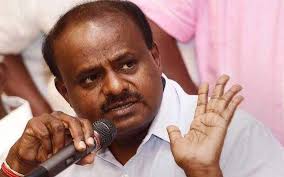
Bengaluru: Alleging that political leaders from the South were deprived of opportunities by "Hindi politics and discrimination", JD(S) leader H D Kumaraswamy on Monday said it has prevented many South Indians from becoming the Prime Minister.
Expressing anguish over CISF officials allegedly asking DMK MP Kanimozhi if "she was an Indian" as she could not speak Hindi, the former Karnataka Chief Minister accused the ruling class of ignoring the south with "disdain."
In a series of tweets, he also raised concerns over Kannadigas allegedly being denied opportunities from getting jobs as for many governments and public sector jobs, one has to write exams either in English or Hindi.
"DMK @arivalayam MP @KanimozhiDMK has been questioned "Are you an Indian?.I raise my voice against the insult meted to sister Kanimozhi.
Now, it is apt to debate how political leaders from the South were snatched of their opportunities by Hindi politics and discrimination (sic)," Kumaraswamy tweeted.
DMK MP Kanimozhi on Sunday had alleged that a CISF official asked her if "she was an Indian" as she could not speak Hindi, while the paramilitary force ordered an inquiry asserting that it is not its policy to insist upon any particular language.
Stating that Hindi politics has prevented many south Indians from becoming PM, and H D Deve Gowda, Karunanidhi and Kamaraj are prominent among them, he said, though his father Gowda was successful in breaking this barrier, there were several incidents of him being criticised and ridiculed for reasons of language.
"Hindi politics was successful in making the then PM Deve Gowda deliver his Independence Day speech from the Red Fort in Hindi.
PM Deve Gowda finally agreed only because of farmers from Bihar & UP. To this extent Hindi politics works in this country," he said in another tweet.
The former chief minister claimed he has also had similar experiences as he was a Lok Sabha member twice.
"The ruling class ignores the South with disdain. I have seen from close quarters on how Hindi politicians manoeuvre. Most of them don't respect non-Hindi politicians," he added.
Gowda was the 11th Prime Minister of India from June 1, 1996 to April 21, 1997.
Further noting that apart from politics, for many government and public sector jobs, one has to write exams either in English or Hindi and the Institute of Banking Personnel Selection (IBPS) is one of them, he claimed there was no place for Kannada in this year's notification.
Kumaraswamy alleged Kannadigas were being denied opportunities for getting jobs and this must stop.
"Centre says Hindi is one of the languages. But it is spending crores of rupees in India and abroad organising programmes to popularise Hindi. This is one of the clandestine programmes. It is possible to fight this only with prompt love and respect for each one's language," he said.
Let the Truth be known. If you read VB and like VB, please be a VB Supporter and Help us deliver the Truth to one and all.
Over 50% new faces elected to Majlis-e-Islah wa Tanzeem executive committee
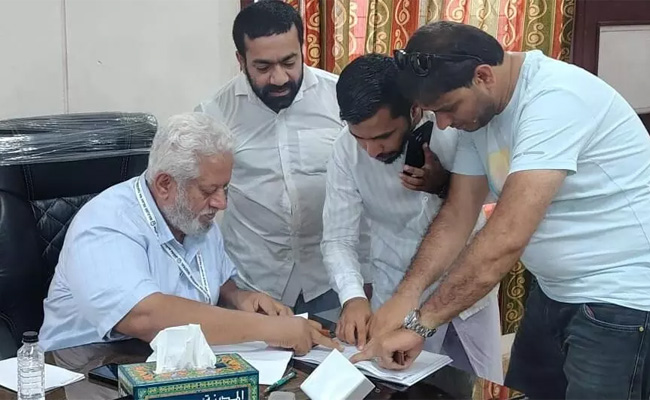
Bhatkal: More than 50 per cent of the members elected to the executive committee of Majlis-e-Islah wa Tanzeem in its triennial elections are new faces, with a significant number of young members getting an opportunity in the organisation’s executive committee.
Polling for eight constituencies in different parts of Bhatkal was held on May 12, in which 24 members were elected. In addition, 20 members were elected unopposed from seven constituencies.
The keenest contest was witnessed in Constituency No. 14, where 10 candidates were in the fray for five seats.
With this, the process of electing members to the organisation’s 132-member executive council from Bhatkal and other regions has been completed.
Election Commissioner Mohiuddin Altaf Kharoori said the induction of a large number of new members into the executive committee has brought fresh enthusiasm to the organisation.