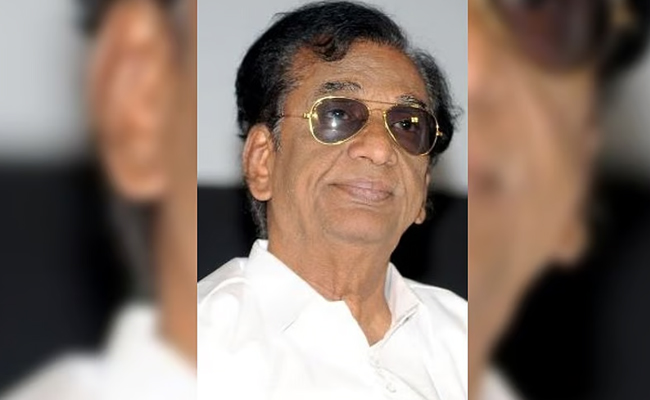
Radha Krishna Rao: An exemplary teacher bids adieu
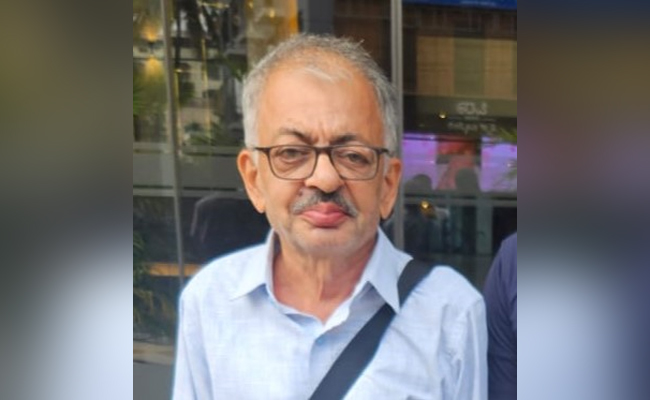
It’s hard to believe that Radha Krishna Rao, my former teacher at Badriya PU College, is no more. Just a few weeks ago, during a phone conversation, he had said warmly, “Make sure you drop by the next time you’re in town.” That call must have been my first conversation with him since I left PU college, likely in the early 1990s. Despite the long gap, we spoke with the comfort and familiarity of close friends. I even pulled his leg a bit - calling him out for being the kind of teacher who could control an entire class with just a stern look.
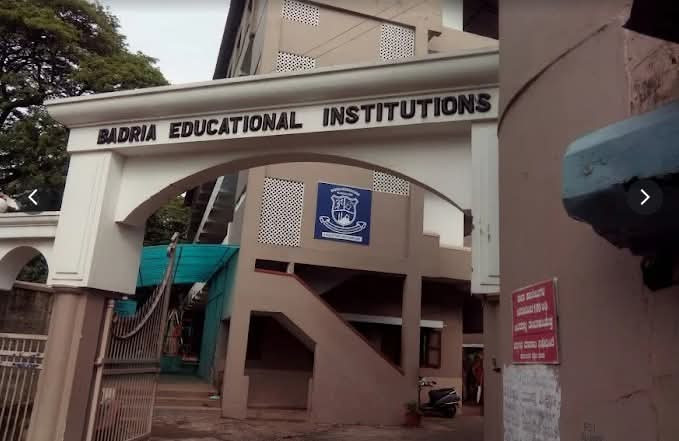
Late Rao dedicated most, if not all, of his professional life to teaching accountancy at Badriya College, shaping it into an institution of academic repute. He had a unique style - he could assess students’ understanding quickly and explain even complex concepts in simple, relatable terms. Teaching at Badriya wasn’t easy either; the college was often seen as a last resort for students who couldn't get seats elsewhere. Yet, Rao sir and his colleagues patiently guided these students, year after year, delivering impressive academic results.
Thousands of students who learned accountancy from him have gone on to build successful careers in India and abroad. Particularly in the coastal Karnataka Muslim community, which has seen a remarkable educational surge in recent decades, the role of selfless teachers like Rao sir cannot be overstated. With his talent and credentials, he could easily have joined any elite institution. But he chose instead to dedicate his life to shaping the future of a community historically marginalised in terms of education, economy and opportunity. That is why the Muslim community in the region owes him a deep debt of gratitude.
Just last month, in what now feels like a symbol of his lasting commitment to education, Rao Sir visited the new NEET coaching facility being launched by Shepherd Education Trust in partnership with Bidar Shaheen, right here in Mangaluru. A friend had shared a photo of that visit in a group of Badria alumni, and thanks to that, I ended up having an unexpected chat with sir. He sounded tired. “What can I say, my friend? I’ve crossed 65. I have BP, diabetes... all of it. The kids are all away. We’ve sold our house in Mangalore and moved to Udupi. It’s just me and my wife now,” he said. There was a quiet ache in his voice. Trying to lighten the moment, I joked, “Oh come on, Sir! You sound just fine. Still young! Go enjoy a second honeymoon!”
That conversation left me determined to meet him during my next visit home. But tragically, just a week later, I received a forwarded message: “Rao sir’s in the ICU at TMA Pai Hospital, on a ventilator.” And within days, he left this world - leaving behind not only a grieving family, but thousands of students who owe their foundations to him.
It gives me some comfort that, even after all these years, I got the chance to speak to Rao sir again - if only over the phone. But the regret of not meeting him in person will stay with me for a long time.
In his passing, Badriya College has lost one more link in its chain of idealistic, committed educators. Among them, Rao sir stood out - not just as an excellent teacher, but as one of the foundational figures who helped build the institution’s reputation, especially during the 1980s under the visionary leadership of Prof Abdul Qadir.
It’s only fitting that the college's current management and alumni community consider establishing a lasting memorial for Radha Krishna Rao on campus - so future generations remember and honour the man who gave so much, so quietly, for their success.
Let the Truth be known. If you read VB and like VB, please be a VB Supporter and Help us deliver the Truth to one and all.
Ordinance issued to increase number of Supreme Court judges from 34 to 38
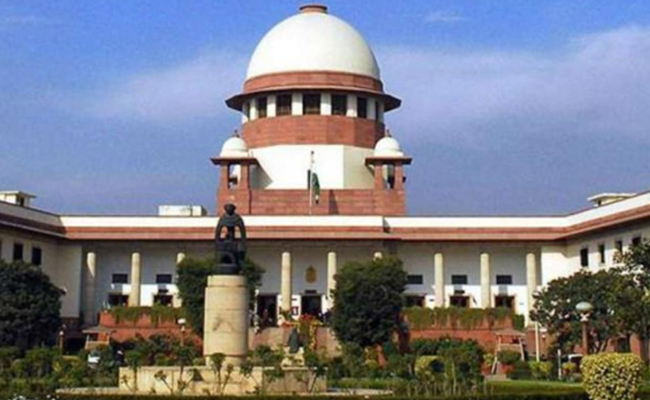
New Delhi (PTI): The government has promulgated an ordinance to increase the strength of the Supreme Court from the present 34 judges to 38, including the Chief Justice of India.
The law ministry notified the ordinance on Saturday, which amended the Supreme Court (Number of Judges) Act, 1956, to increase the sanctioned strength of the top court.
So far, the sanctioned strength of the top court was 34, including the Chief Justice of India (CJI). Now, the number of judges has been increased by four, taking the sanctioned strength to 38.
The top court will now have 37 judges, other than the CJI.
With the apex court having two vacancies at present, and the ordinance coming into force immediately, the Supreme Court Collegium will now have to recommend six names for appointment as judges in the top court.
A bill will be brought in the Monsoon Session of Parliament to convert the ordinance – an executive order – into a law passed by Parliament.
The Union Cabinet had cleared a draft bill on May 5 to increase the number of apex court judges.
The strength of the Supreme Court was last increased from 30 to 33 (excluding the CJI) in 2019.
The Supreme Court (Number of Judges) Act, as originally enacted in 1956, put the maximum number of judges (excluding the CJI) at 10.
This number was increased to 13 by the Supreme Court (Number of Judges), Amendment Act, 1960, and to 17 by another amendment to the law.
The Supreme Court (Number of Judges) Amendment Act, 1986, augmented the strength of judges from 17 to 25, excluding the CJI.
A fresh amendment in 2009 further increased the strength from 25 to 30.
Article 124(3) of the Constitution lists the qualifications required to become a Supreme Court judge.
An Indian citizen who has either served as a high court judge for at least five years, or as an advocate for 10 years, or is a distinguished jurist, can be appointed to the top court.
The strength of the Supreme Court is increased based on the recommendations of the CJI, who writes to the Union law minister. After consulting the finance ministry, the Department of Justice under the law ministry moves the Cabinet with a draft bill.