Ramsena State President arrested for duping man by promising post of VC at Mangaluru University
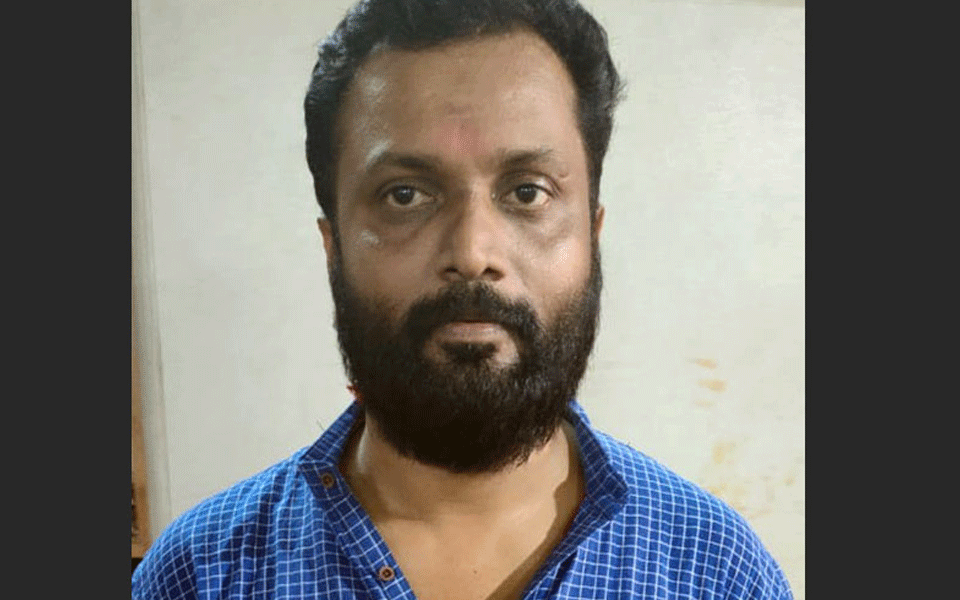
Mangaluru: Local police on Monday arrested the Ramsena State President Prasad Attavar for allegedly duping people of money by promising them the job of Vice-Chancellor at Mangalore University.
Prasad Attavar who heads the state unit of Ramsena and is also the founder of the Hindu organization had reportedly promised one person named Vivek Acharya of elevating him to the position of Vice-Chancellor at the Mangalore University and had duped him of 17.5 lakhs rupees. A case in this regard was registered at Kankanady Police Station in the city following which he was arrested on Monday.
According to the reports, Vivek was lobbying for himself for the post of VC as he believed he was the able contender for the post at the Mangalore University where he was posted as Chemistry Professor. Taking advantage of the situation, Prasad approached him and claimed that he can elevate him as the VC of the university using his connection with the Chief Minister.
Prasad reportedly sought 15 lakh rupees as a bribe and additional 2.5 lakh rupees for miscellaneous expenses from Vivek.
Vivek filed a complaint with the police when there was no progress on the job for more than a year after he gave money to Prasad.
Prasad was an active member of Shri Ramsene and later came out of it to form his own organization Ramsena of which he was the founder and State President. The group had linked itself to BJP.
Several cases of fraud and cheating are registered against Prasad at Kankanady, Bunder, and Kadri police stations in the city. The initial investigations have also revealed that he had duped more people in similar cases and the city police commissioner has added that the case will be thoroughly investigated.
Let the Truth be known. If you read VB and like VB, please be a VB Supporter and Help us deliver the Truth to one and all.
Will continue to keep tab on development work in Bihar: Nitish to JD(U) MLAs
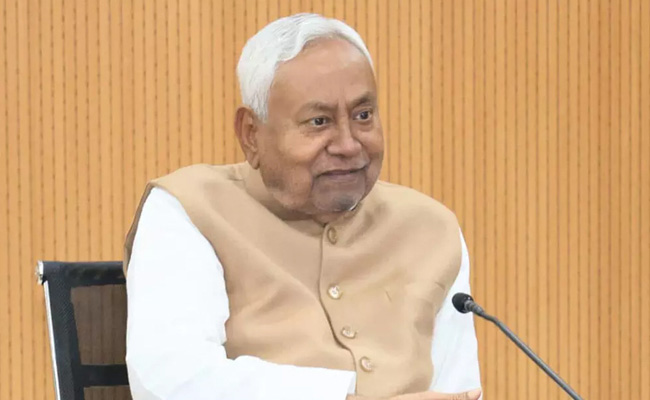
Patna (PTI): JD(U) president Nitish Kumar on Monday told party legislators that he will continue to keep a tab on the development work in Bihar despite having given up the chief minister's post a week ago.
Kumar addressed a meeting of the legislative party at 1, Anney Marg, which is the official residence of the chief minister and which the JD(U) supremo, now a Rajya Sabha MP, had occupied for nearly two decades.
Speaking to reporters after the meeting, JD(U) MLC and spokesperson Neeraj Kumar said, "Our party leader has said that except for sessions of Parliament, which would require his presence in Delhi, he will spend his maximum time in Bihar."
"Nitish Kumar told us that he will ensure that the good work done while he was in power continues under the new government, in which the JD(U) is an important partner. To keep a tab, he will tour the state in due course," Neeraj Kumar said.
The JD(U) spokesperson was asked about speculations that the meeting had been convened to decide on the role to be assigned to Nishant, the party supremo's son, who joined the JD(U) last month, but has declined to accept a ministerial berth in the Samrat Choudhary government.
"There is no confusion about the role of Nishant, who has been accepted by the party as the leader of the future. In any case, there was no discussion on him today," Neeraj Kumar said.
Nitish Kumar has been authorised by the legislators to decide on choosing the legislative party leader, he added.
Among those present at the meeting were Union minister and former JD(U) national president Rajiv Ranjan Singh 'Lalan' and Deputy Chief Ministers Vijay Kumar Chaudhary and Bijendra Prasad Yadav.
Interestingly, don turned politician Anant Kumar Singh, who represents Mokama assembly seat, claimed after the meeting that MLAs were asked by the supreme leader to try and win "200 seats in the next elections".
"Nitish Kumar ji told us that he will now be more easily available for party workers and general public. He also said that he will extensively tour the state and asked us to work hard so that the party wins 200 seats in the next elections", said Singh, who is often in news for putting his foot in the mouth.
The Bihar assembly is 243-strong and the JD(U)'s current tally is 85, four less than ally BJP, which is the single largest party.
The JD(U)'s best-ever performance was in 2010, when it had contested 142 seats and won 115 of these. It was also the highest tally for any single party since Bihar's truncation in 2000, until when Jharkhand was part of the state and assembly had 324 seats.