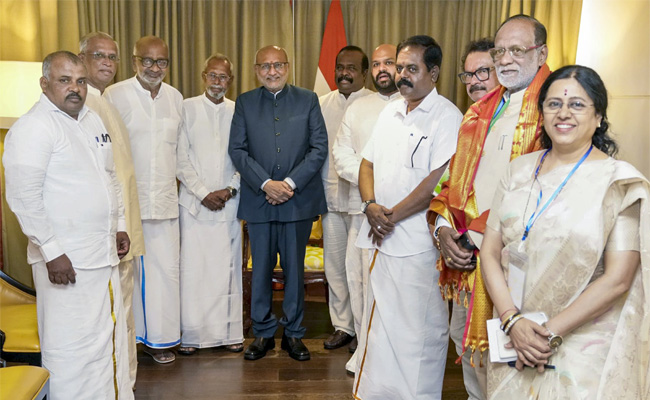
Heartfelt connections key to harmony: Panditaradhya Shivacharya Swamiji
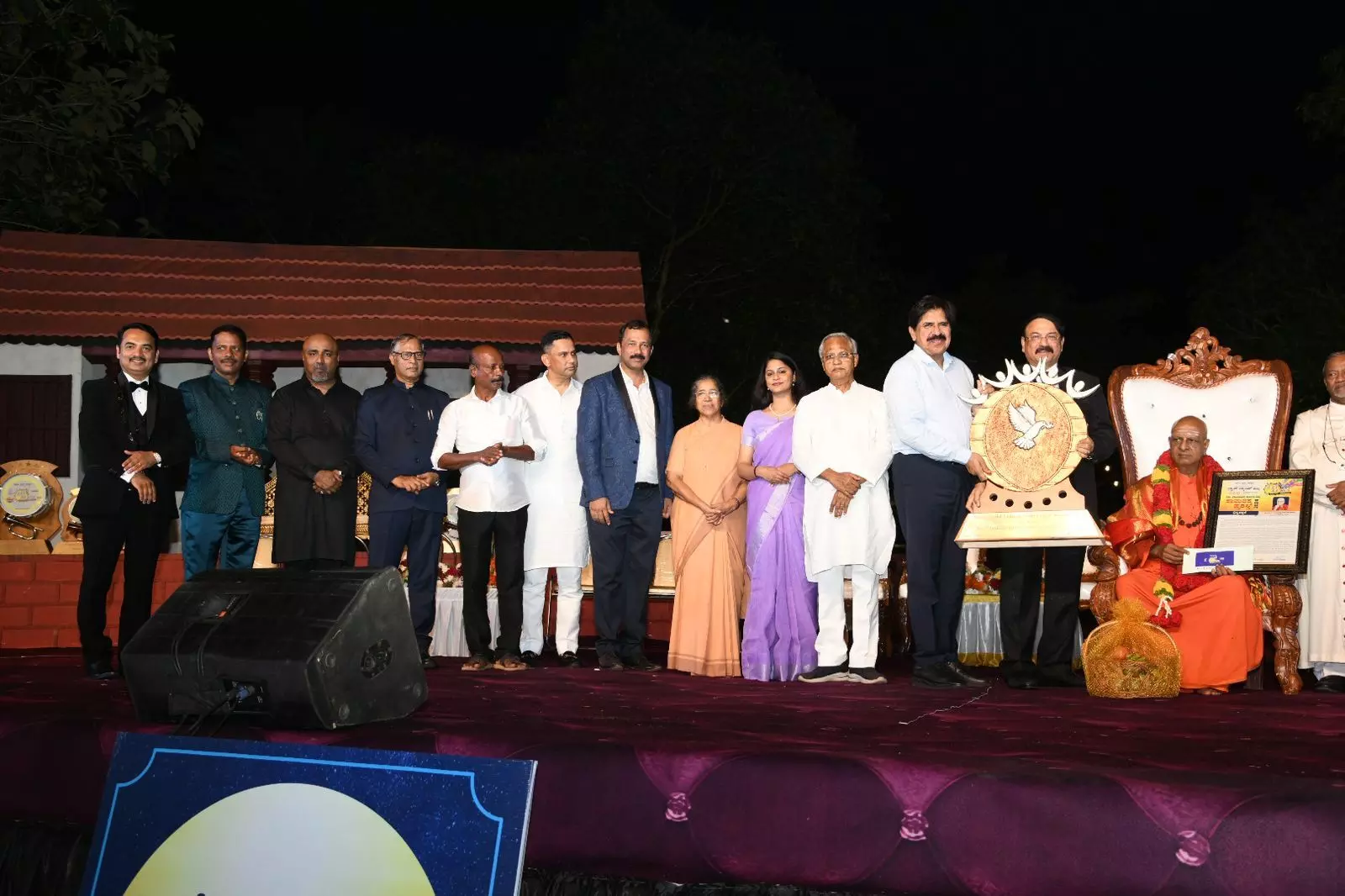
Dr. Ronald Colaco Samarasya Award ceremony
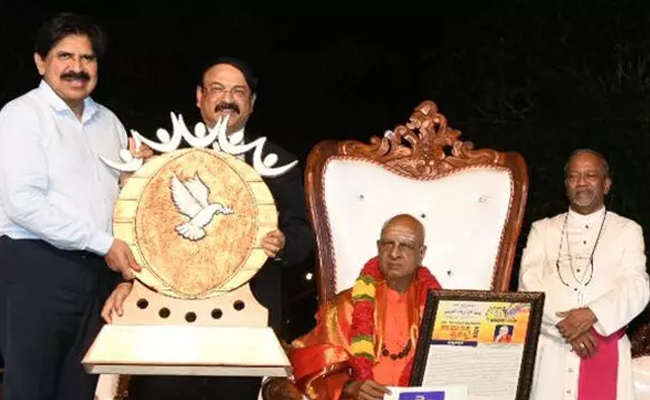
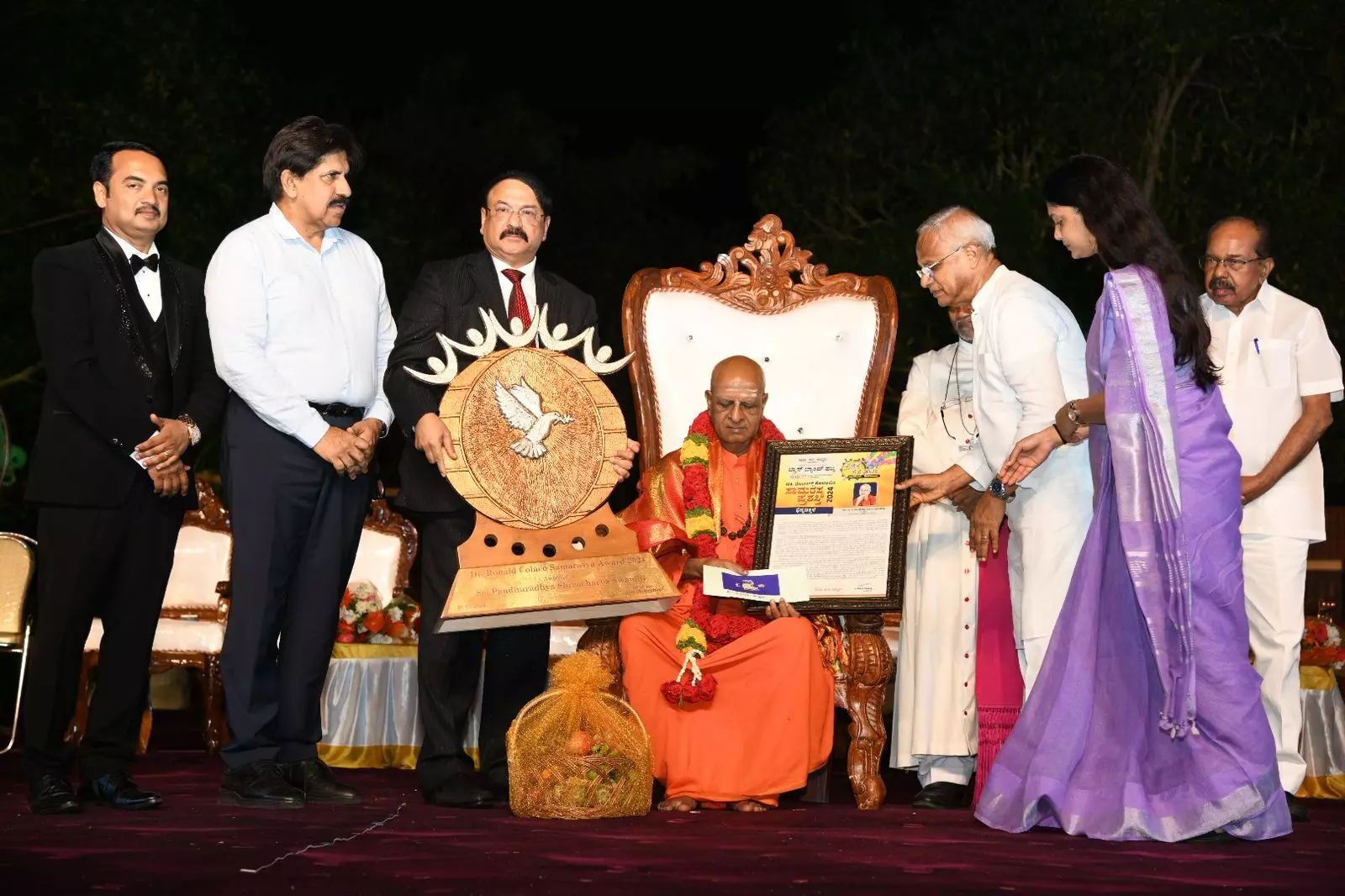
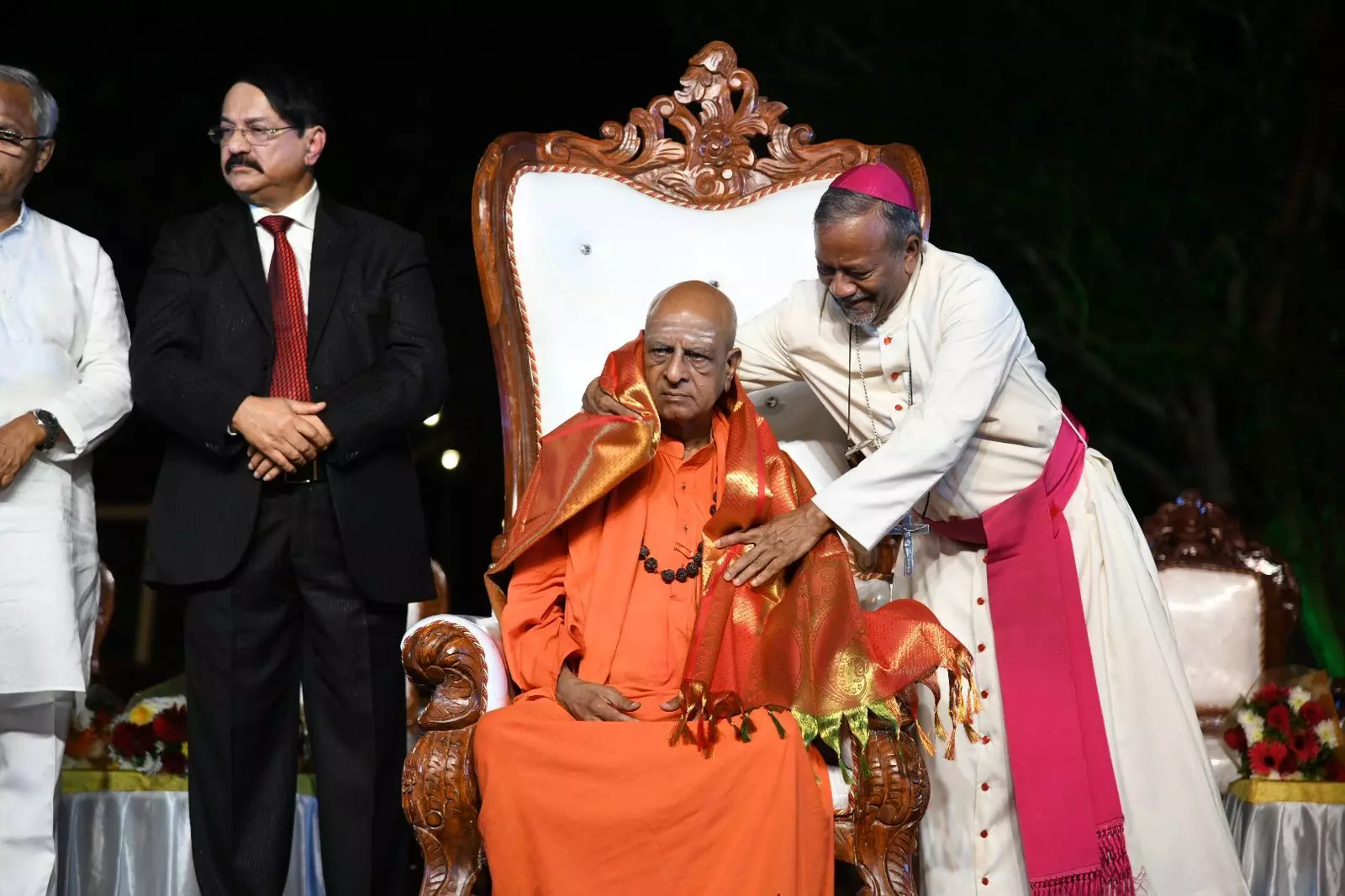
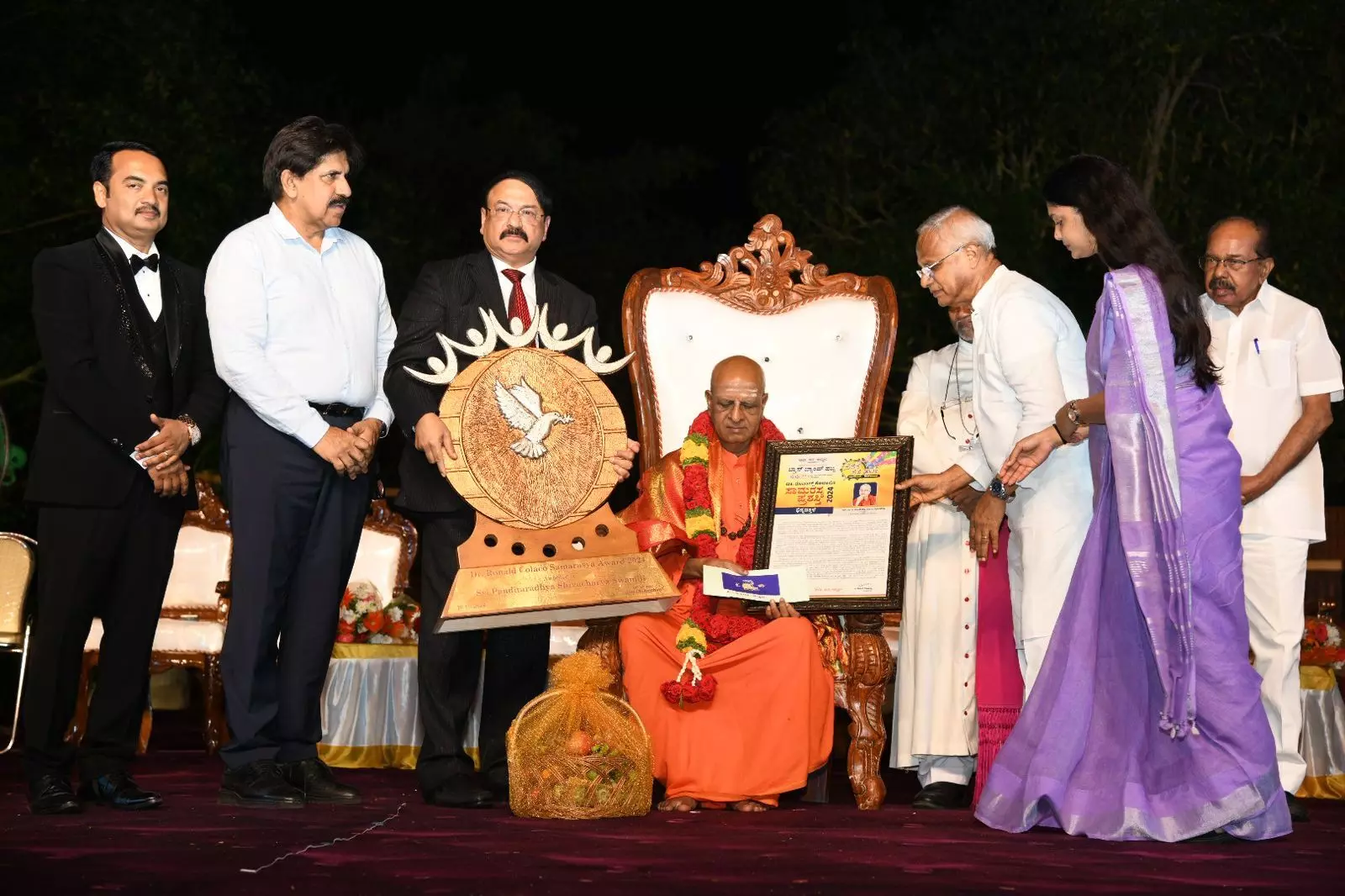
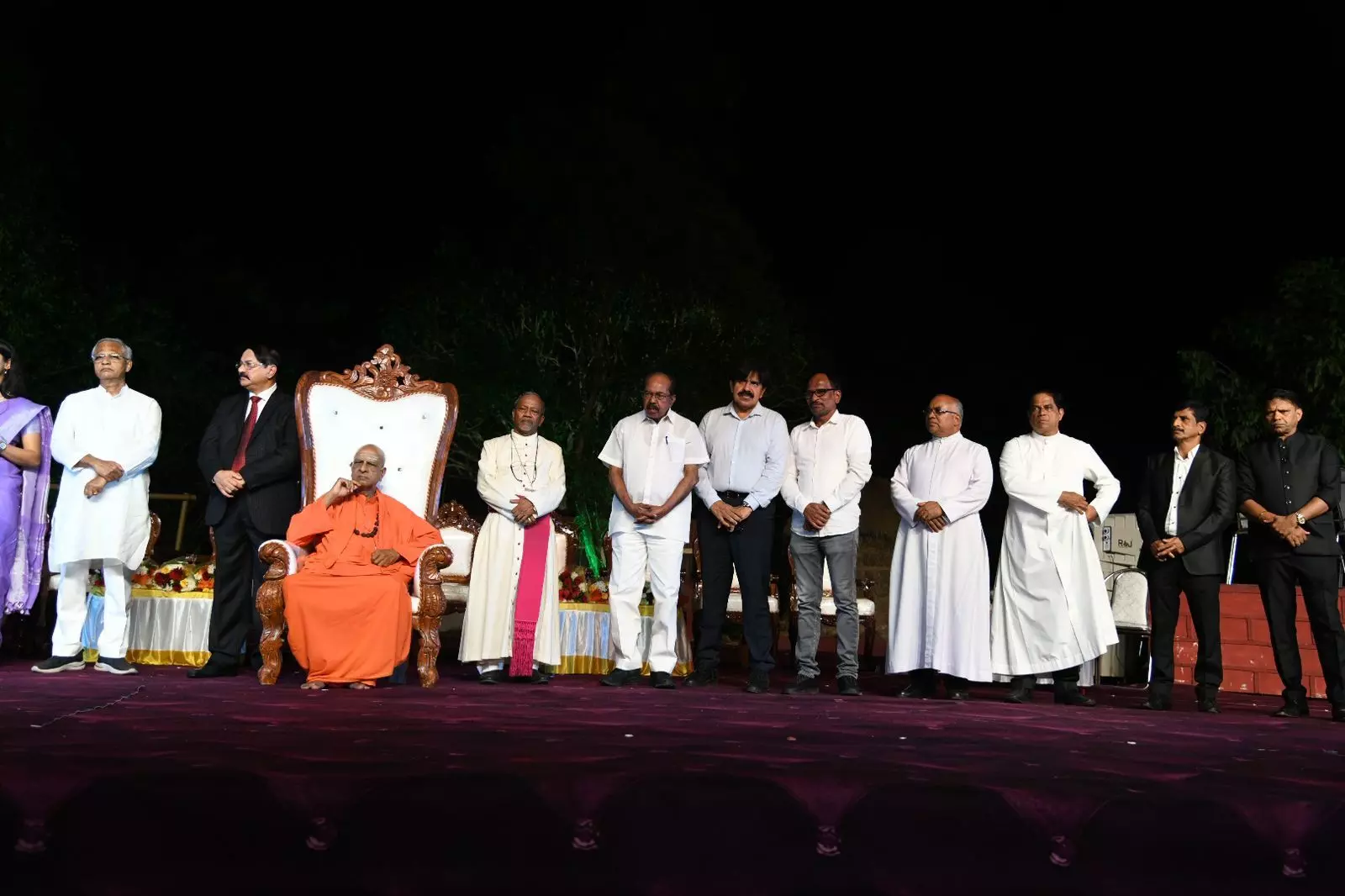
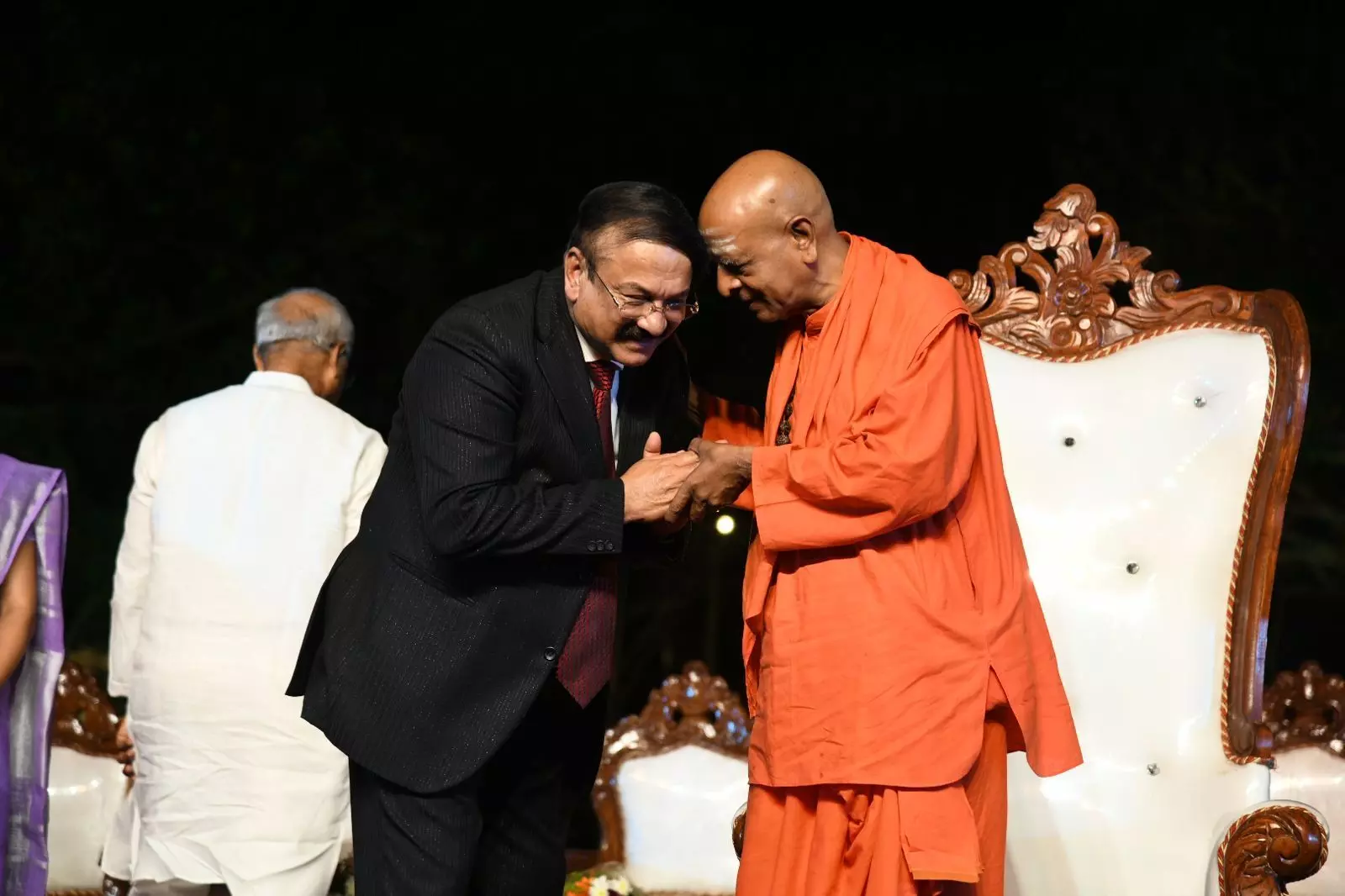
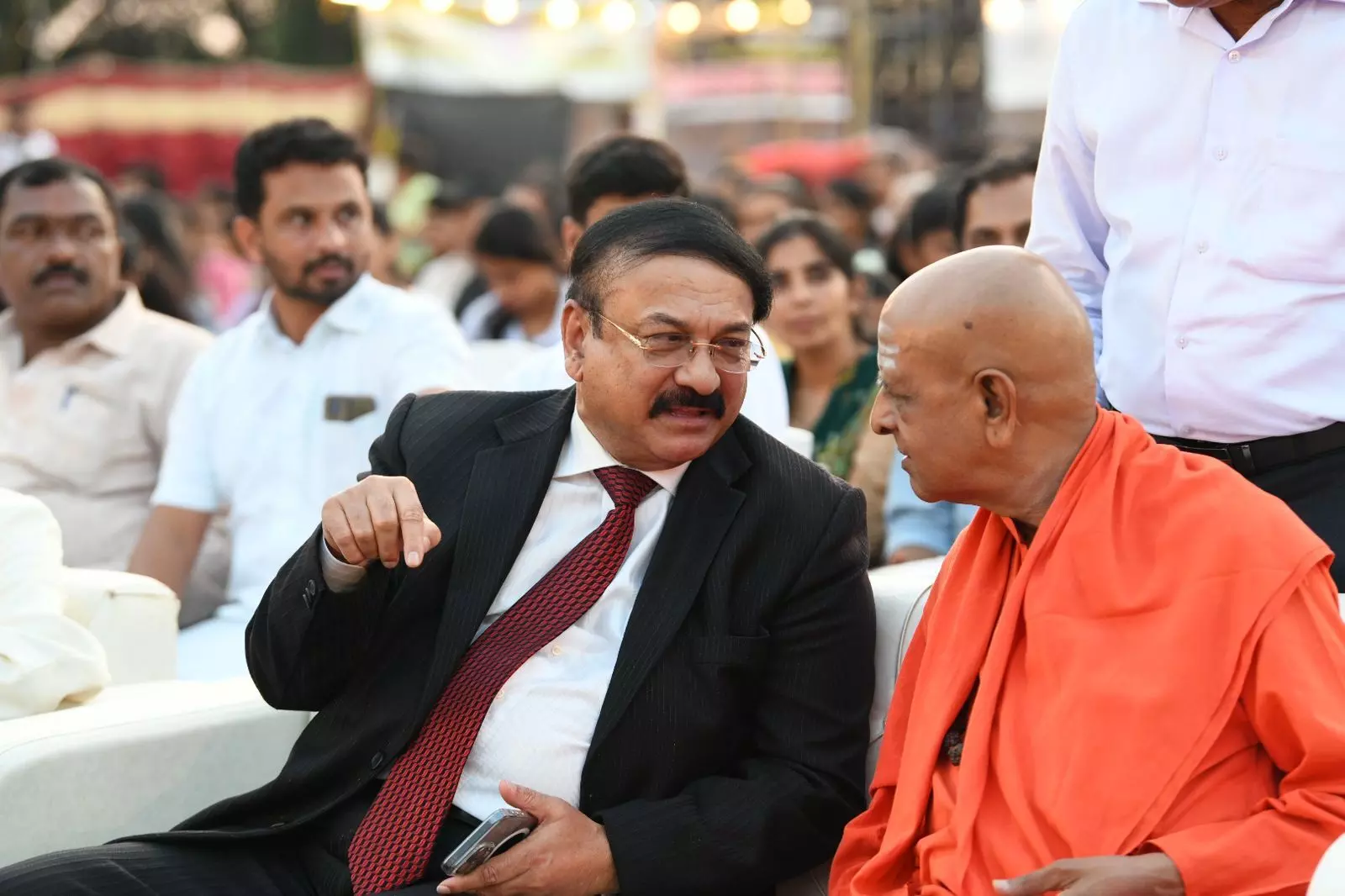
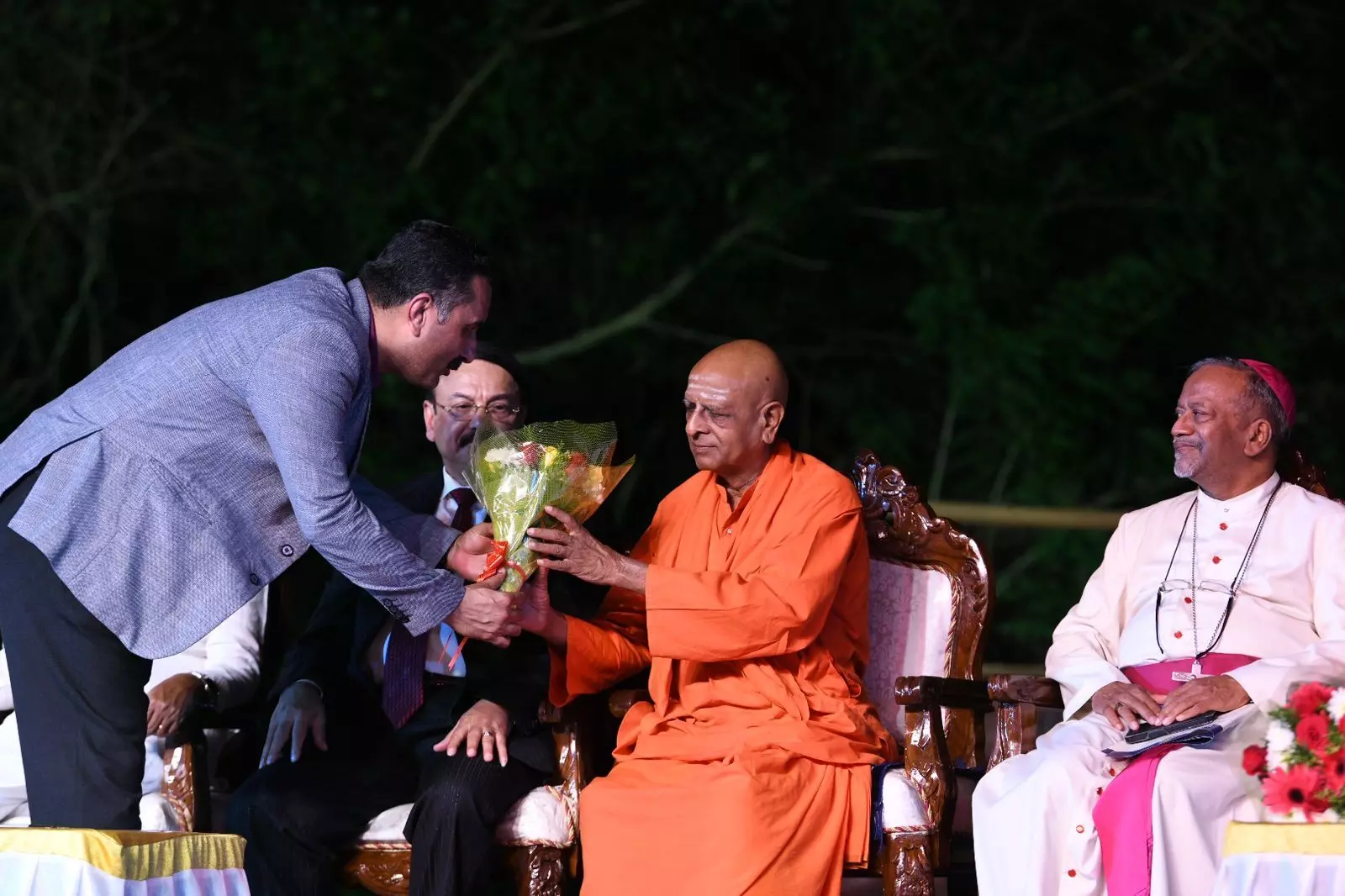
Mangalore: Harmony in society can only be nurtured through genuine connections of the heart, not mere words, emphasized Sri Panditaradhya Shivacharya Swamiji, the seer of Sri Math Sanehalli Hosadurga Chitradurga. Accepting the Dr. Ronald Colaco Harmony Award at the ‘Pepere Pepe Dum’ festival — the largest brass band event on Karnataka’s coast — organized by the ‘Ami Ani Amchim’ organization at Kelarai Church on Sunday, Swamiji stressed that true harmony blossoms from sincere relationships between people.
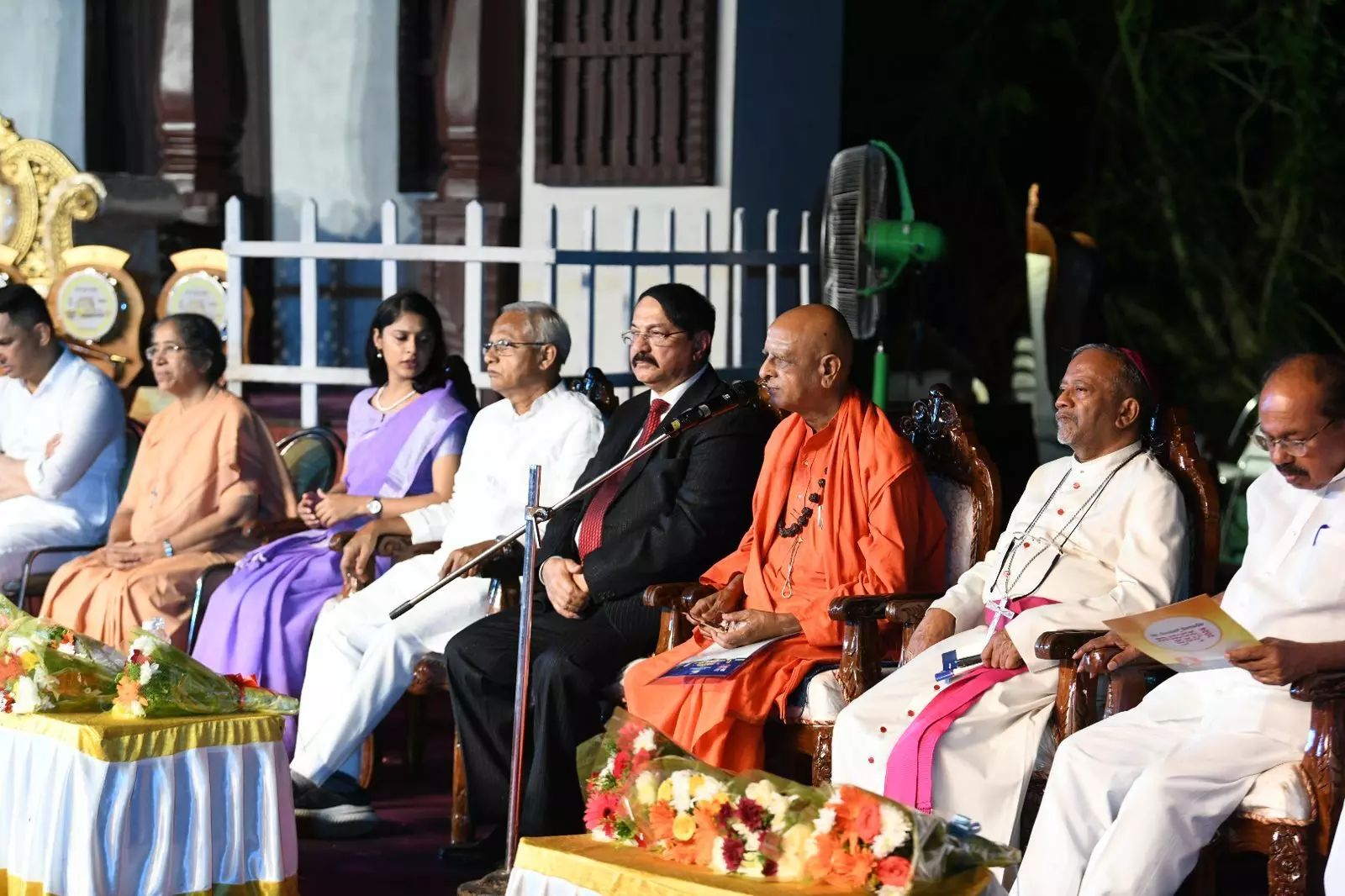
Addressing the gathering, Swamiji observed that today, across various sectors including religion, politics, society, and economy, individuals sometimes forsake ideals in pursuit of power and wealth. While caste may be an inherited identity, he said, it’s possible to transcend these limitations through achievements. “Why construct barriers among us when we share the same origins?” he questioned, adding that society must blend tradition and awareness to break down such divides. “Awareness does not require ritual, and ritual without awareness lacks purpose,” he said, pointing out that this disconnect poses a threat to societal harmony.
Swamiji also shared an anecdote underscoring the importance of prioritizing respect for parents and elders. He recalled a story of a wealthy man who spent a fortune on his dog, only to find it had wandered to an old-age home where his mother, who had once fed the dog, lived. The dog’s loyalty reflected the man’s neglect of his own mother, a poignant reminder of misplaced priorities.
Swamiji expressed concern over the growing distrust towards leaders in the religious and political realms, noting that while not all leaders have lost their way, negative influences are on the rise. “It’s vital to recognize the forces fostering harmony in society,” he urged, pointing out that organizations like ‘Ami Ani Amchim’ are dedicated to this mission.
Reflecting on an earlier visit to Mangalore, Swamiji recalled a warm welcome extended by a Muslim family, particularly young girls, and the sense of communal cooperation he witnessed at a welfare event in Bellary, where Muslim and Christian youth volunteered for traffic management and distributed offerings. “This is the essence of harmony,” he remarked.
He highlighted the importance of time awareness in one’s conduct. Those who respect and effectively utilize time, space, and awareness contribute meaningfully to society, he noted, urging all to work conscientiously to avoid self-deception and societal harm.
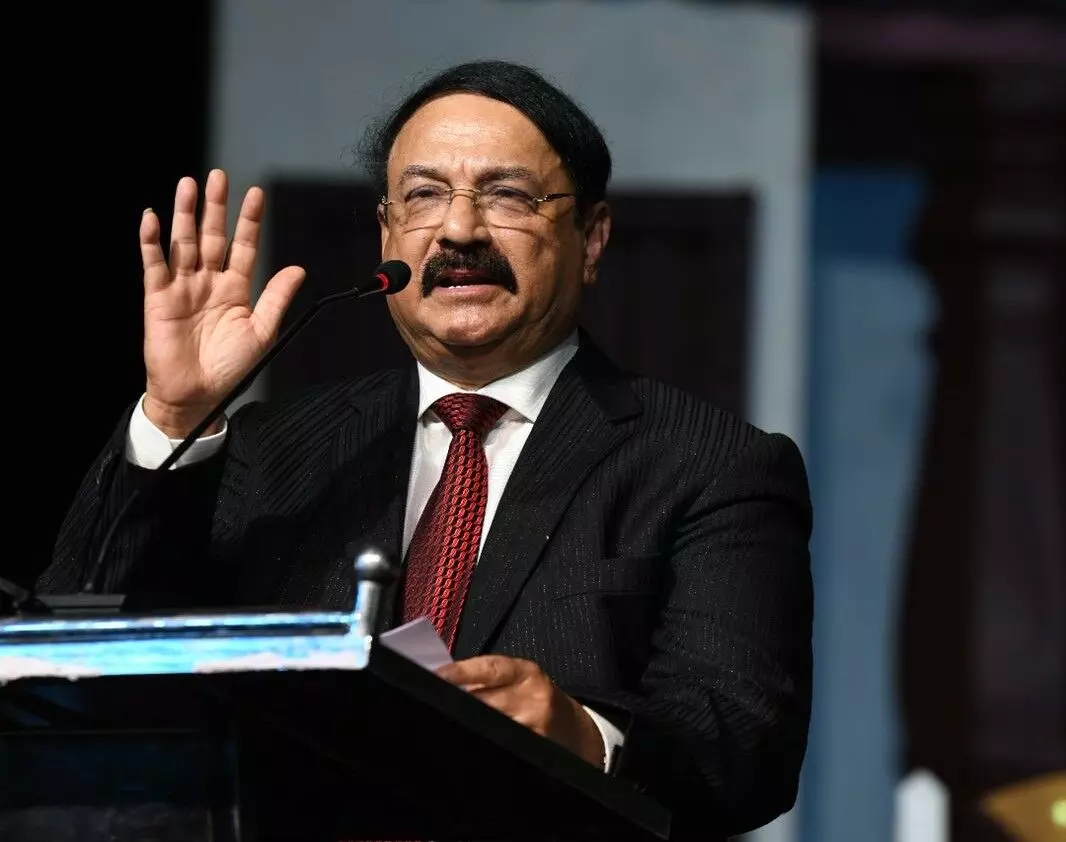
In his introductory speech, businessman and philanthropist Ronald Colaco praised the efforts of ‘Ami Ani Amchim’ in promoting harmony through diverse programs. “In today’s India, rich with diversity, our unity and harmony face unprecedented challenges,” Colaco said, adding that the selection of Panditaradhya Shivacharya Swamiji for the Harmony Award underscores his commitment to fostering societal peace. He urged politicians to reflect on their actions, especially when they disrupt social unity.
Colaco also lauded the festival’s role in reviving brass bands, a cherished but fading art, alongside the award ceremony. He emphasized that harmony is essential to sustain economic growth, especially in India’s culturally varied landscape, where a range of traditions and attire reflect the country’s diversity. Self-centered actions by certain political figures have harmed social harmony, he said, underscoring that unity would accelerate economic progress.
Panditaradhya Swamiji’s contributions toward peace and harmony were further recognized, with former Chief Minister Dr. M. Veerappa Moily extending his best wishes. Dr. Peter Machado, Archbishop of Bangalore, presided over the ceremony.
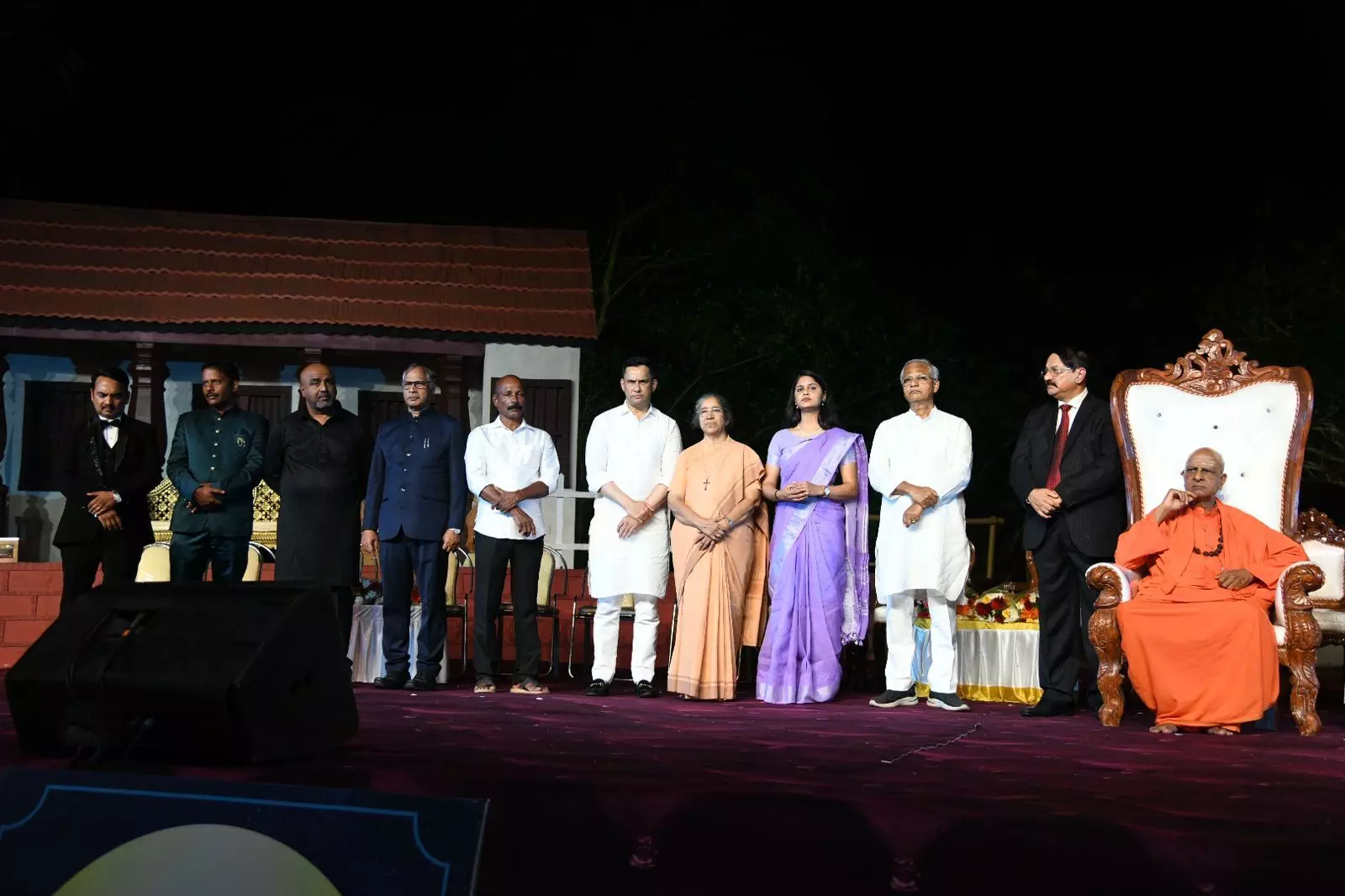
The event saw the presence of prominent personalities, including Dr. U.T. Iftikhar Farid, President of the Karnataka State Allied and Healthcare Board, former MLA J.R. Lobo, Vishal D Coscta from the Central Government Indirect and Customs Department, State Finance Department Additional Chief Secretary L.K. Atiq, businessman Rohan Montero, Karnataka Bari Sahitya Academy President Umar U.H., Wm. Fr. James de Soza, businessman Phillips de Soza, Sylvester de Krasta, Fr. Dennis de Silva, and local leader Alex Castellino.
Dennis de Silva, Chairman of ‘Ami Ani Amchim,’ extended welcome to the attendees, while Convener Santhosh de Costa read out the citation in honor of Swamiji’s contributions to harmony.



Let the Truth be known. If you read VB and like VB, please be a VB Supporter and Help us deliver the Truth to one and all.
No contract was signed with Muzarabani for PSL stint, but verbal agreement was reached: PCB

Karachi (PTI): The Pakistan Cricket Board admitted that no contract was ever sent to Blessing Muzarabani to play in the PSL but insisted that a firm verbal agreement was reached with the Zimbabwe pacer and he had breached the trust while joining the Indian Premier League.
The PCB recently imposed a two-year ban on Muzarabani from playing in the PSL claiming he breached a contract with Islamabad United and joined IPL side Kolkata Knight Riders.
The fast bowler’s agent, Rob Humphries tore into the PCB on Sunday in a social media post for the ban and claimed his client neither took part in the PSL players auction nor signed any contract with Islamabad United.
Humphries said the ban was excessive and unjustified.
But sources in the PCB while conceding no contract was signed with Rabbani claimed that a clear verbal agreement between both the parties was reached.
The source said this was also clear in the PCB announcement about the ban that despite a clear offer and an unequivocal acceptance of essential terms, the player chose to disregard these obligations in favour of a conflicting arrangement.
The PCB source said once essential terms — including remuneration and structure — are agreed upon through written correspondence, a binding obligation is formed.
But Humphries said after talks began with Islamabad United they had made it clear that unless they had a contract they couldn’t apply for an NOC from the Zimbabwe Cricket.
“We've remained quiet publicly over the last six weeks because we did not wish to create or cause anymore animosity for the Pakistan Super League/Pakistan Cricket Board than they had already created for themselves,” Humphries’ statement said.
"[On] 13 February, Blessing [was] approached by Islamabad United about a playing opportunity for the 2026 PSL. The deal [was] agreed subject to obtaining a No Objection Certificate (NOC) from Zimbabwe Cricket.
“An NOC cannot be obtained without a contract from the PSL. Islamabad United/PSL announced the signing to the world via social media,” it said.
Humphries further urged the PCB to gracefully withdraw the ban and accept this situation risen out of an administrative error at their end.
Muzarabani was taken by Islamabad as a replacement for West Indian pacer Shamar Joseph for USD 40,000.