Three arrested for repeatedly sexually harassing 14-year-old school girl in Mangaluru's Gurupura
Police Commissioner says larger network operating in the area to harass young women
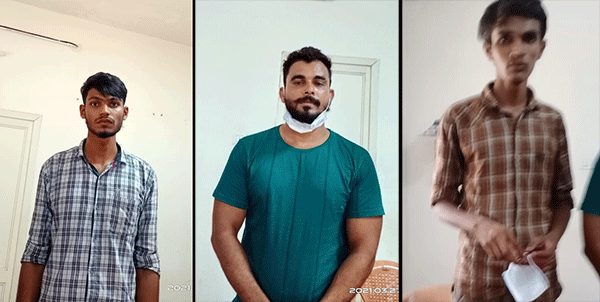
Mangaluru: Local police on Saturday arrested three people for repeatedly sexually harassing a 14-year-old schoolgirl. The incident was reported from the outskirts of the city located at Gurupur.
The arrested accused have been identified as Mohammed Muneer (28) a resident of Bantwal Taluk, Tausif, and Sadik both residents of Kaikamba.
Speaking to reporters after the arrests were made, city’s Police Commissioner N Shashikumar on Saturday added that Muneer is the prime accused in the case while the other two have been arrested for lending support to him in sexually harassing the minor girl. He further added that the police were looking out for more accused in the case.
The Commissioner added “In the Gurupur-Kaikamba area there are groups of youngsters who target school students and young women. At first, they make friends with them, offer chocolates and other items to them and then sexually harass them. There is a vast-spread network behind this and we have launched an intense investigation into the matter”.
“Muneer who is the prime accused in the case used to roam around the school and lure students and young girls with gifts to attract them and befriend them. He then used to exchange numbers with them and ask them for their private pictures and videos. After acquiring the photos and videos he used to ask the girls for sexual favors and threaten them to post their pictures and videos on social media platforms upon their rejection hence leading to sexual harassment of the girls” Shashikumar said during the press conference at his office.
A case in this regard was registered at the women's police station in the city after the parents of the girls came to know about the harassment. Three people have now been arrested and further investigations are underway. Muneer, according to the police works as a driver while the other two arrested accused also have criminal records against their names.
Police Commissioner Shashikumar also urged women and girls who have been victims of such incidents and harassments, to come forward and report it to the police as the initial investigations have revealed that several girls and women were targeted by the accused in the Gurupura locality.
Local residents of Gurupura have also acknowledged the presence of such groups of youngsters who lure women and girls by living a luxurious life and roaming around in luxurious cars. The locals also said the groups sometimes also use rented luxury cars to impress girls and lure them and befriend them.
College students, girls, and women whose husbands live abroad are the primary target of these groups. They exchange numbers trap them under the guise of a love affair and sexually exploit them. They then make videos of them and blackmail the victims, who, out of fear give away money and gold to the abusers, locals added.
They also said such groups enjoy support from powerful people of the area.
Let the Truth be known. If you read VB and like VB, please be a VB Supporter and Help us deliver the Truth to one and all.
Will continue to keep tab on development work in Bihar: Nitish to JD(U) MLAs
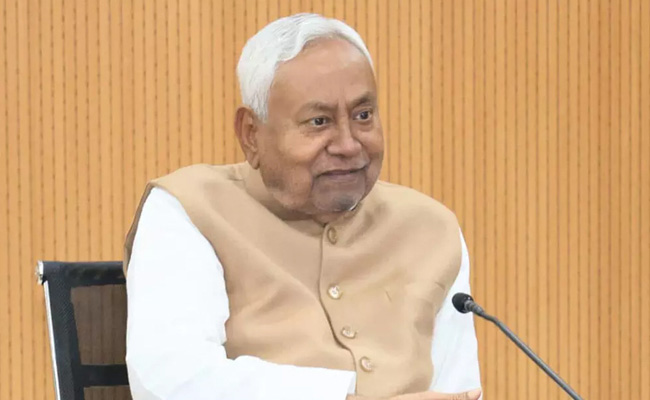
Patna (PTI): JD(U) president Nitish Kumar on Monday told party legislators that he will continue to keep a tab on the development work in Bihar despite having given up the chief minister's post a week ago.
Kumar addressed a meeting of the legislative party at 1, Anney Marg, which is the official residence of the chief minister and which the JD(U) supremo, now a Rajya Sabha MP, had occupied for nearly two decades.
Speaking to reporters after the meeting, JD(U) MLC and spokesperson Neeraj Kumar said, "Our party leader has said that except for sessions of Parliament, which would require his presence in Delhi, he will spend his maximum time in Bihar."
"Nitish Kumar told us that he will ensure that the good work done while he was in power continues under the new government, in which the JD(U) is an important partner. To keep a tab, he will tour the state in due course," Neeraj Kumar said.
The JD(U) spokesperson was asked about speculations that the meeting had been convened to decide on the role to be assigned to Nishant, the party supremo's son, who joined the JD(U) last month, but has declined to accept a ministerial berth in the Samrat Choudhary government.
"There is no confusion about the role of Nishant, who has been accepted by the party as the leader of the future. In any case, there was no discussion on him today," Neeraj Kumar said.
Nitish Kumar has been authorised by the legislators to decide on choosing the legislative party leader, he added.
Among those present at the meeting were Union minister and former JD(U) national president Rajiv Ranjan Singh 'Lalan' and Deputy Chief Ministers Vijay Kumar Chaudhary and Bijendra Prasad Yadav.
Interestingly, don turned politician Anant Kumar Singh, who represents Mokama assembly seat, claimed after the meeting that MLAs were asked by the supreme leader to try and win "200 seats in the next elections".
"Nitish Kumar ji told us that he will now be more easily available for party workers and general public. He also said that he will extensively tour the state and asked us to work hard so that the party wins 200 seats in the next elections", said Singh, who is often in news for putting his foot in the mouth.
The Bihar assembly is 243-strong and the JD(U)'s current tally is 85, four less than ally BJP, which is the single largest party.
The JD(U)'s best-ever performance was in 2010, when it had contested 142 seats and won 115 of these. It was also the highest tally for any single party since Bihar's truncation in 2000, until when Jharkhand was part of the state and assembly had 324 seats.