Ujire gram panchayat to produce foot mats, interlock tiles from plastic waste
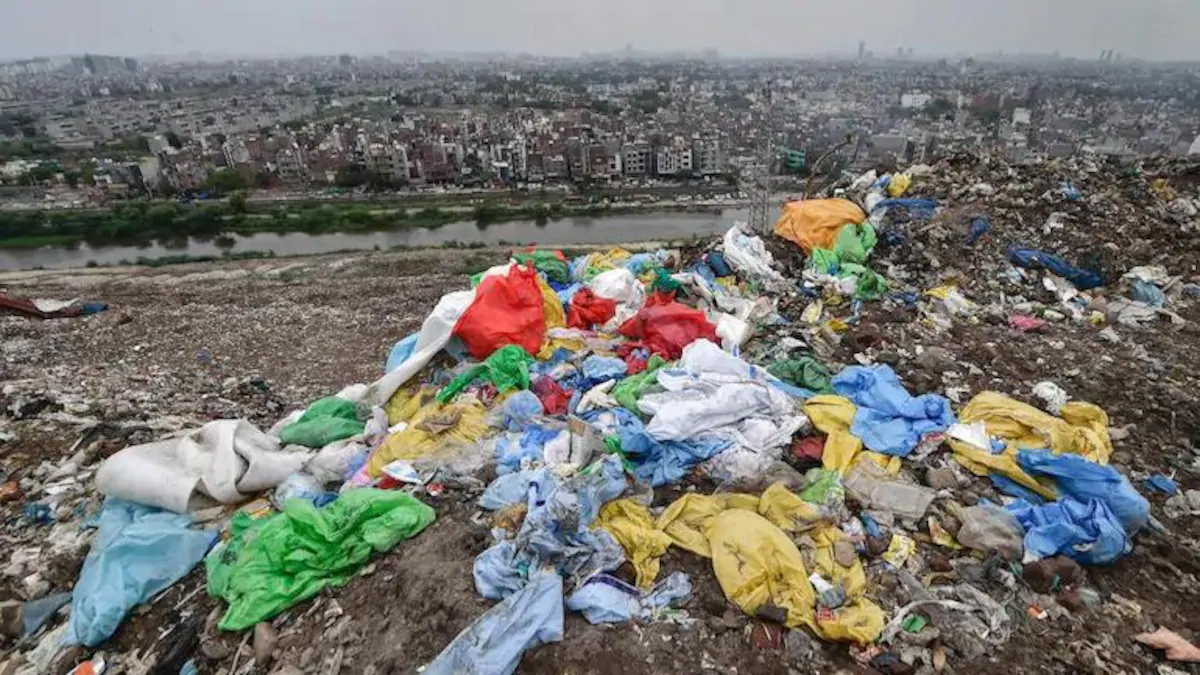
Ujire, Dec 20: "Ujire Janya", an organic manure produced from wet waste collected from nearly 6,000 houses in Ujire gram panchayat, which has a population of 18,000 in Karnataka, is likely to hit the market soon, said Ujire gram panchayat (GP) Panchayat Development Officer (PDO) Prakash Shetty.
Besides this, the GP is also planning to set up a plastic recycle plant which would produce foot mats and interlock tiles which could be used at garages, Shetty said.
Ujire Gram Panchayat is part of Belthangadi taluk in Dakshin Kannada district and a town near Dharmasthala, which is at the banks of the river Nethravathi. Ujire is an important junction for travellers in this region as it connects to another temple town Hornadu situated at the banks of river Bhadra in Chaikkamagaluru district.
The road at Ujire deviates to Dharmasthala (towards Hassan, Bengaluru), Kottigehara (towards Horanadu, Chikkamagaluru) and Belthangady (towards Mangaluru), hence it is strategically situated and challenges of segregating waste at source is potentially high due to large number of tourists incoming and returning, the PDO claimed.
This GP is also turning out to be an education hub in recent times and is 310 km from the tech hub in the southern state.
Shetty disclosed that Ujire produces nearly 1.5 tonne of garbage a day and it was the biggest challenge to convince people to segregate their waste at the source. "We are able to produce anywhere between 25 to 30 quintal of manure at a gap of every six to eight weeks," he said.
They launched the programme - "My Waste, My Responsibility" - nearly a year ago asking people to cooperate in segregating waste at the source, the PDO added.
"Within months we were able to convince the people and started producing "Ujire Janya" manure, which is yet to be registered as our brand and sold 25 quintal of manure in the last six months," he said.
The GP has a stock of nearly 50 quintal, for which a fertiliser company has come forward to lift it by paying Rs four per kg but the GP is still negotiating with them for a higher price, he added.
According to him, he had negotiated with several entrepreneurs wanting to set up plastic recycling plants in Ujire. "We have not yet finalised anything as the talks are in a very early stage. One of the entrepreneurs has come forward to produce foot mats and interlocking tiles using waste plastic. Therefore, we have not announced the plastic recycle plant yet," he said.
The proposed brand - "Ujire Janya" - is derived from the town name as well as the famous Janardhana temple situated in the heart of the town, Shetty added.
Disclosing about the challenges faced, Shetty said, he convinced people who came to meet him related to the work and told them about the benefits of waste segregation.
Apart from this, Dharmasthala Dhramadhikari Veerendra Heggade, whose charitable trusts runs several educational institutions in and around Ujire and Dharmashtala, should set up their own manure plants. As a result, waste segregation at the source has succeeded, Shetty opined.
Let the Truth be known. If you read VB and like VB, please be a VB Supporter and Help us deliver the Truth to one and all.
Ordinance issued to increase number of Supreme Court judges from 34 to 38
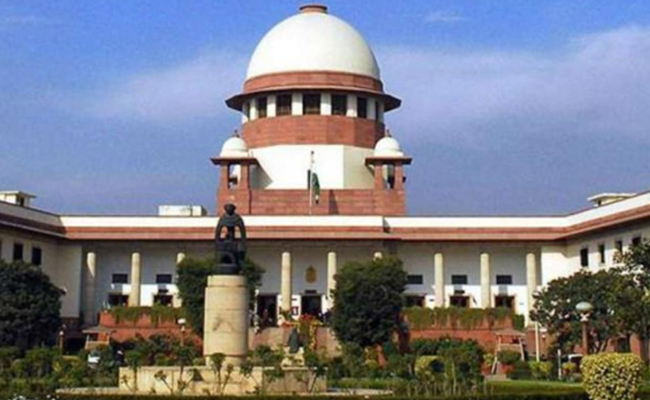
New Delhi (PTI): The government has promulgated an ordinance to increase the strength of the Supreme Court from the present 34 judges to 38, including the Chief Justice of India.
The law ministry notified the ordinance on Saturday, which amended the Supreme Court (Number of Judges) Act, 1956, to increase the sanctioned strength of the top court.
So far, the sanctioned strength of the top court was 34, including the Chief Justice of India (CJI). Now, the number of judges has been increased by four, taking the sanctioned strength to 38.
The top court will now have 37 judges, other than the CJI.
With the apex court having two vacancies at present, and the ordinance coming into force immediately, the Supreme Court Collegium will now have to recommend six names for appointment as judges in the top court.
A bill will be brought in the Monsoon Session of Parliament to convert the ordinance – an executive order – into a law passed by Parliament.
The Union Cabinet had cleared a draft bill on May 5 to increase the number of apex court judges.
The strength of the Supreme Court was last increased from 30 to 33 (excluding the CJI) in 2019.
The Supreme Court (Number of Judges) Act, as originally enacted in 1956, put the maximum number of judges (excluding the CJI) at 10.
This number was increased to 13 by the Supreme Court (Number of Judges), Amendment Act, 1960, and to 17 by another amendment to the law.
The Supreme Court (Number of Judges) Amendment Act, 1986, augmented the strength of judges from 17 to 25, excluding the CJI.
A fresh amendment in 2009 further increased the strength from 25 to 30.
Article 124(3) of the Constitution lists the qualifications required to become a Supreme Court judge.
An Indian citizen who has either served as a high court judge for at least five years, or as an advocate for 10 years, or is a distinguished jurist, can be appointed to the top court.
The strength of the Supreme Court is increased based on the recommendations of the CJI, who writes to the Union law minister. After consulting the finance ministry, the Department of Justice under the law ministry moves the Cabinet with a draft bill.