10 UK returnees test COVID-19 positive in Karnataka: Health Minister K Sudhakar
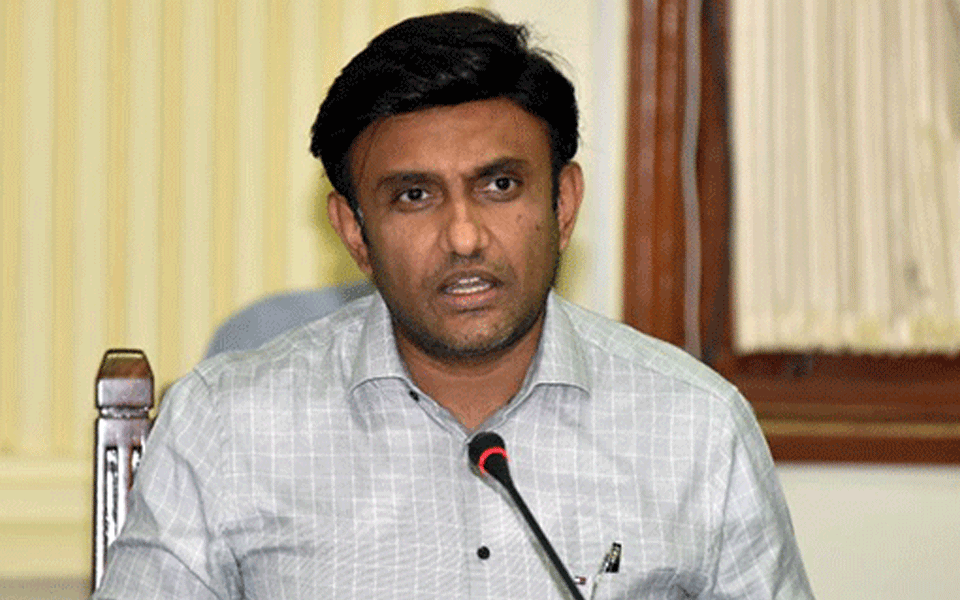
Bengaluru: Karnataka Health Minister K Sudhakar on Friday said so far 10 people who have come to the state from the UK have tested positive for COVID-19 and their samples have been sent for genetic sequencing to find out whether it is a new strain of virus that has infected them.
"Among the UK returnees according to information I have about 10 people have tested positive, all their samples have been sent to NIMHANS, two to three days are required for genetic sequencing, once that (report) is out we will get to know whether it is the second strain, and accordingly we will follow necessary procedures for treatment," he said.
Speaking to reporters, Sudhakar said, things relating to this second strain were still being studied and according to initial studies the variant of South African origin was more intensive than the one found in the UK.
"Based on the final reports we get, we will take necessary steps. Have trust in the government, before taking any decision we think hundred times. Protecting the health of the people is our main priority," he added.
The Minister had recently said that about 2,500 people have come to the state from the UK from November 25 to December 22 in two flights-Air India and British Airways that operate, and efforts were on to trace, monitor their health and subject them to tests.
The state government had announced to impose night curfew amid concerns over a new COVID-19 variant spreading in the UK, but on Thursday it decided to withdraw the curfew just six hours before it was to kick in, amid opposition from various quarters including opposition parties and a section of media.
Trying to defend the decision to impose night curfew, Sudhakar said, closure of economic activities will cause loss to the government too, despite that the administration had decided to go ahead with the measure keeping in mind the public health.
"Is it not the duty of the government to remind people about following rules and guidelines in the given situation," he asked.
Apparently several ministers in the cabinet were also unhappy with the move to impose night curfew and had expressed apprehensions about it helping in containing the virus spread, considering curfew timing was between 11 pm to 5 am.
Responding to criticism against the government, the minister pointed out that this is the very government that has achieved the recovery rate of 97.5 per cent, brought down fatality rate to 1.22 per cent.
"There is a lockdown in the UK, since 20 days there has been night curfew in Germany are they dumb? ...we have not taken any political decision so far, Technical Advisory Committee consisting of public health experts were consulted before taking decision including on this (night curfew)," he said.
The decision to impose curfew after 11 pm was taken keeping in mind the public interest so as to insure that normal life is not affected, Sudhakar said, adding "almost all our festivals this year were celebrated in a simple way, but outrage was expressed against this night curfew as though it was necessary for youth have to have fun or party during the new year."
"I have seen comments of some opposition leaders, if something happens, they will be responsible," he said, adding the media should also remember that the government takes decisions responsibly in public interest
Let the Truth be known. If you read VB and like VB, please be a VB Supporter and Help us deliver the Truth to one and all.
Ordinance issued to increase number of Supreme Court judges from 34 to 38
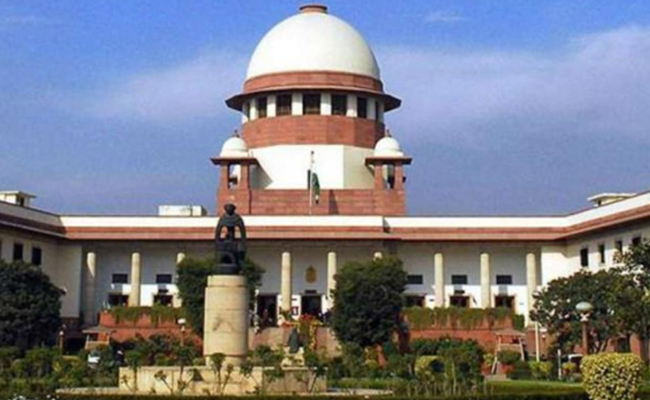
New Delhi (PTI): The government has promulgated an ordinance to increase the strength of the Supreme Court from the present 34 judges to 38, including the Chief Justice of India.
The law ministry notified the ordinance on Saturday, which amended the Supreme Court (Number of Judges) Act, 1956, to increase the sanctioned strength of the top court.
So far, the sanctioned strength of the top court was 34, including the Chief Justice of India (CJI). Now, the number of judges has been increased by four, taking the sanctioned strength to 38.
The top court will now have 37 judges, other than the CJI.
With the apex court having two vacancies at present, and the ordinance coming into force immediately, the Supreme Court Collegium will now have to recommend six names for appointment as judges in the top court.
A bill will be brought in the Monsoon Session of Parliament to convert the ordinance – an executive order – into a law passed by Parliament.
The Union Cabinet had cleared a draft bill on May 5 to increase the number of apex court judges.
The strength of the Supreme Court was last increased from 30 to 33 (excluding the CJI) in 2019.
The Supreme Court (Number of Judges) Act, as originally enacted in 1956, put the maximum number of judges (excluding the CJI) at 10.
This number was increased to 13 by the Supreme Court (Number of Judges), Amendment Act, 1960, and to 17 by another amendment to the law.
The Supreme Court (Number of Judges) Amendment Act, 1986, augmented the strength of judges from 17 to 25, excluding the CJI.
A fresh amendment in 2009 further increased the strength from 25 to 30.
Article 124(3) of the Constitution lists the qualifications required to become a Supreme Court judge.
An Indian citizen who has either served as a high court judge for at least five years, or as an advocate for 10 years, or is a distinguished jurist, can be appointed to the top court.
The strength of the Supreme Court is increased based on the recommendations of the CJI, who writes to the Union law minister. After consulting the finance ministry, the Department of Justice under the law ministry moves the Cabinet with a draft bill.