114 'Namma Clinics' to be inaugurated on December 14: Health Minister K Sudhakar
Bengaluru, Dec 12: The Karnataka government will be launching 114 'Namma Clinics' on December 14, aimed at providing primary healthcare services to vulnerable sections, especially slum dwellers, daily wage workers and other economically weaker sections of society.
Twelve types of health services will be available at the centre, and each clinic will consist of a medical officer, a nurse, lab technician, and a Group D employee.
This is a project with a total cost of Rs 150 crore, and most of the clinics will start working in government buildings.
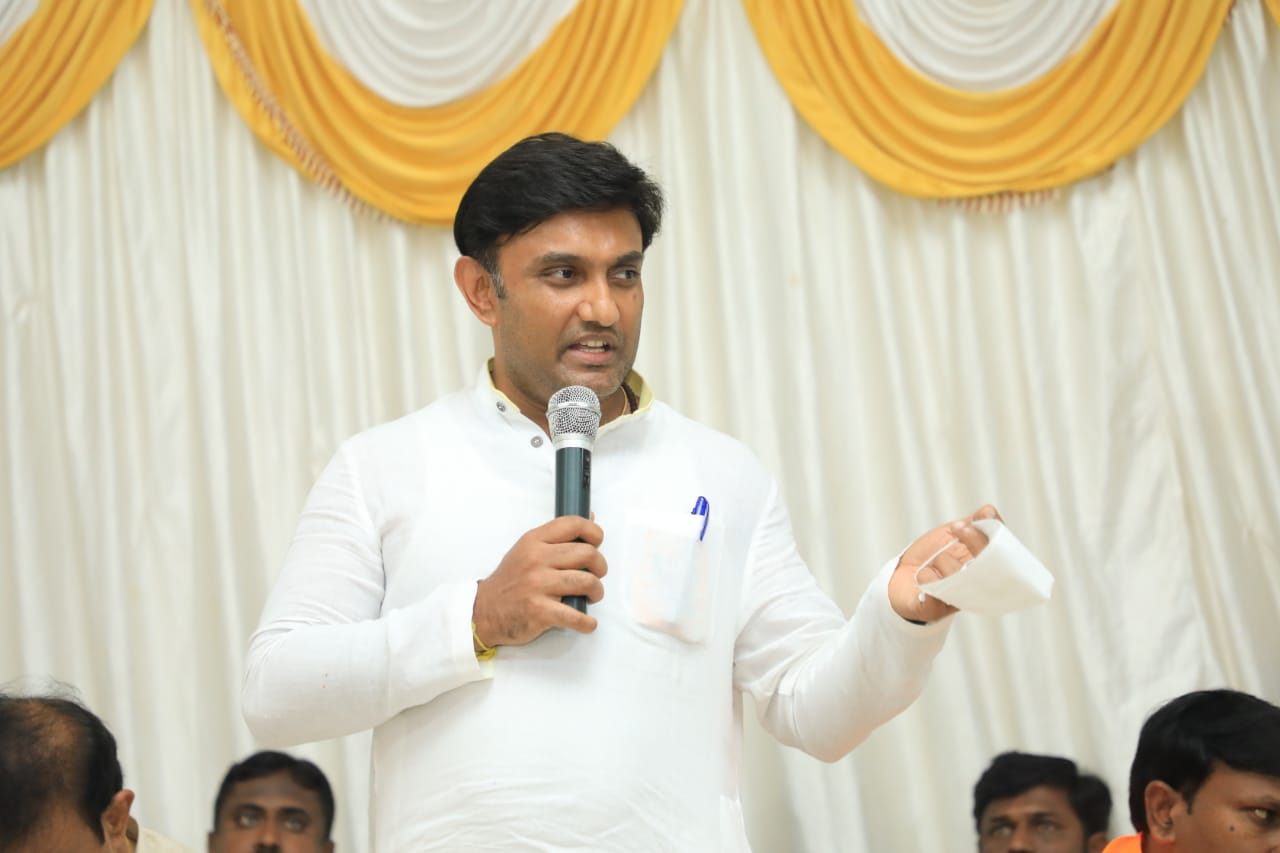
"Chief Minister Basavaraj Bommai will dedicate Namma Clinics on December 14. In the initial phase, 114 clinics will be launched simultaneously across the state... It is a matter of pride that for the first time in history, more than 100 clinics are being inaugurated simultaneously. This will be an all-time record," Health Minister K Sudhakar said.
He said the government is working to operationalise all 438 Namma Clinics across the state soon as announced earlier and all the remaining ones will be operational by January 2023.
A total of 243 of Namma Clinics will be functioning under the Bruhat Bengaluru Mahanagara Palike (BBMP) area, and work is underway to make them functional for public service by the second week of January, he said, adding at the least 150 clinics will surely be available for public service.
Each Namma Clinic will cater to a population of 10,000 to 20,000.
The 12 kinds of services include pregnancy, postnatal, neonatal care, childhood and adolescent care, universal immunisation services, family welfare, contraceptive, infectious disease management, common and minor ailment care, diabetes, blood pressure management, chronic diseases, oral ailments, etc.
Free referrals will also be given to other hospitals for ailments that need tertiary care such as breast and uterine cancer, eye examination amongst others, Sudhakar said.
Elderly care, emergency medical services, health check-ups and medicines will be completely free. Fourteen lab tests, teleconsultation services, wellness activities will also be available free of cost at Namma Clinics, he added.
Already 300 doctors have been appointed and there is a shortage of doctors at a few places.
The minister said alternative arrangements have been made in such places and 80-100 doctors in compulsory rural service will be appointed at such places.
Let the Truth be known. If you read VB and like VB, please be a VB Supporter and Help us deliver the Truth to one and all.
Man arrested for duping Delhi resident of Rs 2 lakh in online car sale fraud

New Delhi (PTI): Police have arrested a 32-year-old man for allegedly duping a Delhi resident of Rs 2 lakh on the pretext of selling a second-hand car online, an official said on Saturday.
The accused, identified as Aman Sethi, a resident of Shiv Puri Extension in east Delhi, allegedly impersonated an employee of a reputed online car sale platform to gain the victim's trust, the police said.
The case came to light after a complaint was lodged by Harish, a resident of Trilokpuri, following which an FIR was registered on April 16 under relevant sections of the Bharatiya Nyaya Sanhita (BNS). Sethi was arrested on Friday.
According to the complainant, the accused contacted the victim and offered to sell a second-hand car. He allegedly convinced him to transfer Rs 2 lakh as booking and processing charges.
After receiving the money, the accused neither delivered the vehicle nor refunded the amount and stopped responding to calls.
A police team conducted a detailed financial and technical investigation and traced the money trail to a bank account in the accused's name.
"Analysis of KYC details, account activity and digital footprints helped identify the suspect," a senior police officer said.
The police said the accused had vacated his known address and was evading arrest, but was eventually tracked down through technical surveillance and local intelligence after multiple raids in Delhi-NCR.
During interrogation, Sethi allegedly tried to mislead investigators but was confronted with evidence and subsequently arrested. Further probe revealed his involvement in a similar cheating case registered at the Krishna Nagar police station, indicating a pattern of such offences.
The police said the accused targeted people searching for second-hand cars online by posing as an employee of vehicle sale platforms, sharing photographs and details of vehicles, and demanding advance payments in personal bank accounts.
Two debit cards, two mobile phones and SIM cards allegedly used in the offence have been recovered from his possession, the police added.