'2023 polls will be my last, won't contest from Chamundeshwari', says Siddaramaiah
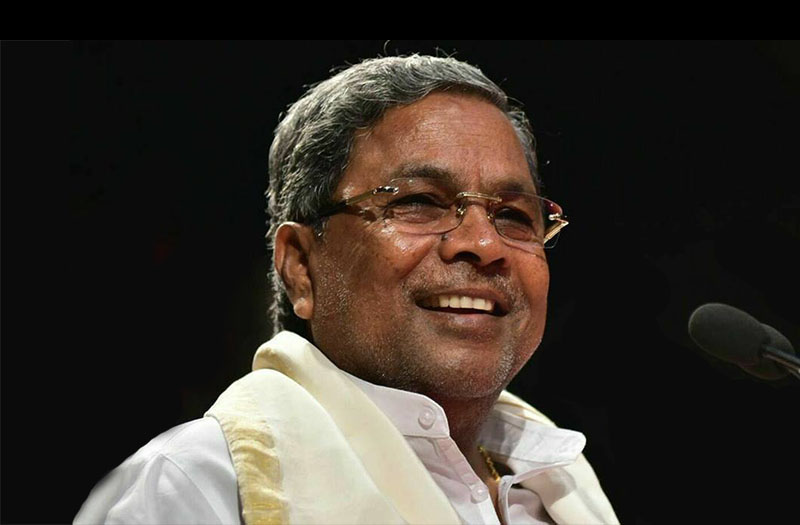
Mysuru, Mar 25: Senior Congress leader Siddaramaiah on Sunday strongly reiterated that the 2023 Assembly election would be his last, and that he would not be contesting that poll from Chamundeshwari segment where he had faced defeat in 2018.
The Leader of Opposition in the State Assembly also announced that he would not be accepting any position including that of Rajya Sabha, after the term of the next Assembly.
The former Chief Minister, accusing BJP's misinformation campaign against him led to his defeat from Chamundeshwari in 2018, blamed also the failure of Congress workers in taking programmes of his government and its achievements to people and some elements within the party for the loss.
"I'm making it very very clear, you (Congress workers) to take this clearly, I will not contest from Chamundeshwari again. No one should say again that Siddaramaiah will contest from Chamundeshwari. We will make someone a candidate, ensure that he or she wins, he or she will be a Congress candidate," Siddaramaiah said.
Addressing party workers in Chamundeshwari, he said he would not contest from the constituency and asked partymen to not make such statements even to please him.
"Remove it from your head... I will not contest from here again. I'm making it very, very, very clear. In 2018, the people of Chamundeshwari left my hand, but the people of Badami have held my hands, they want me to contest from there again, so do people from Kolar, Koppal, Hunsur and Varuna, but I have still not decided. I will contest from wherever I'm asked to," he added.
Siddaramaiah said, "I will not contest again...after that (term) I will not accept any position. I will not accept if I'm asked to become Rajya Sabha member or something else."
"...Why I'm contesting, you know? This corrupt government should go. This communal government should go," he added.
Siddaramaiah, the then sitting chief minister, had lost in Chamundeshwari in 2018 to JD(S) G T Deve Gowda by a margin of over 36,042 votes.
He, however, won Badami, the other constituency from where he had contested, defeating BJP's B Sriramulu by a margin of just 1,696 votes.
Making his debut in the Assembly in 1983, Siddaramaiah had got elected from Chamundeshwari on a Lok Dal party ticket. He won five times from this constituency and lost thrice.
After neighbouring Varuna became a constituency in 2008 following delimitation, Siddaramaiah represented it till he vacated the seat for his son Dr Yatindra (MLA) in the 2018 Assembly polls and went back to his old constituency of Chamundeshwari.
Ahead of the May 2018 Assembly polls, Siddaramaiah had said it would most likely be his last election.
Earlier, during the 2013 Assembly polls, too, he had said that it was his last election and went on to become Chief Minister after the polls.
It is no secret that Siddaramaiah, who was Chief Minister between 2013-2018, is nursing his ambition for a second term in office, if the party wins the next Assembly polls.
With State Congress president D K Shivakumar, too, having similar aspirations, it has triggered a game of one-upmanship between the two.
Let the Truth be known. If you read VB and like VB, please be a VB Supporter and Help us deliver the Truth to one and all.
Patna-bound IndiGo flight makes emergency landing at Lucknow due to bad weather
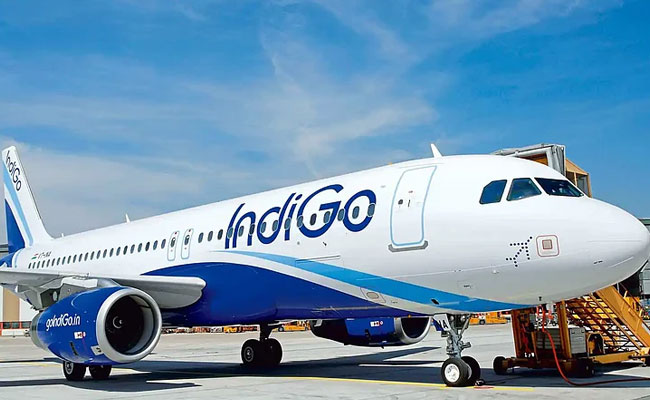
Lucknow (PTI): Adverse weather forced an IndiGo Kolkata-Patna flight to make an emergency landing at Lucknow airport on Friday, airport sources said.
According to airport officials, weather conditions in Patna deteriorated suddenly on Friday afternoon, affecting flight operations.
IndiGo flight 6E 6917 from Kolkata, which was scheduled to land in Patna at 3.50 pm, could not land due to bad weather and kept circling in the air after failing to get clearance from air traffic control, they said.
The flight was later diverted to Lucknow and landed safely at the Chaudhary Charan Singh International Airport at around 5.15 pm. There were 180 passengers and six crew members on board, officials said.
The aircraft was later allowed to depart for Patna after weather conditions improved.