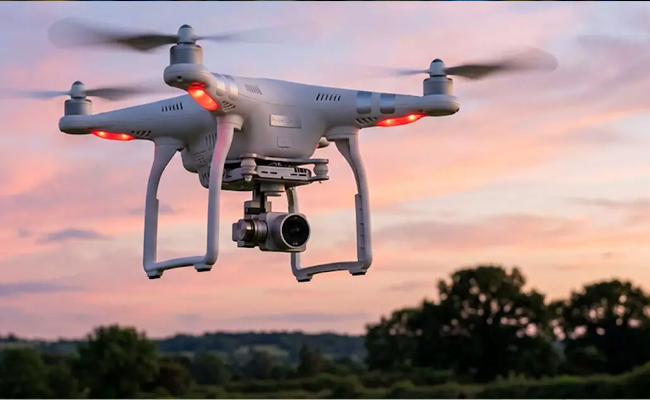
30-plus countries to participate in Bengaluru Tech Summit starting tomorrow

Bengaluru (PTI): The Karnataka government's annual global Bengaluru Tech Summit (BTS) will begin on Wednesday, bringing together tech leaders, startups, investors and research labs from 30-plus countries.
Organised by the Karnataka government's Department of Information Technology and Biotechnology along with the union government's Software Technology Parks of India, the three-day 26th BTS, with the theme 'Breaking Boundaries', will be inaugurated by Chief Minister Siddaramaiah at Palace Grounds here.
Kazakhstan's Minister of Digital Development, Innovations and Aerospace Industry Bagdat Mussin and Semiconductor company AMD's EVP & CTO Mark Papermaster will be among the VIP dignitaries present at the inauguration.
A recorded message from Finland's Minister of Science and Culture Sari Multala as well as one from Germany's Minister of Digital Affairs and Transport Volker Wissing will be relayed at the opening event.
Key figures from the Indian industry, including Rishad Premji, Executive Chairman of Wipro Limited; Kiran Mazumdar-Shaw, Chairperson of Vision Group on Biotechnology, and Executive Chairperson of Biocon Ltd; S Gopalakrishnan, Chairman of Vision Group on IT and Co-founder of Infosys; and Prashanth Prakash, Chairman, Vision Group on Startups, and Founding Partner of Accel Partners India will be a part of BTS.
A fireside chat on the topic 'Legend, Legacy & Leadership,' featuring Infosys Founder N R Narayana Murthy in conversation with Zerodha Co-founder Nikhil Kamath, and another featuring Union Minister of State for Electronics & Information Technology Rajeev Chandrasekhar are a part of the event.
Some of the key speakers addressing this year's BTS include Former Director General of the Council of Scientific and Industrial Research (CSIR) Dr R A Mashelkar and Nobel Laureate American Biologist Dr H Robert Horvitz, among others.
BTS 2023 will feature a variety of events, including a multi-track conference on IT & electronics, deep tech, start-ups & biotech, an international exhibition on 'Global Innovation Alliance', India-USA Tech conclave, R&D-Lab2Market, B2B meetings, STPI IT Export Awards, Smart Bio awards, VC awards, ATF awards, Rural IT quiz, Bio quiz and Bio posters.
One of the highlights of this year's BTS is the Chandrayaan 3 ISRO-Industry Pavilion, symbolising India's significant presence in space exploration.
The pavilion not only showcases ISRO's achievements but also emphasises the contributions of SMEs, startups, and private industries in ensuring the success of the Chandrayaan-3 mission, organisers said.
Also, in a specially erected geodesic dome, using AR/VR (Augmented Reality and Virtual Reality) technology, an immersive experience is created to learn about lunar missions, space science, and technology behind Chandrayaan, they added.
The BTS Exhibition - the tech marketplace -- will include country pavilions as well as those of IT and biotech majors, unicorns, startups, R&D labs, and educational institutions.
According to organisers, BTS has committed to achieving Net Zero in the upcoming years. This ambitious goal involves integrating eco-conscious practices in procurement to minimise waste generation and establishing a 'sustainability advisory' for various stakeholders.
The summit promises over 75 sessions, 400-plus speakers, 350-plus startups, 600-plus exhibitors, and 20,000-plus business attendees.
Let the Truth be known. If you read VB and like VB, please be a VB Supporter and Help us deliver the Truth to one and all.
CM Siddaramaiah alleges ‘criminal conspiracy’ in Sringeri recount, vows legal action
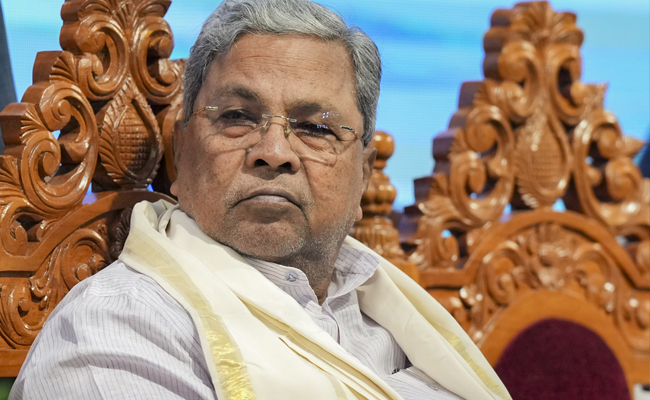
Bengaluru (PTI): Alleging a “criminal conspiracy” by BJP candidate D N Jeevaraj in the Sringeri Assembly poll recounting, Karnataka CM Siddaramaiah on Tuesday said the outcome was manipulated after valid postal ballot votes in favour of Congress leader T D Raje Gowda were tampered with during the recounting process.
Following a Karnataka High Court order on an election petition filed by Jeevaraj, challenging Raje Gowda’s election, the reverification and recounting were conducted on Saturday.
After the reverification and recount of postal ballots for the Sringeri Assembly constituency, votes polled in favour of Raje Gowda were reduced by 255, the returning officer said.
A report on the matter has been submitted to the Election Commission of India for further action, the officer added.
Congress leader Raje Gowda had won the 2023 Assembly polls from Sringeri by 201 votes, defeating his nearest rival Jeevaraj.
Addressing a press conference in Bengaluru, Siddaramaiah said the High Court had directed the recounting of postal ballots and that irregularities were noticed during the exercise conducted on May 2.
“This is a clear case of criminal conspiracy,” Siddaramaiah said, alleging that valid votes cast in favour of Raje Gowda were altered after being accepted by counting agents of all parties, including Congress, BJP, and JD(S).
He claimed that during the recounting of postal ballots, 255 votes were initially accepted as valid by all agents but were later tampered with by subordinate officials.
“There is a second mark on the votes polled in favour of Raje Gowda. They had accepted these as valid votes. Subsequently, another mark was made by officials. This is a clear case of criminal conspiracy,” he said.
When asked who was behind the alleged conspiracy, the CM replied, “It was hatched by Jeevaraj and others. It is planned.”
Siddaramaiah further alleged that the returning officer acted improperly by declaring the result despite the presence of an Election Commission observer during the recounting.
“Immediately after the counting, the returning officer announced the result. He should not have done so; this is against the law,” he said.
He pointed out that Raje Gowda had originally won by 201 votes, but after the recounting, the BJP candidate was declared the winner by 52 votes.
“The BJP has committed a criminal act of conspiracy. This is not vote chori but vote dacoity,” he alleged.
The CM said a police complaint had already been filed by Raje Gowda’s election agent, Sudhir Kumar, and emphasised the need for electoral integrity.
“We want transparency and free and fair elections. That is what our Constitution mandates,” he added.
Stating that the government would pursue legal remedies, Siddaramaiah said, “We are preparing an appeal challenging the returning officer’s announcement in a court of law.”
Responding to a separate query on elections in other states, the CM said there appeared to be an anti-incumbency factor in West Bengal, while results in Tamil Nadu were “surprising,” adding that Vijay’s party was emerging as the largest there.
Following the victory of party candidates in Bagalkote and Davanagere South, Siddaramaiah expressed confidence about future electoral prospects in Karnataka.
“Even in 2028, we will win the Assembly elections. We will come back,” the CM said.
Siddaramaiah added that he would order a forensic examination into the alleged tampering of postal ballots.