35 athletes at SAI Bengaluru isolated after testing COVID-19 positive, doctors' panel formed
Bengaluru, Jan 7: Thirty-five junior athletes at the Sports Authority of India's Bengaluru facility, who are participating in various national events, have tested positive for COVID-19, sources in the SAI said.
The revelation prompted the SAI Bengaluru to set up a committee of doctors to conduct tests and ensure the standard operating procedure (SOP) is followed on the campus.
The solace for the SAI is that none of the players preparing for the international events such as Commonwealth and Asian Games have contracted the disease, they added.
"The SAI had conducted random tests on 210 people comprising 175 athletes and 35 coaches. Of them, 35 have tested positive," a source told PTI on condition of anonymity.
She added that among the infected persons, 31 are asymptomatic while the four had mild symptoms. "All of them have been isolated. However, they did not require hospitalisation," she said.
The infected athletes were detected after a few showed mild symptoms compelling the authorities to conduct a random test.
It was also decided by the SAI that those players who did not contract the disease will be allowed to participate in the national-level event, another source said.
However, those players will undergo tests on arrival and will be allowed to mingle with other players only if their test reports come negative.
He also said the panel constituted by SAI on Thursday has Dr Monika Ghuge, Dr Rashid, Dr Ameya and physiotherapist Dr Ranganathan.
The committee will closely monitor the implementation of SOPs, quarantine norms, isolation facilities and suggest measures to contain the spread of COVID-19.
Let the Truth be known. If you read VB and like VB, please be a VB Supporter and Help us deliver the Truth to one and all.
Ordinance issued to increase number of Supreme Court judges from 34 to 38
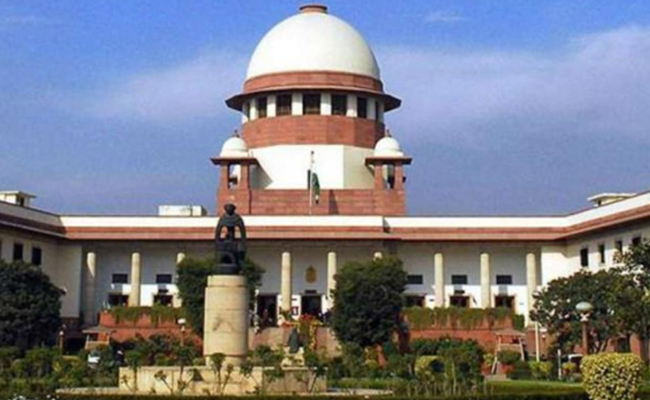
New Delhi (PTI): The government has promulgated an ordinance to increase the strength of the Supreme Court from the present 34 judges to 38, including the Chief Justice of India.
The law ministry notified the ordinance on Saturday, which amended the Supreme Court (Number of Judges) Act, 1956, to increase the sanctioned strength of the top court.
So far, the sanctioned strength of the top court was 34, including the Chief Justice of India (CJI). Now, the number of judges has been increased by four, taking the sanctioned strength to 38.
The top court will now have 37 judges, other than the CJI.
With the apex court having two vacancies at present, and the ordinance coming into force immediately, the Supreme Court Collegium will now have to recommend six names for appointment as judges in the top court.
A bill will be brought in the Monsoon Session of Parliament to convert the ordinance – an executive order – into a law passed by Parliament.
The Union Cabinet had cleared a draft bill on May 5 to increase the number of apex court judges.
The strength of the Supreme Court was last increased from 30 to 33 (excluding the CJI) in 2019.
The Supreme Court (Number of Judges) Act, as originally enacted in 1956, put the maximum number of judges (excluding the CJI) at 10.
This number was increased to 13 by the Supreme Court (Number of Judges), Amendment Act, 1960, and to 17 by another amendment to the law.
The Supreme Court (Number of Judges) Amendment Act, 1986, augmented the strength of judges from 17 to 25, excluding the CJI.
A fresh amendment in 2009 further increased the strength from 25 to 30.
Article 124(3) of the Constitution lists the qualifications required to become a Supreme Court judge.
An Indian citizen who has either served as a high court judge for at least five years, or as an advocate for 10 years, or is a distinguished jurist, can be appointed to the top court.
The strength of the Supreme Court is increased based on the recommendations of the CJI, who writes to the Union law minister. After consulting the finance ministry, the Department of Justice under the law ministry moves the Cabinet with a draft bill.