Asst Commissioner to hoist national flag at Chamarajpet Idgah Maidan on Aug 15
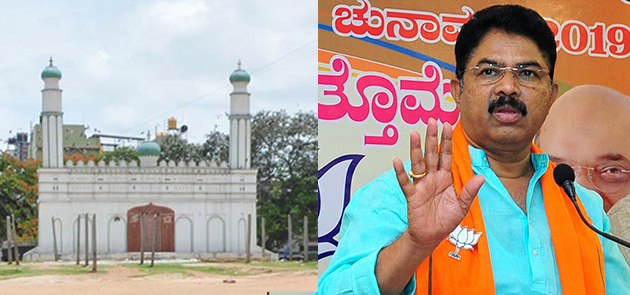
Bengaluru, Aug 11: The Karnataka government on Thursday said a Revenue Department official of the rank of Assistant Commissioner will be hoisting the tricolour at Chamarajpet 'Idgah Maidan' here on August 15.
Bruhat Bengaluru Mahanagara Palike (BBMP), the city civic body, had recently dismissed the petition filed by the Karnataka State Board of Auqaf for a 'khata' (document which identifies the ownership of a property) in its favour for the communally-sensitive Idgah Maidan, and had declared Karnataka Revenue Department to be the default owner of the land.
"Several persons and groups had come out wanting to hoist the national flag on August 15. All these days it was Corporation (BBMP) property.. now it is no more a Corporation property and has come to the Revenue Department and after consulting the Legal department, officers and intelligence chief Dayananda, it has been decided that a Revenue Department official will hoist the flag," Revenue Minister R Ashoka said.
Speaking to reporters here, he said, Assistant Commissioner- Bengaluru North will hoist the flag and as per protocol an MP and local MLA among others are allowed to participate in the event, along with people.
"Deputy Commissioner of Police who has jurisdiction over the area has been asked to make all bandobast, and for no reasons other than slogans like Bharat Mata ki Jai, Vande Mataram and hailing freedom fighters- no other slogans like religious will be allowed, and police commissioner will issue an order imposing restriction," he added.
Following the BBMP order, several Hindu organisations had announced that they will celebrate Independence Day on August 15 on the ground.
Also, Local Congress MLA B Z Zameer Ahmed Khan too had announced that they will go ahead and hoist the tricolour on the ground.
Appealing to everyone to abide by law, the Minister said anyone involved in any violation or mischief will be dealt strictly in accordance with law.
He said if any one has any claims over the title of the land, they can make an appeal to the Revenue department, and it will be decided accordingly as per rules. "One can even approach the court."
The decades-old dispute over Idgah Maidan had once again come to fore earlier this year, when some Hindu outfits sought BBMP's permission to hold events at the place.
This resulted in two contrary sets of documents emerging, as the Karnataka State Board of Auqaf presented a 1965 gazette notifying the land as Wakf property, while the 1974 City Survey records and all other civic records thereafter showed the land to be a playground.
Let the Truth be known. If you read VB and like VB, please be a VB Supporter and Help us deliver the Truth to one and all.
Bengaluru jail introduces biometric tracking system for prisoners
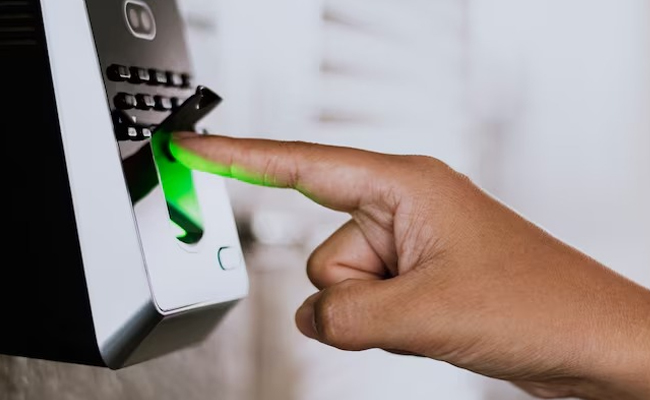
Bengaluru: In a bid to curb misconduct and illegal activities inside Parappana Agrahara Central Prison, prison authorities have introduced a new ‘Prisoners Tracking Movement System’ under which inmates will have to undergo biometric verification while entering every barrack.
According to jail officials, biometric systems have been installed across all major sections of the prison, including barracks, visitor rooms, hospital, canteen, kitchen, library, playground, handicraft units and bakery sections. Staff members have also been deployed at these locations.
Officials said inmates visiting the visitors’ room must now obtain a digital token after biometric verification. Details such as the prisoner’s name, identification number and entry time will be updated in the prison software system. This will help authorities maintain a complete digital record of inmates visiting and returning from meeting rooms.
Similar systems have also been introduced at entry points of the hospital, library and other barracks accessed for work-related purposes. Officials said the system will help identify prisoners involved in suspicious or illegal activities with other inmates and enable authorities to track how much time a prisoner spends at different locations inside the prison.
Authorities stated that AI-powered cameras were already being used inside the prison to monitor inmates as well as prison staff. Along with this, digital tracking of prisoner phone calls and a digital token system for visitor meetings have now been added to strengthen surveillance over inmate movement. Officials said the project has been implemented at a cost of around Rs 2.25 crore.
The prison department has also introduced a canteen usage tracking system to monitor prisoners’ spending patterns. Instead of direct cash payments, inmates can purchase bakery items and snacks using wallets or coupons issued within the prison system.
Officials said the digital system will record details including the buyer’s name, items purchased, quantity, date, time and remaining wallet balance. This will allow prison authorities to maintain complete expenditure records of inmates.