Ban placed on entry of 3 Maha ministers, 1 MP in Belagavi to prevent trouble on K'taka formation day

Bengaluru/Belagavi (PTI): The Belagavi administration has banned three Maharashtra ministers and an MP from entering this border district, as they are expected to participate in the "black day" event organised by Maharashtra Ekikaran Samiti (MES) on November 1, on the occasion of Karnataka formation day.
Karnataka Home Minister G Parameshwara has warned them of legal action, in case they indulge in activities or make statements that are against Karnataka or Kannada.
Maharashtra Ministers Shambhuraje Desai, Chandrakant Patil, Deepak Kesarkar and MP Dhairyasheel Mane are expected to attend the MES event, official sources said.
MES, which has been fighting for the merger of several Marathi speaking areas and villages of the state with Maharashtra for long, observes 'Karnataka Rajyotsava' as a black day every year.
They had recently met Maharashtra Chief Minister Ekanath Shinde at Kolhapur, seeking his support on the boundary issue and requesting that he send representatives to take part in the MES event.
Three ministers and an MP have been banned from entering Belagavi from 6 am on October 31 to 6 pm on November 2, citing maintenance of law and order.
Officials foresee the chances of them making instigative speeches during the visit. Also Kannada activists could gherao them, and it may result in clashes with MES activists.
"We have sensitised the police along Maharashtra border region, whether it is Belagavi or Bidar. We have already deployed Karnataka State Reserve Police (KSRP) platoons at places where there is information about trouble breaking out," Parameshwara told reporters in Bengaluru, in response to a question.
'Black day' is observed in Belagavi by MES on the occasion of Karnataka Rajyotsava and ministers from Maharashtra come and make statements there, he said. "We control such activities every year. This year too, we have already made necessary arrangements there."
"If anyone comes inside Karnataka's borders and makes statements against Karnataka, Kannada, Karnataka land and water, we will take legal action against them," Parameshwara said.
Deputy Chief Minister D K Shivakumar termed the observing of 'black day' as wrong, and assured that the government would do everything to protect the interests of the people of the state and Kannadigas living in Maharashtra.
"It is very wrong, whoever it is... We have to protect the interest of our state, we have to protect the people of the state," he told reporters.
"Our government will take all necessary measures to protect the people of the state and Kannadigas there (in Maharashtra). The Chief Minister (Siddaramaiah) has held a meeting with the Home Minister and senior police officials and has instructed them to remain cautious," he added.
The border issue dates back to 1957 when states were reorganised on linguistic lines. Maharashtra laid claim to Belagavi, which was part of the erstwhile Bombay Presidency, as it has a sizeable Marathi-speaking population, and over 800 Marathi-speaking border villages that are currently a part of Karnataka.
Karnataka maintains that the demarcation done on linguistic lines as per the States Reorganisation Act and the 1967 Mahajan Commission Report is final.
To assert that Belagavi is an integral part of the state, Karnataka built the 'Suvarna Vidhana Soudha' there, modelled on the Vidhana Soudha, the seat of the State Legislature and Secretariat in Bengaluru.
Let the Truth be known. If you read VB and like VB, please be a VB Supporter and Help us deliver the Truth to one and all.
Congress’ Umesh Meti wins Bagalkot bypoll
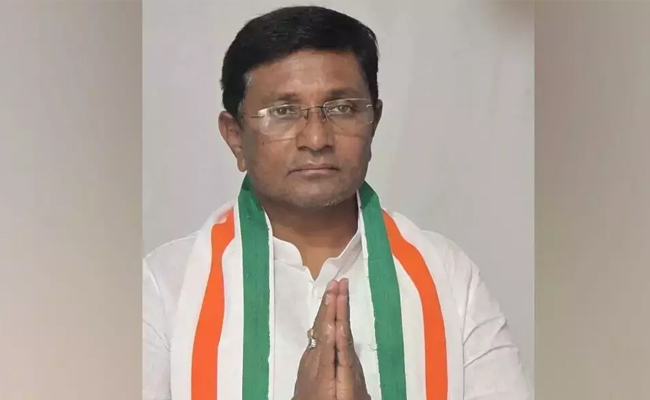
Bagalkot: The Congress has secured a victory in the Bagalkot Assembly by-election, with its candidate Umesh Meti winning the seat after maintaining a lead from the first round of counting till the end.
The seat had fallen vacant following the death of sitting MLA H Y Meti. Umesh Meti, his son, has now been elected to the Assembly.
Party leaders attributed the victory to a combination of factors, including sympathy votes, the state government’s schemes, and campaign strategies led by Chief Minister Siddaramaiah and senior leader Satish Jarkiholi.
The Congress maintained a consistent lead throughout the counting process, eventually securing a decisive win in the constituency.