Bengaluru auto drivers reject 20% fare hike; Plan protest
No scope for change; drivers must follow it: Transport Minister Ramalinga Reddy
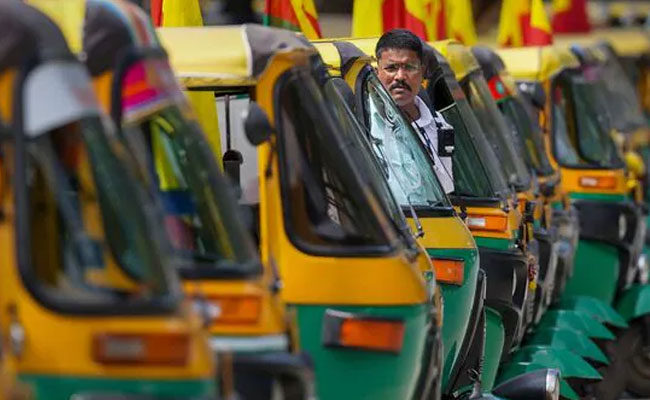
Bengaluru: Bengaluru's auto drivers have expressed strong opposition to the government's decision to increase fares by 20% starting August 1, with several unions announcing a boycott of the hike.
The protest is expected to involve around 50,000 drivers who have called for a halt on recalibrating meters until the government reviews the decision, as reported by Deccan Herald on Wednesday.
The District Transport Authority has set a new base fare of Rs 36 for the first 2 km and Rs 18 for every additional kilometre. This is a rise from the current fare of Rs 30 for the first 2 km and Rs 15 per km, which has been in place since 2021.
“We are dissatisfied with the hike. It is unscientific and ignores inflation. We have written to the chief secretary and Bangalore Urban deputy commissioner, but received no response,” DH quoted D. Rudramurthy, general secretary, Auto Rickshaw Drivers’ Union (ARDU), as saying.
Drivers are demanding a base fare of Rs 40 and Rs 20 per km. C. Sampath, General Secretary of the Adarsha Auto Union, also voiced concerns over the practicality of the new fares. "We will not accept anything less. The fare must be rounded off. With UPI usage declining, giving change will become a problem," he stated.
However, Transport Minister Ramalinga Reddy stood firm on the fare hike. "The fare was finalised after due research. There is no scope for change. Drivers must follow it,” DH quoted Reddy as saying.
A senior Regional Transport Officer (RTO) official quoted in the report warned that non-compliance could affect drivers’ fitness certificates and permits. “We will coordinate with the traffic police and the Bangalore Urban deputy commissioner,” he added.
Let the Truth be known. If you read VB and like VB, please be a VB Supporter and Help us deliver the Truth to one and all.
V.D. Satheesan elected as new Chief Minister of Kerala
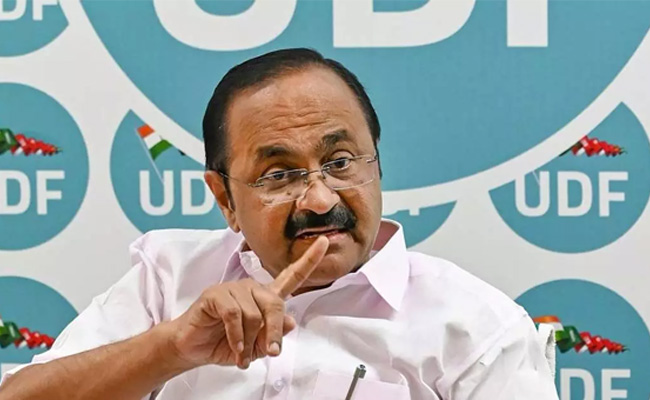
Thiruvananthapuram (PTI): Celebrations erupted across Kerala on Thursday after V D Satheesan was selected by the Congress High Command as the next Chief Minister of the state.
Satheesan was at the Contonment House in Thiruvananthapuram, the official residence of the Leader of the Opposition, when AICC leaders announced it in New Delhi.
Soon after the announcement, jubilant Satheesan supporters burst firecrackers and distributed sweets in several parts of the state.
Paravur in Ernakulam district, the Assembly constituency he has represented since 2001, witnessed large-scale celebrations.
Satheesan was widely seen as the frontrunner for the post, with UDF allies also backing his candidature during the selection process.
As the Leader of the Opposition in the outgoing Assembly, he led the UDF both inside and outside the House.
Apart from Satheesan, senior Congress leader Ramesh Chennithala and Congress MP K C Venugopal were also considered for the post.