‘Bengaluru bandh’ if BBMP division decision is not withdrawn: Vatal Nagaraj
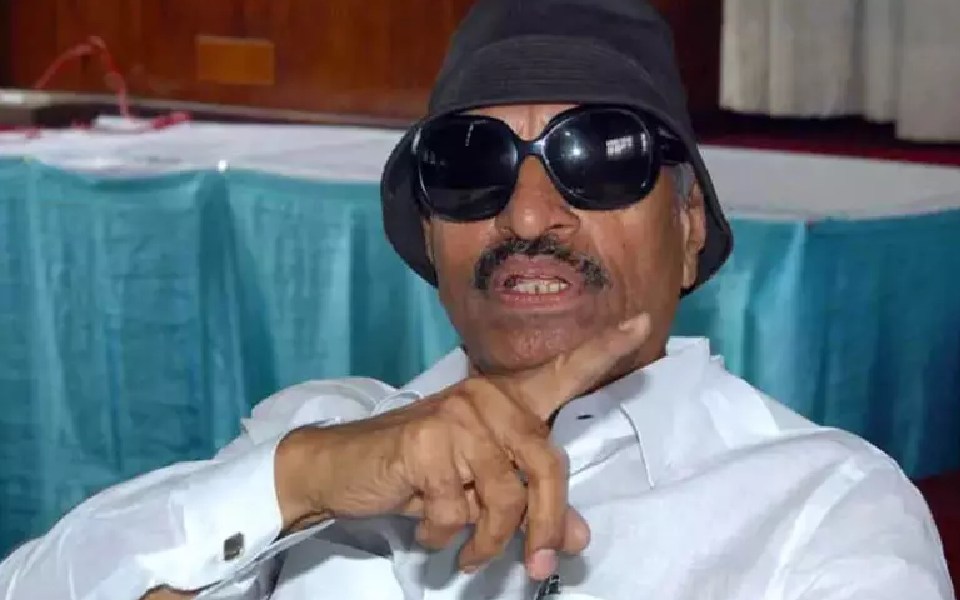
Bengaluru: Pro-Kannada activist Vatal Nagaraj on Saturday warned that a ‘Bengaluru Bandh’ would be called if the state government does not withdraw its decision to divide the city into five municipalities under the Greater Bengaluru Authority (GBA) Act. He termed the move “fatal to the existence of Kannadigas” and claimed it would increase the influence of non-Kannada speakers in the city.
Speaking at a press conference held at the Press Club in Bengaluru, Nagaraj said that the decision to split the city would damage its prestige and dignity. “Reducing Bengaluru to the level of a taluk is unacceptable. Appointing five mayors and placing the Chief Minister at the helm of the GBA is against the spirit of decentralised local governance,” he stated. “This move paves the way for political domination by non-Kannada speakers,” he added.
He demanded that, instead of forming five separate municipal corporations, elections should first be held for the unified city corporation. He also criticised the collapse of the city’s civic infrastructure. “Garbage is piling up across the city, roads are riddled with potholes, and lakes are being polluted due to encroachments. Yet, the authorities remain indifferent. Basic civic services are being ignored while the government continues to impose garbage collection taxes,” he alleged.
Vatal Nagaraj announced that a public awareness campaign will be launched from August 14 to expose what he called the government's betrayal of Kannadigas. He also revealed plans to hold discussions with writers, film actors, and artists on the issue. “If our demands are not fulfilled, we will be forced to call for a Bengaluru Bandh,” he reiterated.
Leaders Parthasarathy, Girish Gowda, Narayanaswamy, and others were present at the press meet.
Let the Truth be known. If you read VB and like VB, please be a VB Supporter and Help us deliver the Truth to one and all.
Nicobar Tribal Council Alleges FRA Violations in Great Nicobar Wildlife Sanctuaries
Sri Vijaypuram (Port Blair): The Tribal Council of Little and Great Nicobar has alleged fresh violations of the Forest Rights Act in the notification of three wildlife sanctuaries linked to the Centre’s ₹92,000-crore Great Nicobar Island project, even as the Calcutta High Court is set to hear petitions challenging the mega project over similar concerns next month.
The Union government had, in October 2022, notified three wildlife sanctuaries in parts of Little Nicobar Island, Menchal Island and Meroe Island for the conservation of leatherback turtles, megapodes and coral ecosystems. The move came after the government acknowledged that the proposed infrastructure project on Great Nicobar Island would affect coral colonies and nesting habitats of endangered species.
However, the tribal council has maintained that the sanctuaries were declared without consultation with the Nicobarese communities who traditionally inhabit and manage these islands.
In a letter dated April 23 addressed to the Assistant Conservator of Forests of the Nicobar Forest Division, the council reiterated its opposition to the sanctuaries and objected to the formation of a committee to determine eco-sensitive zones around the protected areas.
The council said its chairman had not been consulted before being included in the committee and was informed of his membership only a month after the committee was constituted.
The three notified sanctuaries include the Leatherback Turtle Sanctuary in parts of Little Nicobar Island, the Megapode Sanctuary covering the entire Menchal Island and the Coral Sanctuary spanning the whole of Meroe Island.
According to the council, Menchal and Meroe islands hold deep cultural and spiritual significance for the Nicobarese community, which believes the islands are inhabited by the spirits of their ancestors.
The council demanded that the sanctuary notifications be revoked and the eco-sensitive zone committee dissolved, alleging that both decisions were taken against the wishes of the indigenous community.
Meanwhile, Jairam Ramesh has written to Tribal Affairs Minister Jual Oram alleging violations of the Forest Rights Act in the process of obtaining consent for diversion of forest land for the Great Nicobar project.
Ramesh argued that consent should have been obtained through the Tribal Council representing the Nicobarese communities instead of through Gram Sabhas representing settler families. He also questioned how the government-controlled Andaman Adim Janjati Vikas Samiti could provide consent on behalf of the Shompen community, classified as a Particularly Vulnerable Tribal Group.
He urged the Tribal Affairs Ministry to intervene and seek withdrawal of clearances granted for the project under the Forest Rights Act.
Earlier, Ramesh had also written to Union Environment Minister Bhupender Yadav alleging that environmental impact studies for the project were conducted in haste and without the detailed seasonal assessments mandated under environmental laws.
The dispute dates back to 2022 when the Andaman and Nicobar administration initiated the process for notifying the three sanctuaries before holding Special Gram Sabhas for diversion of forest land linked to the Great Nicobar project.
In May that year, the administration invited objections and claims regarding the proposed sanctuaries. Subsequently, on July 19, the Nicobar Deputy Commissioner certified that no objections or claims had been received.
The tribal council later wrote to the district administration stating that the notification process was carried out without ensuring that residents of Little Nicobar Island were informed as required by law. It alleged that no public announcements seeking objections were made in villages such as Bahua, Muhincoihn and Kiyang, whose residents traditionally use and manage parts of the notified areas.
The council said the Nicobarese community had protected the islands and wildlife for generations through customary practices and traditional belief systems.
It further argued that the sanctuaries would interfere with long-standing rights over forests and coastal areas. They noted that these areas are used for rituals, plantations, collection of forest produce, construction of huts and canoes, harvesting medicinal plants and worship.
In November 2024, the council objected to draft Island Coastal Regulation Zone plans, demanding basic infrastructure, instead of proposed eco-tourism activities in the sanctuaries. The council demanded better public restrooms, jetties, water facilities, pathways, and mobile connectivity.
The Nicobar administration issued a clarification in May 2025, stating that the sanctuaries would not affect hunting rights available to Scheduled Tribes in the Nicobar Islands. The council, however, rejected the clarification, stating that their dependence on forests and coasts extended far beyond hunting activities.
Earlier this month, a Bench led by the Chief Justice of the Calcutta High Court dismissed preliminary objections raised by the Union government against petitions challenging the diversion of forest land for the Great Nicobar project. The matter has now been listed for final hearing in June.