Bengaluru Kambala: Sunday at Palace Grounds on roll as visitor numbers surge on final race day
"Cultural unity: No caste, creed, or religion in this Sport": Buffalo owner Ankita at B'luru Kambala
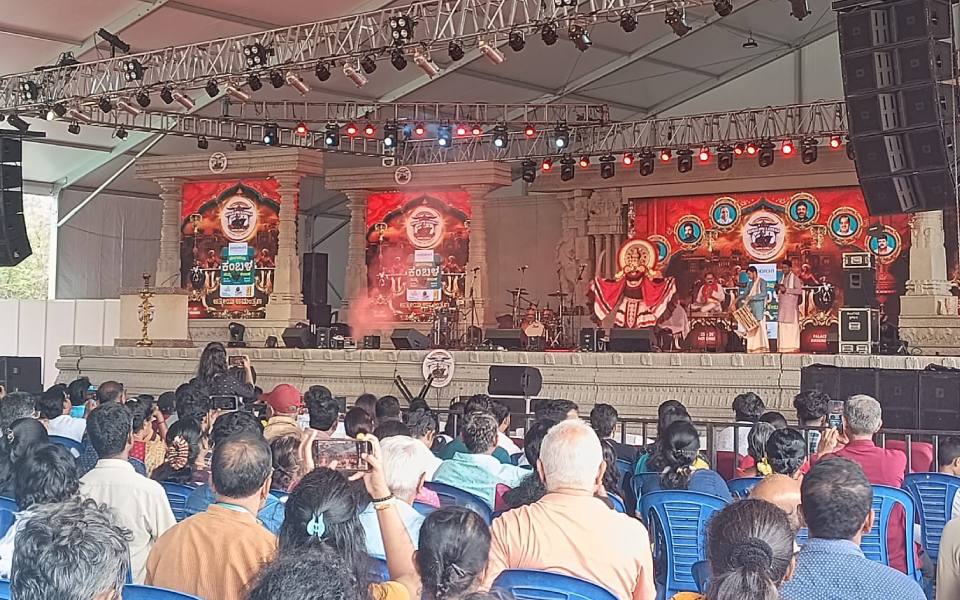
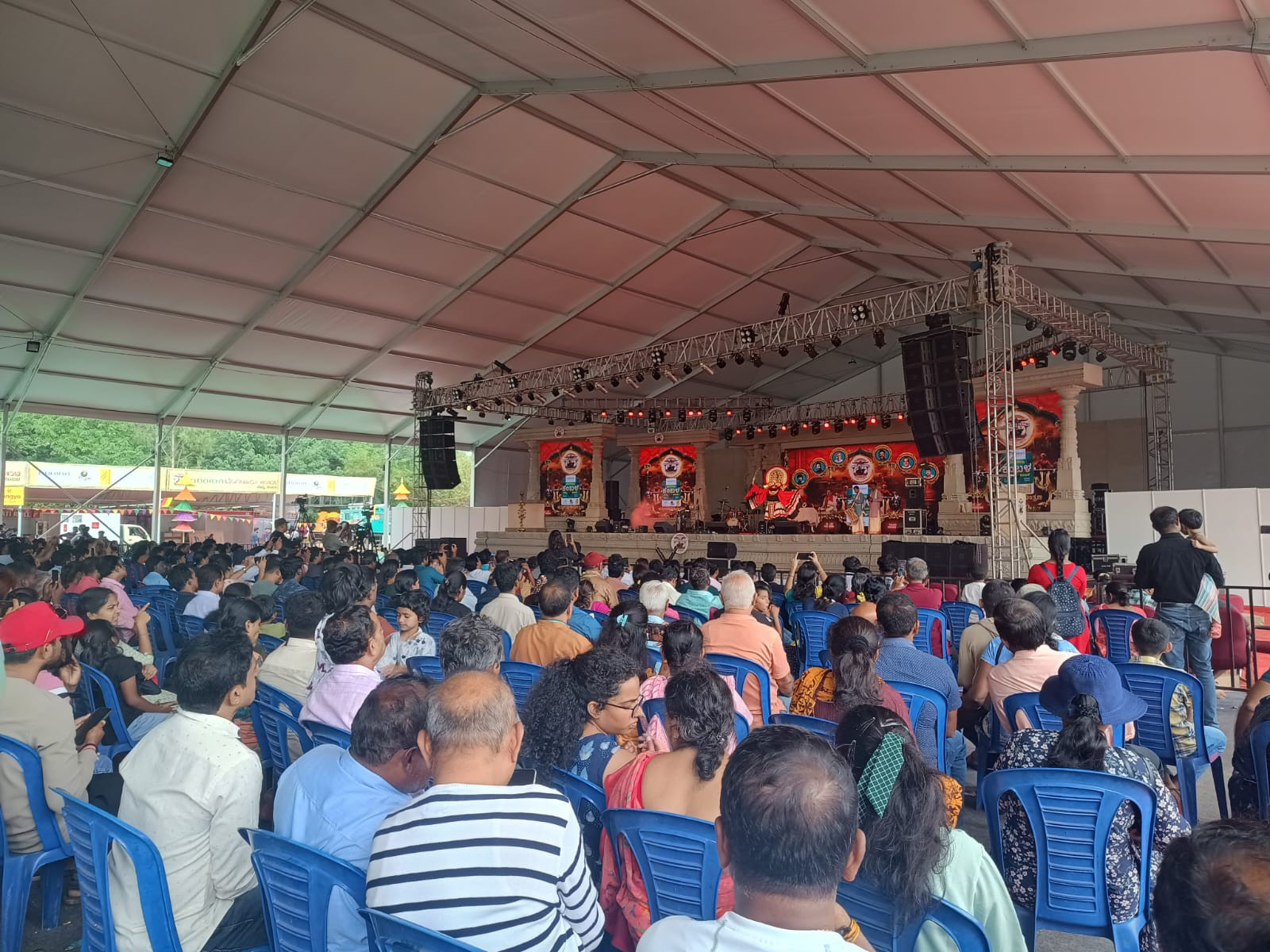
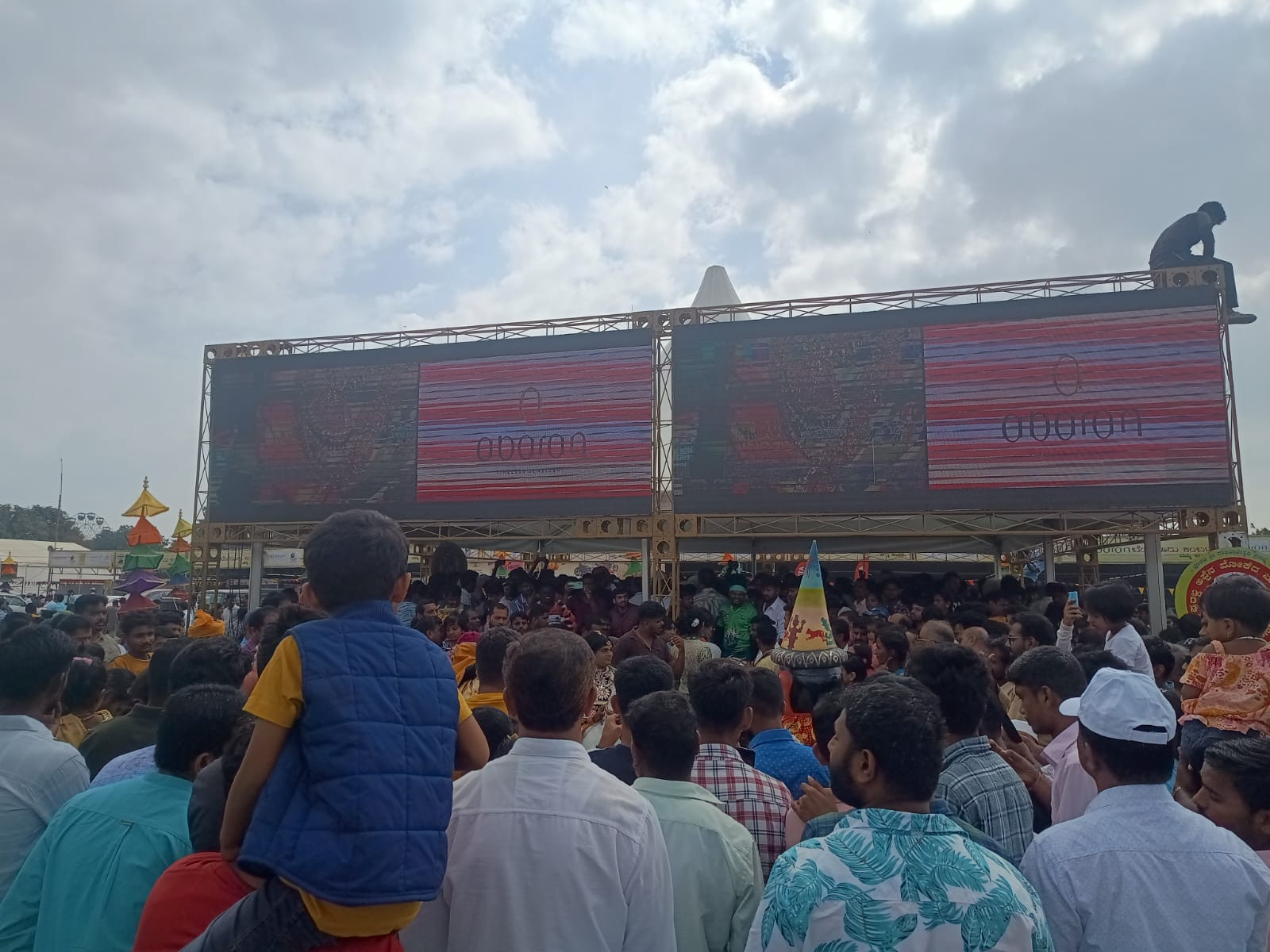
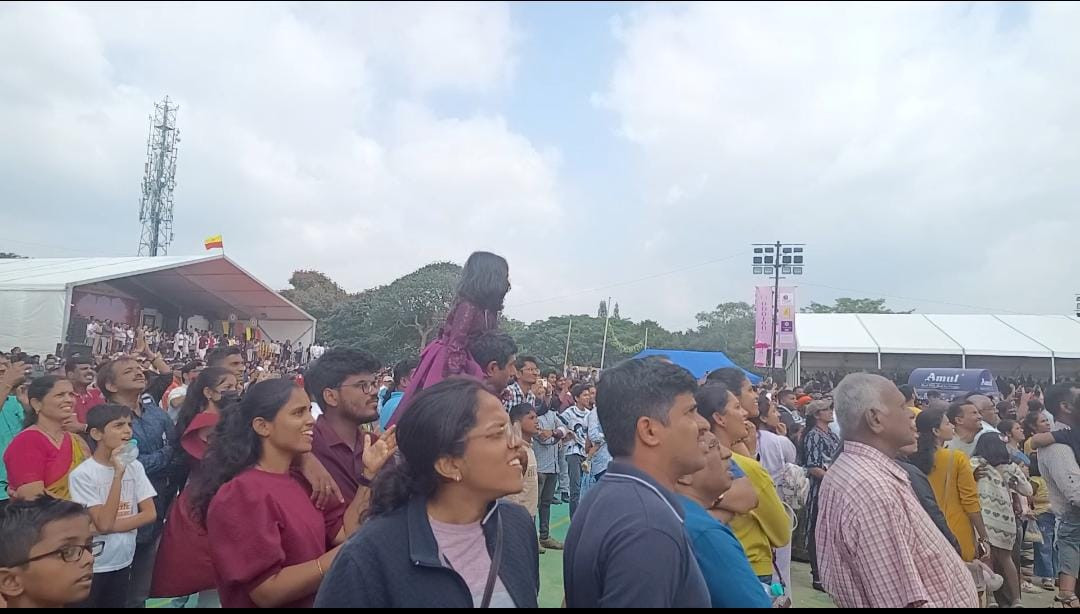
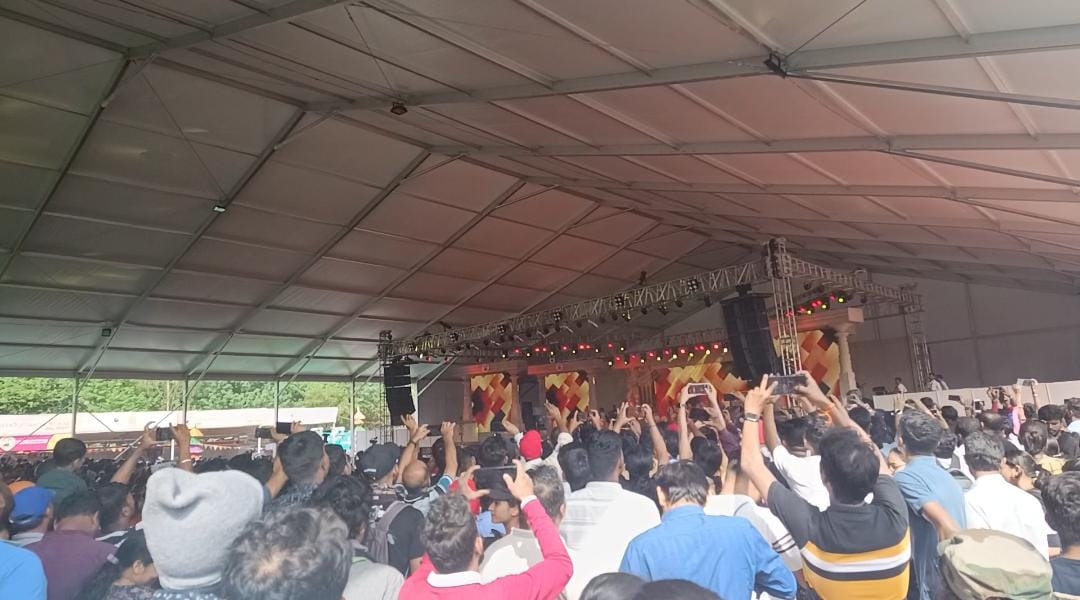
Bengaluru: As the first Kambala event of the city is coming to its closure on Sunday, the number of visitors thronging to witness the historic and electrifying Kambala (Buffalo race) doubled, in line with the expectations of the organising Bengaluru Kambala committee.
Sudeep Shetty, member of the organising committee speaking to the Vartha Bharathi revealed that around 170-180 buffaloes participated in the race. “As expected, the crowd increased on the final, second day. The event is a major success, the race is expected to make a comeback in the silicon city in the next season too. We are very delighted to see such a massive participation. The finals of the race will be held at the palace grounds around midnight.”
Sunday’s vibrant cultural performances featured musical evening by popular singers Arjun Janya, Indu Nagaraj, Shamitha Malnad, a comedy show by “Comedy Khiladi Team-Prashansa Mangaluru," an Oxygen dance team performance, and a live art performance by Vilas Nayak. Traditional performances including, Yakshagana, Atti Kalanja, Pilli Vesha, Kangilu Nrutya and many others caught the attention of the audience at the cultural program held alongside Kambala here at Palace Grounds.
“This sport does not have any caste, creed or religion…It's our land's culture, and people of all religions take part in the race.”
Ankitha, member of Jai Tulunadu Punkedadi and a buffalo owner expressed happiness with the organising committee and stated, “We treat our buffaloes like our kids, they are like god to us. It is a matter of pride that our own Karavali sport has come to Bengaluru. I appeal to all Tulu mothers not to stop our traditions and cultures,it should be passed on to the coming generations.”
"This sport transcends caste, creed, or religion. It is not limited to participation by people of a specific caste or community; rather, it follows traditions and rituals. It is a culture, which is embraced by people regardless of their religious, caste, and creed backgrounds. In our organization, Jai Tulunadu, we have individuals from three different religions, yet we live peacefully, fostering a sense of unity. Our Kambala culture shines as a beacon of hope, overcoming societal conflicts,"added Ankitha.
Meanwhile, a few foreigners were also spotted in the palace grounds who had come to witness the event. Two Swedish citizens, Annie and Tomas, speaking to this correspondent said, “We come from a country where we haven't got so many people, we are not used to it, it's fun and kind of an adventure and we are loving it. It’s important to have such events for the common people to just be happy, and we are also having our happy moments in life.”
Simultaneously, several native Karavalites also expressed a hope for the event to continue in the coming seasons. “We work here in Bengaluru, such events make us feel like we are at our home,” said Sharat Kumar, a native of Badiyadka in Kasaragod.
Another Karavalite, who works in the city asserts that the event has made others aware about our culture and traditions.
The two-day mega sporting event was organised through the collaborative efforts of the Kambala Committees of Dakshina Kannada, Udupi, Kasaragod districts, and the Bengaluru Kambala Committee. The event will draw to a close on Sunday midnight. Various political leaders, film stars, and other dignitaries came down to the event enhancing its grandeur.
Let the Truth be known. If you read VB and like VB, please be a VB Supporter and Help us deliver the Truth to one and all.
CM Siddaramaiah alleges ‘criminal conspiracy’ in Sringeri recount, vows legal action
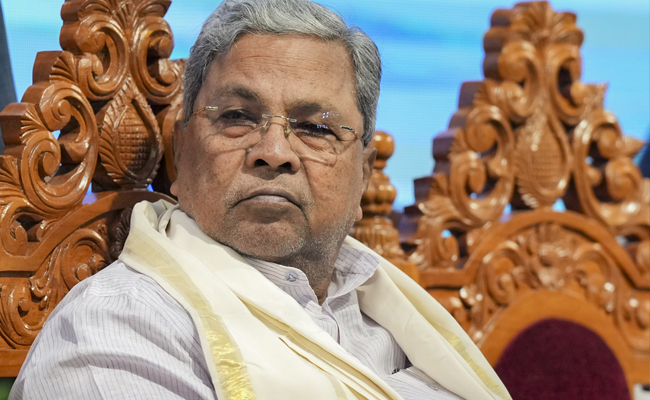
Bengaluru (PTI): Alleging a “criminal conspiracy” by BJP candidate D N Jeevaraj in the Sringeri Assembly poll recounting, Karnataka CM Siddaramaiah on Tuesday said the outcome was manipulated after valid postal ballot votes in favour of Congress leader T D Raje Gowda were tampered with during the recounting process.
Following a Karnataka High Court order on an election petition filed by Jeevaraj, challenging Raje Gowda’s election, the reverification and recounting were conducted on Saturday.
After the reverification and recount of postal ballots for the Sringeri Assembly constituency, votes polled in favour of Raje Gowda were reduced by 255, the returning officer said.
A report on the matter has been submitted to the Election Commission of India for further action, the officer added.
Congress leader Raje Gowda had won the 2023 Assembly polls from Sringeri by 201 votes, defeating his nearest rival Jeevaraj.
Addressing a press conference in Bengaluru, Siddaramaiah said the High Court had directed the recounting of postal ballots and that irregularities were noticed during the exercise conducted on May 2.
“This is a clear case of criminal conspiracy,” Siddaramaiah said, alleging that valid votes cast in favour of Raje Gowda were altered after being accepted by counting agents of all parties, including Congress, BJP, and JD(S).
He claimed that during the recounting of postal ballots, 255 votes were initially accepted as valid by all agents but were later tampered with by subordinate officials.
“There is a second mark on the votes polled in favour of Raje Gowda. They had accepted these as valid votes. Subsequently, another mark was made by officials. This is a clear case of criminal conspiracy,” he said.
When asked who was behind the alleged conspiracy, the CM replied, “It was hatched by Jeevaraj and others. It is planned.”
Siddaramaiah further alleged that the returning officer acted improperly by declaring the result despite the presence of an Election Commission observer during the recounting.
“Immediately after the counting, the returning officer announced the result. He should not have done so; this is against the law,” he said.
He pointed out that Raje Gowda had originally won by 201 votes, but after the recounting, the BJP candidate was declared the winner by 52 votes.
“The BJP has committed a criminal act of conspiracy. This is not vote chori but vote dacoity,” he alleged.
The CM said a police complaint had already been filed by Raje Gowda’s election agent, Sudhir Kumar, and emphasised the need for electoral integrity.
“We want transparency and free and fair elections. That is what our Constitution mandates,” he added.
Stating that the government would pursue legal remedies, Siddaramaiah said, “We are preparing an appeal challenging the returning officer’s announcement in a court of law.”
Responding to a separate query on elections in other states, the CM said there appeared to be an anti-incumbency factor in West Bengal, while results in Tamil Nadu were “surprising,” adding that Vijay’s party was emerging as the largest there.
Following the victory of party candidates in Bagalkote and Davanagere South, Siddaramaiah expressed confidence about future electoral prospects in Karnataka.
“Even in 2028, we will win the Assembly elections. We will come back,” the CM said.
Siddaramaiah added that he would order a forensic examination into the alleged tampering of postal ballots.