Bengaluru techie returns from wedding, finds valuables worth Rs 37.8 lakh stolen from house

Bengaluru: In an incident reported in the city recently, a techie was shocked to find on returning home from a wedding that miscreants had broken into his house situated and stolen valuables worth Rs 37.8 lakh.
The 54-year-old software engineer, Vishwanath SD, and his wife, residing in 4th Block of Kathriguppe in Banashankari 3rd Stage, had gone to Chikkamagaluru to attend a wedding on May 21.
When they returned on May 22, they found the door of the room on the first floor of their house open. They found that miscreants had opened not only the cupboard but also broken open the wardrobes, drawers and locker. Household articles and clothes were strewn on the floor of the room. On the third floor of the house, the terrace door was ajar.
When Vishwanath checked the CCTV camera footage, he found that the miscreants had entered his house from the terrace door at around 8 pm on May 21. They had apparently turned the CCTV camera aside and searched for the valuables in the house.
Vishwanath, who reported to have lost valuables, including cash worth approximately Rs 24 lakh and also jewelry and coins, has filed a police complaint.
The police officers, who visited the house and held an inspection, have collected evidence, including fingerprints.
Let the Truth be known. If you read VB and like VB, please be a VB Supporter and Help us deliver the Truth to one and all.
Ordinance issued to increase number of Supreme Court judges from 34 to 38
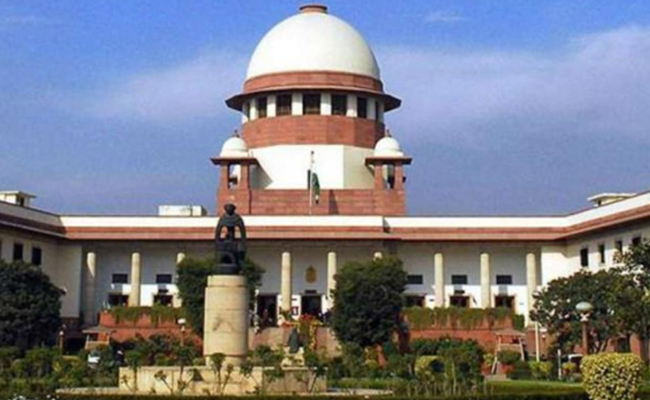
New Delhi (PTI): The government has promulgated an ordinance to increase the strength of the Supreme Court from the present 34 judges to 38, including the Chief Justice of India.
The law ministry notified the ordinance on Saturday, which amended the Supreme Court (Number of Judges) Act, 1956, to increase the sanctioned strength of the top court.
So far, the sanctioned strength of the top court was 34, including the Chief Justice of India (CJI). Now, the number of judges has been increased by four, taking the sanctioned strength to 38.
The top court will now have 37 judges, other than the CJI.
With the apex court having two vacancies at present, and the ordinance coming into force immediately, the Supreme Court Collegium will now have to recommend six names for appointment as judges in the top court.
A bill will be brought in the Monsoon Session of Parliament to convert the ordinance – an executive order – into a law passed by Parliament.
The Union Cabinet had cleared a draft bill on May 5 to increase the number of apex court judges.
The strength of the Supreme Court was last increased from 30 to 33 (excluding the CJI) in 2019.
The Supreme Court (Number of Judges) Act, as originally enacted in 1956, put the maximum number of judges (excluding the CJI) at 10.
This number was increased to 13 by the Supreme Court (Number of Judges), Amendment Act, 1960, and to 17 by another amendment to the law.
The Supreme Court (Number of Judges) Amendment Act, 1986, augmented the strength of judges from 17 to 25, excluding the CJI.
A fresh amendment in 2009 further increased the strength from 25 to 30.
Article 124(3) of the Constitution lists the qualifications required to become a Supreme Court judge.
An Indian citizen who has either served as a high court judge for at least five years, or as an advocate for 10 years, or is a distinguished jurist, can be appointed to the top court.
The strength of the Supreme Court is increased based on the recommendations of the CJI, who writes to the Union law minister. After consulting the finance ministry, the Department of Justice under the law ministry moves the Cabinet with a draft bill.