BJP-JD(S) 'Mysuru Chalo' march demanding CM’s resignation in Mandya on day 4

Mandya (PTI): The combined opposition, BJP and JD(S), on Tuesday continued their protest march, demanding the resignation of Karnataka Chief Minister Siddaramaiah over the alleged Mysuru Urban Development Authority (MUDA) site allotment 'scam.'
The week-long Bengaluru -Mysuru padayatre (foot march) has sought to highlight the alleged fraudulent allotment of sites to land losers by MUDA, including to Siddaramaiah's wife Parvathi.
The fourth day of the 'Mysuru Chalo' protest began at Nidaghatta near here and is scheduled to cover a distance of 20 km to reach the district headquarters city of Mandya.
BJP State President and MLA B Y Vijayendra, former Deputy Chief Minister C N Ashwath Narayan, Deputy Leader of Opposition in Assembly Arvind Bellad, several legislators, leaders and workers from both parties took part as the march resumed.
A large number of workers and leaders from both parties were seen marching shouting slogans against Siddaramaiah and the Congress government, holding BJP and JD(S) party flags and placards, amidst sounds of drum beat.
The stretch through which the march passed was decked up with flags of both parties, buntings and portraits of prominent leaders at several places.
Kick started on Saturday at Kengeri near Bengaluru, the march on its first day had covered a distance of 16 km to reach Bidadi, 22 km on day two to reach Kengal, and 20 km on day three to reach Nidaghatta.
In the MUDA 'scam', it is alleged that compensatory sites were allotted to Siddaramaiah's wife Parvathi in an upmarket area in Mysuru, which had higher property value as compared to the location of her land which had been "acquired" by the MUDA.
The MUDA had allotted plots to Parvathi under a 50:50 ratio scheme in lieu of 3.16 acres of her land, where MUDA developed a residential layout.
Under the controversial scheme, MUDA allotted 50 per cent of developed land to the land losers in lieu of undeveloped land acquired from them for forming residential layouts.
BJP leaders have claimed that the MUDA "scam" is of the magnitude of Rs 4,000 crore to Rs 5,000 crore.
The Congress government on July 14 constituted a single member inquiry commission under former High Court Judge Justice P N Desai to probe the MUDA 'scam'.
Based on a petition filed by advocate-activist T J Abraham, Karnataka Governor Thaawarchand Gehlot had issued a "show-cause notice" on July 26 directing the Chief Minister to submit his reply to the allegations against him within seven days as to why permission for prosecution should not be granted against him.
Subsequently, the Karnataka government had "strongly advised" the Governor to withdraw his "show-cause notice" to the CM, and alleged "gross misuse of the Constitutional Office '' of the Governor. The council of Ministers after their meeting had said a concerted effort is being made to destabilise a lawfully elected majority government in Karnataka for political considerations.
Let the Truth be known. If you read VB and like VB, please be a VB Supporter and Help us deliver the Truth to one and all.
Ordinance issued to increase number of Supreme Court judges from 34 to 38
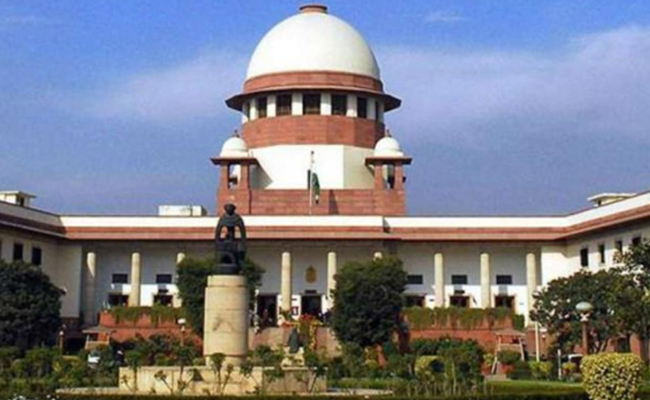
New Delhi (PTI): The government has promulgated an ordinance to increase the strength of the Supreme Court from the present 34 judges to 38, including the Chief Justice of India.
The law ministry notified the ordinance on Saturday, which amended the Supreme Court (Number of Judges) Act, 1956, to increase the sanctioned strength of the top court.
So far, the sanctioned strength of the top court was 34, including the Chief Justice of India (CJI). Now, the number of judges has been increased by four, taking the sanctioned strength to 38.
The top court will now have 37 judges, other than the CJI.
With the apex court having two vacancies at present, and the ordinance coming into force immediately, the Supreme Court Collegium will now have to recommend six names for appointment as judges in the top court.
A bill will be brought in the Monsoon Session of Parliament to convert the ordinance – an executive order – into a law passed by Parliament.
The Union Cabinet had cleared a draft bill on May 5 to increase the number of apex court judges.
The strength of the Supreme Court was last increased from 30 to 33 (excluding the CJI) in 2019.
The Supreme Court (Number of Judges) Act, as originally enacted in 1956, put the maximum number of judges (excluding the CJI) at 10.
This number was increased to 13 by the Supreme Court (Number of Judges), Amendment Act, 1960, and to 17 by another amendment to the law.
The Supreme Court (Number of Judges) Amendment Act, 1986, augmented the strength of judges from 17 to 25, excluding the CJI.
A fresh amendment in 2009 further increased the strength from 25 to 30.
Article 124(3) of the Constitution lists the qualifications required to become a Supreme Court judge.
An Indian citizen who has either served as a high court judge for at least five years, or as an advocate for 10 years, or is a distinguished jurist, can be appointed to the top court.
The strength of the Supreme Court is increased based on the recommendations of the CJI, who writes to the Union law minister. After consulting the finance ministry, the Department of Justice under the law ministry moves the Cabinet with a draft bill.