BJP-JD(S) protest march is for 'redemption from their sins': Deputy CM DK Shivakumar
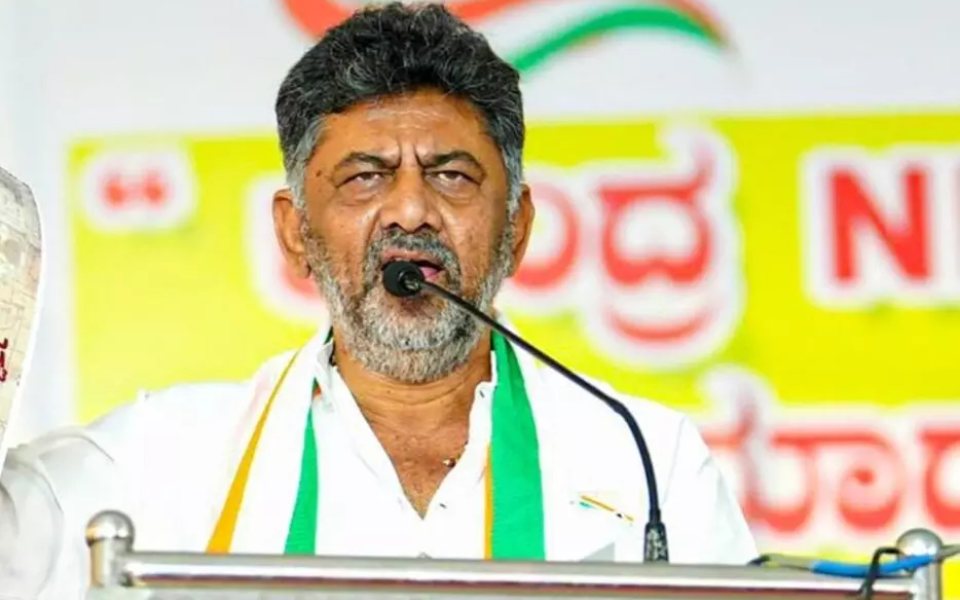
Channapatna (Karnataka), Aug 4: Karnataka Deputy Chief Minister D K Shivakumar on Sunday termed the opposition BJP and JD(S)' ongoing 'padayatra' against alleged Mysuru Urban Development Authority site allotment scam, seeking to corner the Congress government and Chief Minister Siddaramaiah, as a march for "redemption from their sins".
He also questioned JD(S) leader and Union Minister H D Kumaraswamy about the source of his family’s wealth and said he could not have made thousands of crores through farming.
"BJP-JD(S) padayatre is a "Paapa Vimochana Padayatre" (a foot march for redemption from their sins)... it is the march of the corrupt, by the corrupt and for the corrupt," Shivakumar said.
Speaking at the 'Janandolana' event, a public meeting by the Congress to counter BJP-JD(S)' padayatra, he accused BJP leaders and their family, Kumaraswamy and his JDS leaders and their families of indulging in corruption.
ALSO READ; Will work towards bringing back BJP-JD(S) coalition govt in Karnataka: H D Kumaraswamy
The week long 'Mysuru Chalo padayatre' by BJP and JD(S) from Bengaluru that began on Saturday is against the alleged fraudulent allotment of sites to land losers by MUDA, including Siddaramaiah's wife Parvathi.
Noting that he runs a business along with farming, Shivakumar said while Kumaraswamy has clearly said he is the son of the soil and does only farming. "Did he make thousands of crores of wealth just by growing potatoes and onions?"
He also sought to know about Kumaraswamy's elder brother H D Balakrishna Gowda, a retired KAS officer, and his family's assets.
"Kumaranna (Kumaraswamy), you can discuss my assets. Start from the first, your brother -- Balakrishna Gowda, his wife, her father and family -- in Mysuru, Srirangapatna and Bengaluru. Also their benamis. How much land is in their name, you have to answer it. A government employee, how many thousand crores is he worth?" he asked.
Averring that he hasn't yet spoken about the alleged denotification and mining scams involving Kumaraswamy, the Deputy CM said, "I am yet to release your family’s assets, but I will soon...."
JD(S) won 136 seats under his presidency, but JD(S) secured only 19 seats inder Kumaraswamy, Shivakumar said.
"Now, you (Kumaraswamy) have joined your hands with the BJP to save your party. You are an expert in hit and run and you are a blackmailer... You said you will not attend the padayatra but why are you attending now. You are trying to ruin JD(S) for the sake of power."
Channapatna Assembly segment will be facing the by-polls soon. The date is yet to be announced.
The bypoll in Channapatna is necessitated, following Kumaraswamy's election to the Lok Sabha from Mandya.
Speculations are rife within the Congress circles that either Shivakumar or his brother D K Suresh, a former MP, who unsuccessfully contested from Bangalore Rural Lok Sabha segment, are likely to be Congress candidate from Channapatna.
"Whoever may be the candidate in Channapatna, but your vote goes to Siddaramaiah and Shivakumar. The Congress party symbol is the real candidate. I will work for this constituency like a legislator, give me an opportunity by supporting Congress," he appealed.
Let the Truth be known. If you read VB and like VB, please be a VB Supporter and Help us deliver the Truth to one and all.
CPI(M) rebel Kunhikrishnan hopes for 5,000-vote win in Payyanur
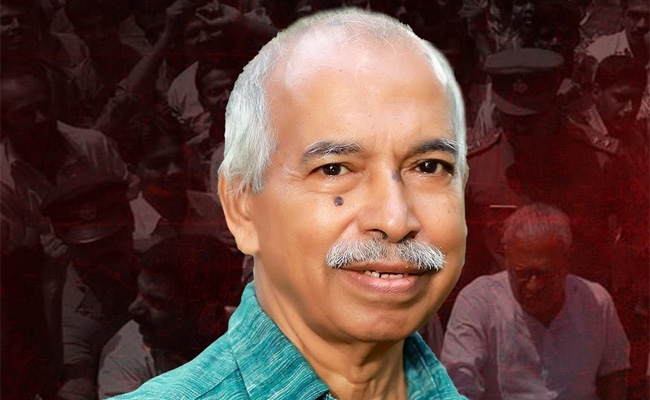
Kannur (Kerala) (PTI): CPI(M) rebel candidate V Kunhikrishnan, who contested as a UDF-backed Independent from Payyanur here, on Saturday said he was hoping to win the Assembly election by a margin of 5,000 votes.
Kunhikrishnan was expelled from the CPI(M) earlier this year after raising allegations of corruption in the party’s martyrs’ fund against sitting MLA T I Madhusoodanan.
Speaking to a TV channel, Kunhikrishnan said he had announced his candidature as a mark of protest and not with expectations of victory.
However, he said the situation had changed drastically, with a strong undercurrent within CPI(M) votes favouring him.
"The undercurrent in CPI(M) votes cannot be measured. Now people are giving a response indicating victory with a margin of at least 5,000 votes," he said.
Payyanur is considered a CPI(M) stronghold, and a defeat for Madhusoodanan there would be a major setback for the party.
On political violence in Payyanur, Kunhikrishnan said he had been facing it since filing his nomination.
"The people leading this violence should think about how long they can continue it. It is the police which has to take the initiative to stop this violence as part of maintaining law and order. But the police are not intervening at the required level," he said.
Regarding his political future, Kunhikrishnan said efforts were underway to strengthen Left groups, and discussions were being held across Kerala in that regard.
"After discussing with others, a decision will be taken," he said.
Kunhikrishnan is among six former CPI(M) leaders who either exited the party or were suspended before contesting for the UDF in the April 9 Assembly elections.
Elections to the 140-seat Kerala Assembly were held on April 9, and the counting of votes will be held on May 4.