BJP may field ex-CMs Jagadish Shettar and Basavaraj Bommai in LS polls
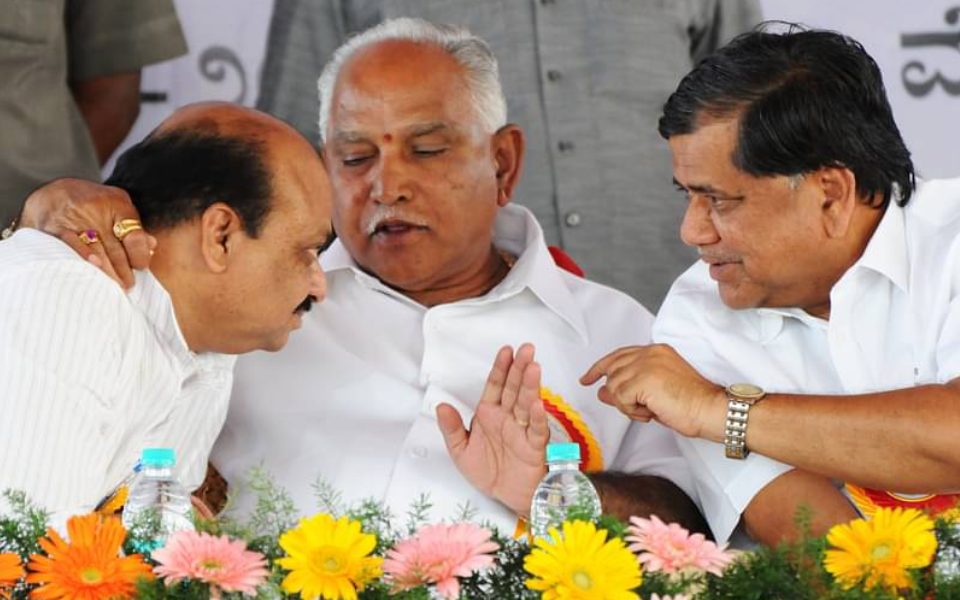
Bengaluru, Mar 7: BJP that has plans to win big time in Karnataka in the upcoming Lok Sabha polls, may field two of its former Chief Ministers -- Basavaraj Bommai and Jagadish Shettar, who come from the dominant Lingayat community, counted by the party as its core vote-base.
Giving indications about this, veteran party leader B S Yediyurappa on Thursday said discussions have taken place regarding candidates for all 28 Lok Sabha seats in the state including Bommai and Shettar, with Union Home Minister Amit Shah and the party's national president J P Nadda, but no final decision has been taken.
The former Chief Minister, who is a member of BJP's Parliamentary Board and Central Election Committee, also hinted that BJP may allot two-three seats to its alliance partner JD(S) in Karnataka, on which party's national leadership including Prime Minister Narendra Modi will be taking a final decision.
BJP leaders from various States are meeting Shah and Nadda, ahead of the party's Central Election Committee, which includes Modi and other senior leaders, holding its second meeting later this week for finalising the party's candidates for the Lok Sabha polls.
ALSO READ: Karnataka Deputy CM DK Shivakumar claims several opposition leaders will join Congress
It has so far announced candidates for 195 Lok Sabha seats out of the total 543 across the country.
"Yesterday Amit Shah ji, Nadda ji and all of us together discussed candidates for all 28 Lok Sabha seats. Who should be given the ticket has not yet been finalised. All of that will be discussed with the Prime Minister, and we might get clarity in two-three days," Yediyurappa told reporters in the national capital.
He said, "Everything has been discussed, but who will be given a ticket from where has not yet been finalised. Discussions have happened about Bommai and Jagadish Shettar."
Speculations are rife within the state BJP circles that Bommai, who is currently MLA from Shiggaon, may be fielded from Haveri, with party's sitting MP Shivakumar Udasi announcing retirement from electoral politics after the current term ends.
Shettar may be fielded from Belgaum (Belagavi), currently represented by Mangala Angadi, the widow of former Union Minister of State Suresh Angadi. She had won with a margin of over 5,000 votes in 2021 bypolls against the Congress strongman Satish Jarkiholi, when after the seat fell vacant due to her husband's death.
BJP wants to replace Mangala with a strong candidate to retain the seat, and Shettar's name is doing the rounds as he also happens to be a relative of the Angadi family and was the poll incharge of this seat when she faced the bypoll.
Shettar, who had quit the BJP to join the Congress ahead of the state assembly polls last year on being denied the ticket, rejoined his old party in January.
Both Bommai and Shettar are from the Lingayat community, which is seen as the strong vote-base of the BJP in Karnataka.
According to party sources, the community "slightly moving away" from the saffron party in the Assembly polls last year is said to be one among the major reasons for its defeat. Yediyurappa is also a Lingayat.
According to Yediyurappa, there will be another round of discussions with BJP's central leadership on Thursday at which some decisions may be taken. He also expressed confidence about winning at least 25 seats, and noted that efforts are on in this direction.
Regarding the seats that will be given to JD(S), he said the decision that will be taken by Modi and Shah is final.
"It is not yet finalised as to which seats will be given to them. Two to three seats may be given to them," he added.
BJP and JD(S) have had discussions on seat sharing. However, there is no official announcement yet.
As per information available so far, JD(S) may contest in three seats -- Mandya, Hassan and Kolar.
There may also be possibility of a candidate from the JD(S) contesting on the BJP symbol, according to sources, and it is likely to be noted cardiac surgeon and former Prime Minister H D Deve Gowda's son-in-law Dr C N Manjunath from Bangalore Rural segment, where sitting MP and Deputy Chief Minister D K Shivakumar's brother D K Suresh is likely to be the Congress candidate once again.
There is also pressure from party workers on Gowda's son -- former CM and JD(S) state President H D Kumaraswamy -- to contest from the Vokkaliga bastion of Mandya, JD(S) sources added.
The BJP wants to repeat or surpass its 2019 Lok Sabha polls performance, when it had swept the state, by winning 25 out of total 28 seats, and had ensured the win of a party supported independent candidate in Mandya.
The Congress and the JD(S), which were running a coalition government back then and fought the election together, had come a cropper winning just one seat each.
But the political scene has changed significantly; the Congress scored a thumping victory in the Assembly elections in May last year and now appears battle-ready, determined to put up a strong show in the Lok Sabha polls.
It is also a role reversal of sorts for JD(S) which joined the BJP-led NDA in September last year and wants to prove that it's still a force to reckon with, particularly in South Karnataka.
Let the Truth be known. If you read VB and like VB, please be a VB Supporter and Help us deliver the Truth to one and all.
Patna-bound IndiGo flight makes emergency landing at Lucknow due to bad weather
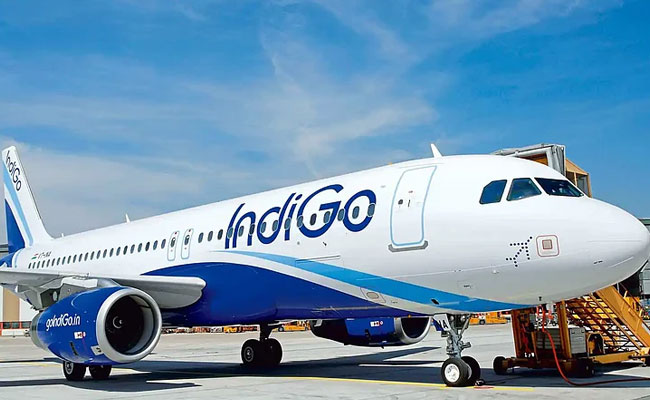
Lucknow (PTI): Adverse weather forced an IndiGo Kolkata-Patna flight to make an emergency landing at Lucknow airport on Friday, airport sources said.
According to airport officials, weather conditions in Patna deteriorated suddenly on Friday afternoon, affecting flight operations.
IndiGo flight 6E 6917 from Kolkata, which was scheduled to land in Patna at 3.50 pm, could not land due to bad weather and kept circling in the air after failing to get clearance from air traffic control, they said.
The flight was later diverted to Lucknow and landed safely at the Chaudhary Charan Singh International Airport at around 5.15 pm. There were 180 passengers and six crew members on board, officials said.
The aircraft was later allowed to depart for Patna after weather conditions improved.