Border dispute: MSRTC partially suspends bus services to Karnataka
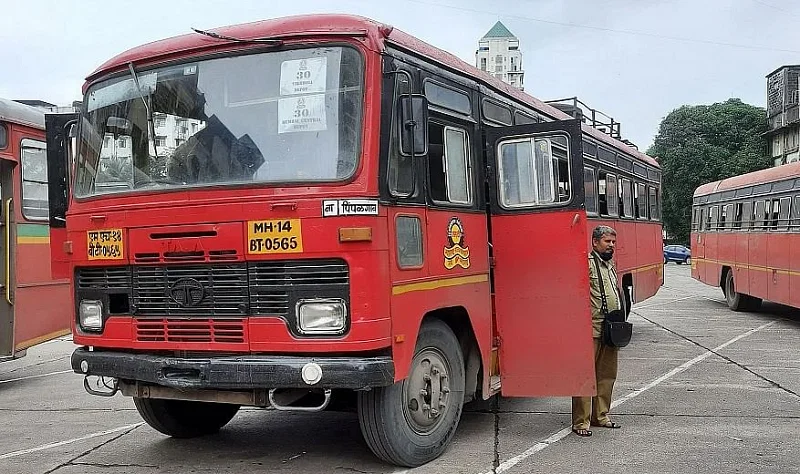
Mumbai, Dec 7: Amid the simmering border row, Maharashtra's state-run bus operator on Wednesday said it has suspended 382 bus services to Karnataka, of the total 1,156 services operated by it daily to the neighbouring state.
The decision of partial suspension of bus services to Karnataka was taken following the instructions from the local police and the district administration, the Maharashtra State Road Transport Corporation (MSRTC) said in a statement.
The MSRTC buses departing from various places in Maharashtra go to Karnataka via Nanded, Osmanabad, Solapur, Sangli, Kolhapur and Sindhudurg districts.
Of these, 312 out of the 572 services operated from Kolhapur via Nipani-Belagavi have been suspended on the instructions of local police and the district administration, it said.
The buses to Gadhinglaj, Chandgad, Aajra (all in Kolhapur district), Konkan and Goa from Kolhapur have been diverted via alternate routes instead of Nipani town in Kolhapur, the statement said.
Apart from this, 22 of the 60 services to Karnataka from Sangli district have been suspended due to the instruction from local administration, it said, adding that another 48 services on sensitive routes from other divisions have been suspended.
The 145 buses that went to Saundatti shrine in Karnataka carrying around 7,000 devotees from Kolhapur are expected to reach by midnight. If necessary, Karnataka police have assured to give protection to these buses, the MSRTC said in the statement.
On the occasion of 'Datta Jayanti', the birth anniversary of Hindu deity Lord Dattatreya, a fair has been organised at Ganagapur in Karnataka, for which additional buses are being run on Solapur-Akkalkot-Ganagapur route as many devotees from Maharashtra take part in the fair. However, the service is operated without any trouble.
The MSRTC is one of the biggest state-owned public transport undertakings in the country with a fleet of over 16,000 buses. The loss-making corporation used to ferry over 60 lakh passengers daily before the outbreak of the pandemic.
Let the Truth be known. If you read VB and like VB, please be a VB Supporter and Help us deliver the Truth to one and all.
4 workers die after being buried under coal slurry in Jharkhand's Dhanbad
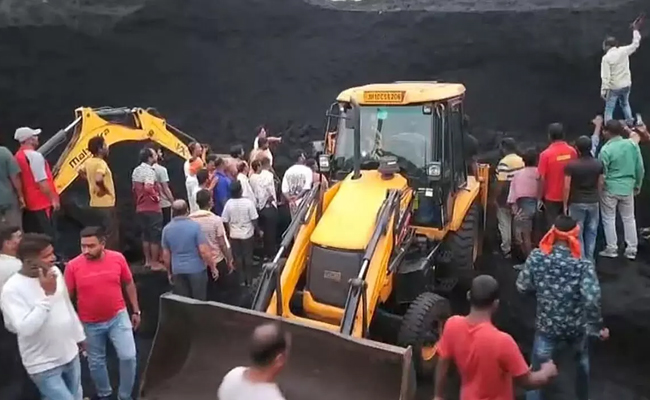
Dhanbad (Jharkhand) (PTI): At least four workers died after being buried under coal slurry in Jharkhand's Dhanbad district on Saturday, a police official said.
The incident took place at Moonidih coal washery in the command area of Bharat Coking Coal Limited (BCCL).
"Bodies of all four workers were dug out of debris during a rescue operation," Putki police station in-charge Waqar Hussain told PTI.
The incident took place when coal slurry was being loaded into trucks by workers, during which a large chunk of slurry fell and trapped several workers underneath, officials said.
The deceased have been identified as Manik Bauri, Dinesh Bauri, Deepak Bauri, and Hemlal Gope.
Meanwhile, the family members of the deceased and local villagers placed the bodies in front of the washery gate and began a protest.
They demanded compensation, jobs for dependents and action against those responsible for the incident.
Police and administration officials are trying to pacify the protesters, an official said.