Cab driver arrested for molesting woman during morning walk in Bengaluru

Bengaluru: A 34-year-old woman was allegedly molested by a cab driver two days ago while she was waiting for a neigbhour to join her for a morning walk. The accused was arrested on Monday, police said.
The incident which occurred at around 5 am on August 2 in Konanakunte police station limits of South Bengaluru was caught on CCTV camera of a house on the road, and it went viral on social media platforms, they said.
In the purported video (running 1.06 minutes), the woman is seen waiting in front of a house. She is suddenly caught hold of by a man from behind. He grasps her and molests her. She shouts for help and manages to run away, but he chases her. He overpowers her as she tries to free herself from his clutches. But when the woman screams for help, he manages to flee from the spot.
Following the CCTV footage, the police traced the victim and asked her to lodge a complaint.
ALSO READ: Rameshwaram Cafe blast: NIA conducts spot inspection along with two accused
"The woman was waiting in front of the house of her neigbhour in a narrow bylane to go for a morning walk when the incident occurred. An unidentified man allegedly caught hold of her and molested her. When she screamed, he managed to flee from the spot," a senior police officer said.
Based on a complaint given by her on August 4, a case was registered under sections 74 (assault or use of criminal force to woman with intent to outrage her modesty), 75 (sexual harrassment), 78 (stalking), 79 (word, gesture or act intended to insult modesty of a woman) and 126 (Wrongful restraint) of the Bharatiya Nyaya Sanhita (BNS), he said.
"Investigation was taken up in this case, and we have nabbed the culprit responsible on Monday. It is found that a cab driver Suresh, 25, used to frequently ferry corporate employees to and fro from that place (narrow bylane) to their place of work. On seeing the woman walking around, he tried to molest her. Further investigation is underway," Lokesh Jagalasar, DCP (South) said.
#WATCH | Karnataka | Bengaluru South Division DCP Lokesh B Jagalasar says, " Under Konanakunte PS limits, a case of molestation was registered yesterday evening. In this case, a lady who had gone out for a walk around 5 am-5:15 am, when was accosted by a person, who molested her… pic.twitter.com/5ZwYoozjnP
— ANI (@ANI) August 5, 2024
In shocking incident from Bengaluru, Karnataka, a woman was recently molested by an unknown assailant while she was out for a morning walk in Krishna Nagar, Konanakunte area of the city. #Bengaluru #Karnataka #women pic.twitter.com/JMeUP3QLPV
— kumar Ashutosh Anand (@Ashutos59663780) August 5, 2024
Let the Truth be known. If you read VB and like VB, please be a VB Supporter and Help us deliver the Truth to one and all.
Ordinance issued to increase number of Supreme Court judges from 34 to 38
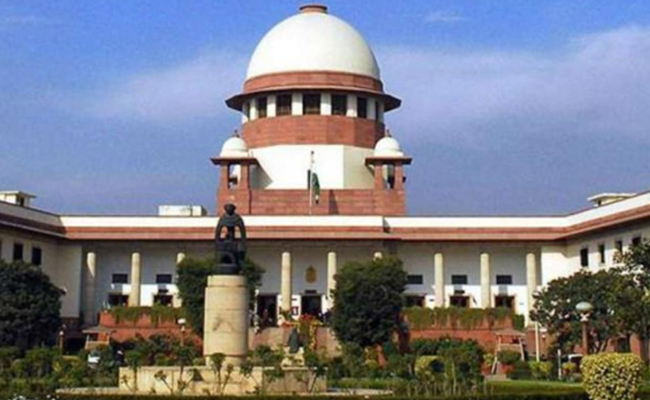
New Delhi (PTI): The government has promulgated an ordinance to increase the strength of the Supreme Court from the present 34 judges to 38, including the Chief Justice of India.
The law ministry notified the ordinance on Saturday, which amended the Supreme Court (Number of Judges) Act, 1956, to increase the sanctioned strength of the top court.
So far, the sanctioned strength of the top court was 34, including the Chief Justice of India (CJI). Now, the number of judges has been increased by four, taking the sanctioned strength to 38.
The top court will now have 37 judges, other than the CJI.
With the apex court having two vacancies at present, and the ordinance coming into force immediately, the Supreme Court Collegium will now have to recommend six names for appointment as judges in the top court.
A bill will be brought in the Monsoon Session of Parliament to convert the ordinance – an executive order – into a law passed by Parliament.
The Union Cabinet had cleared a draft bill on May 5 to increase the number of apex court judges.
The strength of the Supreme Court was last increased from 30 to 33 (excluding the CJI) in 2019.
The Supreme Court (Number of Judges) Act, as originally enacted in 1956, put the maximum number of judges (excluding the CJI) at 10.
This number was increased to 13 by the Supreme Court (Number of Judges), Amendment Act, 1960, and to 17 by another amendment to the law.
The Supreme Court (Number of Judges) Amendment Act, 1986, augmented the strength of judges from 17 to 25, excluding the CJI.
A fresh amendment in 2009 further increased the strength from 25 to 30.
Article 124(3) of the Constitution lists the qualifications required to become a Supreme Court judge.
An Indian citizen who has either served as a high court judge for at least five years, or as an advocate for 10 years, or is a distinguished jurist, can be appointed to the top court.
The strength of the Supreme Court is increased based on the recommendations of the CJI, who writes to the Union law minister. After consulting the finance ministry, the Department of Justice under the law ministry moves the Cabinet with a draft bill.