Case lodged against BJP MLC Ravi Kumar for alleged remarks against Kalaburagi DC
IAS association condemns
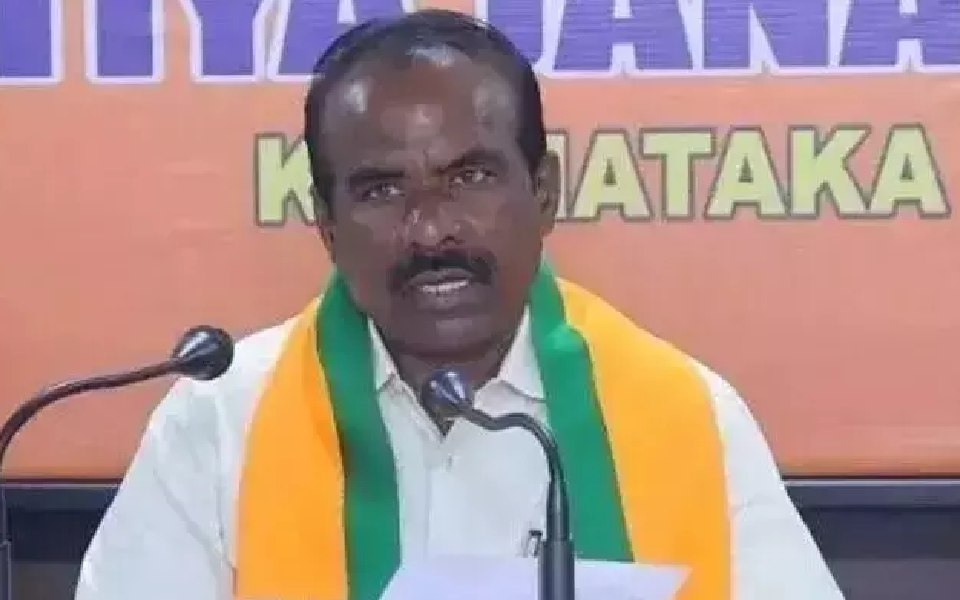
Kalaburagi: A case has been registered against BJP MLC N. Ravikumar at the Station Bazar police station in Kalaburagi for allegedly making derogatory remarks against Deputy Commissioner Fouzia Tarannum. The complaint was filed by Dattatreya Ilkalaki, a resident of Sharana Sirasagi.
Meanwhile, the Indian Administrative Service (IAS) Officers’ Association of Karnataka has strongly condemned the remarks made by Ravikumar during a public event held on May 24. In a statement, the association described his comments as “baseless, unjustified, and entirely devoid of rationale,” calling them “deplorable and unacceptable.”
The association asserted that DC Fouzia Tarannum is a civil servant of “impeccable integrity” with an outstanding record of public service. It expressed deep concern over what it viewed as a deliberate attempt to malign her professional reputation.
“This kind of provocative and false public statement not only demeans the dignity of a committed civil servant but also amounts to harassment, causing severe mental trauma,” the association stated. It emphasized that civil servants must be allowed to discharge their duties without fear or political pressure, and reaffirmed its commitment to upholding their dignity and integrity.
The association extended full solidarity to Tarannum and demanded an unconditional apology from MLC Ravikumar. It also urged the authorities to initiate legal proceedings under relevant laws for what it termed the deliberate dissemination of misinformation aimed at denigrating a senior official.
During his speech at the public program, Ravikumar had allegedly remarked, “The Kalaburagi DC office has also lost its independence. The DC madam is also listening to what they (Congress) say. I don't know whether the DC has come from Pakistan or is an IAS officer here,” a statement that has drawn widespread criticism.
We strongly condemn the remarks made by Shri Ravi Kumar, MLC, against @DCKalaburagi @Fouzia_Taranum at a public function. DC’s integrity & commitment to work is impeccable & her dedication to public service is irrefutable. IASOA will stand by officers who are targeted unjustly. pic.twitter.com/9HDUOCZLYW
— IAS Officers’ Association, Karnataka (@IASOAKarnataka) May 26, 2025
Let the Truth be known. If you read VB and like VB, please be a VB Supporter and Help us deliver the Truth to one and all.
Ordinance issued to increase number of Supreme Court judges from 34 to 38
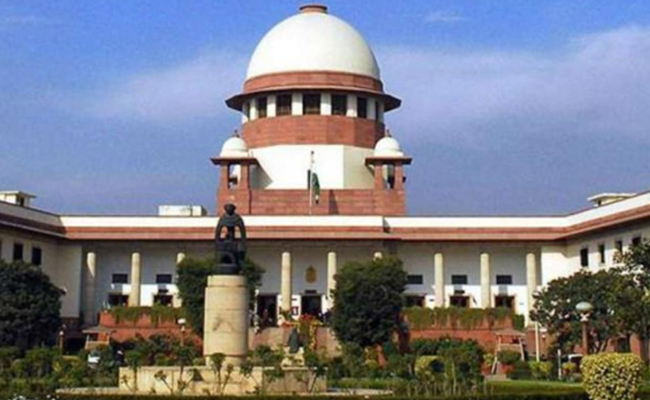
New Delhi (PTI): The government has promulgated an ordinance to increase the strength of the Supreme Court from the present 34 judges to 38, including the Chief Justice of India.
The law ministry notified the ordinance on Saturday, which amended the Supreme Court (Number of Judges) Act, 1956, to increase the sanctioned strength of the top court.
So far, the sanctioned strength of the top court was 34, including the Chief Justice of India (CJI). Now, the number of judges has been increased by four, taking the sanctioned strength to 38.
The top court will now have 37 judges, other than the CJI.
With the apex court having two vacancies at present, and the ordinance coming into force immediately, the Supreme Court Collegium will now have to recommend six names for appointment as judges in the top court.
A bill will be brought in the Monsoon Session of Parliament to convert the ordinance – an executive order – into a law passed by Parliament.
The Union Cabinet had cleared a draft bill on May 5 to increase the number of apex court judges.
The strength of the Supreme Court was last increased from 30 to 33 (excluding the CJI) in 2019.
The Supreme Court (Number of Judges) Act, as originally enacted in 1956, put the maximum number of judges (excluding the CJI) at 10.
This number was increased to 13 by the Supreme Court (Number of Judges), Amendment Act, 1960, and to 17 by another amendment to the law.
The Supreme Court (Number of Judges) Amendment Act, 1986, augmented the strength of judges from 17 to 25, excluding the CJI.
A fresh amendment in 2009 further increased the strength from 25 to 30.
Article 124(3) of the Constitution lists the qualifications required to become a Supreme Court judge.
An Indian citizen who has either served as a high court judge for at least five years, or as an advocate for 10 years, or is a distinguished jurist, can be appointed to the top court.
The strength of the Supreme Court is increased based on the recommendations of the CJI, who writes to the Union law minister. After consulting the finance ministry, the Department of Justice under the law ministry moves the Cabinet with a draft bill.