'Caste census': CM Siddaramaiah gets enumerated, assures personal info will not be misused
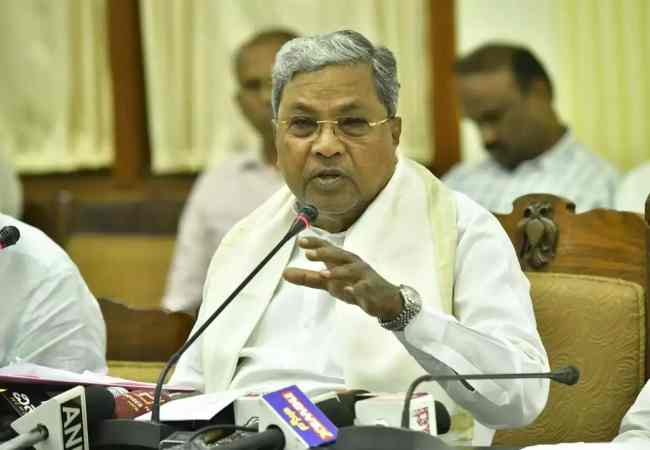
Bengaluru(PTI): Karnataka Chief Minister Siddaramaiah, who was enumerated on Thursday for the ongoing Social and Educational Survey--widely referred to as the "caste census"--, said the survey was not limited to any one caste, but a scientific effort to shed light on the lives of everyone in the state.
Calling on everyone to participate in the survey, he assured that the personal information gathered will definitely not be misused.
The survey, being conducted by the Karnataka State Commission for Backward Classes, began on September 22, and was scheduled to end on October 7. However, the state government decided to extend the survey till October 18.
"I have successfully fulfilled my duty by providing information to the staff who visited my house for the social and educational survey conducted by our government through the Backward Classes Commission. Our government has undertaken this survey with the aim of eliminating inequality and poverty and building an equal society," Siddaramaiah said in a post on 'X'.
Stating that everyone should participate in this survey without fail and give their information honestly, he said, "Only then will accurate information be obtained about the real situation of the society, and it will be possible to identify the economically, socially and educationally backward people and formulate welfare programmes for their progress."
This is not a survey limited to any one caste, but a scientific effort to shed light on the lives of everyone in the state. "By providing information in the survey, your personal information will definitely not be misused. Stop worrying and share the information with the staff," the CM said.
Before extending the deadline, the survey was estimated to cost Rs 420 crore.
The exercise is being carried out using a 60-question questionnaire "scientifically", according to officials.
The government had spent Rs 165.51 crore on an earlier Social and Educational Survey in 2015, which was later discarded.
Let the Truth be known. If you read VB and like VB, please be a VB Supporter and Help us deliver the Truth to one and all.
Two arrested for allegedly sexually assaulting woman at knifepoint in Kochi

Kochi (PTI): Two persons have been arrested after a three-member gang allegedly sexually assaulted a woman at knifepoint near Ernakulam Junction Railway station, officials said on Friday.
The arrested accused were identified as Danish (26), a native of Varkala in Thiruvananthapuram district, and Rahul (39), a native of Paravoor in Kollam district.
Police officials said they were searching for the prime accused, Sanjay, a native of Aroor in Alappuzha district.
According to police, the incident occurred on the night of May 5 when the victim was chatting with her friend near a closed hotel near Ernakulam Junction Railway station.
Officials said the accused approached them, attacked the victim’s friend and then allegedly threatened the woman with a knife before sexually assaulting her.
Police said the accused also allegedly disrobed the victim during the attack.
However, the woman managed to escape from the spot and approached a nearby shop for help.
Police were informed immediately and shifted the victim to the police station.
Officials said the accused were heavily drunk at the time of the incident and went into hiding soon after the attack.
Police registered a case on May 6 under charges including rape, disrobing a woman, criminal intimidation and robbery.
The two accused were later arrested in the city, while efforts are continuing to trace Sanjay, police said.
The accused were produced before a court and remanded to judicial custody.