Centre, state have share in metro project; serving people important, not credit: DK Shivakumar
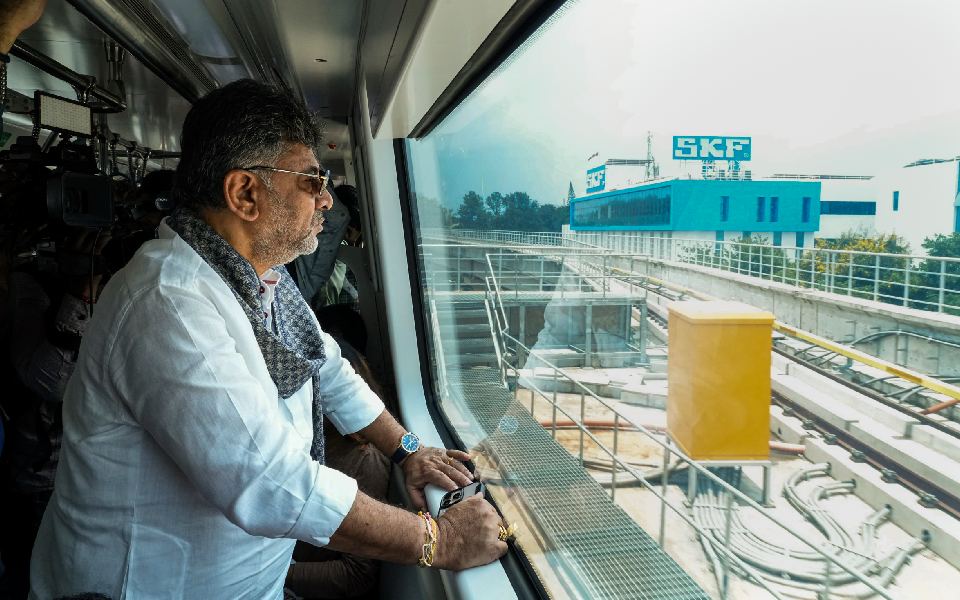
Bengaluru, Aug 5 (PTI): Karnataka Deputy Chief Minister D K Shivakumar on Tuesday said that both state and central governments hold shares in the metro projects, as he asserted that serving the people was more important than "credit politics".
Shivakumar, who is also the Minister in-charge for Bengaluru development, inspected the soon-to-be-launched Yellow line of "Namma Metro" (Bengaluru Metro).
Prime Minister Narendra Modi is scheduled to inaugurate the Yellow Line on August 10.
"This is our metro. The CM and I had requested the PM to inaugurate the Yellow line and he has given the time now. This is not a project of the central government alone, the state too has 50 per cent share in the project. We are all serving the public." Shivakumar said in response to a question.
"The PM will inaugurate the Yellow line on August 10. The 19.15 km line with 16 stations was built at a cost of Rs 7,610 crore. A small programme will be organised at the auditorium in Indian Institute of Management, Bengaluru. The PM, CM and the local legislators would travel in the inaugural trip of the train thereafter....We will submit an appeal to the PM on funds needed for the double decker project's land acquisition," he said.
Asked about the extension of the metro network and building more double-decker metro lines (road and metro corridor), Shivakumar said, "It would be nice if the MPs who are making a lot of noise got us some funds. The MPs don't speak a word on the funds, but are engaged in nitpicking. We have decided to build double decker metro lines for all metro lines in the future."
All the three Lok Sabha seats of Bengaluru are represented by BJP MPs.
The Commissionerate of Railway Safety gave the clearance for the Yellow line on July 31.
The Deputy CM hit out at Bengaluru South BJP Tejasvi Surya for alleging delay in opening the line for the service of the people.
"We can't rush through things like safety. Our MP is a young blood in a hurry and doesn't have any experience," he said.
Noting that three train sets have arrived for the Yellow line and the fourth set will come in August, Shivakumar said three trains will operate now at an interval of 25 minutes. The frequency would be increased to 10 minutes once more train sets arrive. This is a crucial line to link the IT hubs to the city.
Replying to a question on inauguration of Hebbal flyover's new loop, Shivakumar said it will be opened to the public before August 15 after taking CM's availability into consideration for the inaugural.
"The KR-Puram-City loop will be opened now and the Airport service road-City loop will be opened a little later. We are planning a new tunnel from Nagawara to Esteem Mall to agricultural university. This would be a 1.5 km tunnel and it is different from the larger tunnel road being planned," he said.
Let the Truth be known. If you read VB and like VB, please be a VB Supporter and Help us deliver the Truth to one and all.
Congress using hijab issue to pacify minority anger, alleges Karnataka LoP R Ashoka
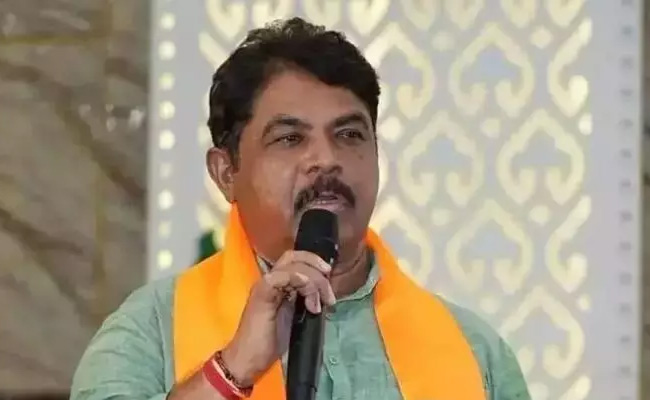
Bengaluru: Leader of Opposition in the Assembly R. Ashoka has accused the Congress government of using the hijab issue to placate what he described as discontent among minority voters after the Davanagere by-election.
In a post on X on Wednesday, Ashoka alleged that the state government, instead of addressing issues such as price rise, corruption, farmers’ distress and law and order, was attempting to retain its minority vote base by reviving the hijab issue.
Referring to the 2022 dress code introduced by the BJP government, which prohibited hijab in schools and colleges, Ashoka said the Karnataka High Court had upheld the policy and emphasised the importance of discipline in educational institutions.
He questioned the Congress government’s move to revisit the issue and asked whether setting aside the court-backed policy to benefit one community could be described as secularism.
Ashoka further alleged that while the government was willing to permit hijab, it continued to prohibit saffron shawls.
He accused the government of dividing students on religious lines rather than treating schools and colleges as spaces of equality.
Drawing a comparison with Mamata Banerjee’s government in West Bengal, Ashoka claimed that excessive appeasement politics had harmed the state and warned that the Congress in Karnataka could face a similar political response.
He said voters in Karnataka would teach the Congress a lesson for what he termed “vote-bank politics” and for compromising constitutional and judicial principles.