Centre to consider Bangalore Metro Phase-2, 3A proposals: Union Minister Manohar Lal Khattar
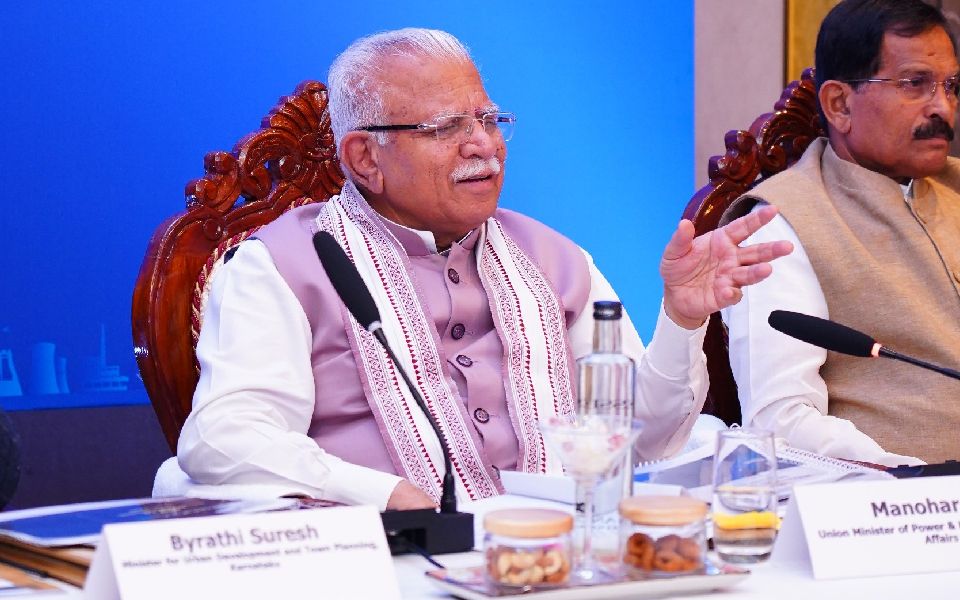
Bengaluru, May 23 (PTI): Union Minister of Housing and Urban Affairs and Power Manohar Lal Khattar on Friday said the Centre will examine Bangalore Metro Phase-2 and 3A proposals after they receive approval from the Karnataka government.
He reviewed the progress of various urban initiatives in Bengaluru and urged the state government to prioritise legacy waste management and tap Scheme for Special Assistance to States for Capital Investment (SSASCI) 2025-26 for Urban Reforms.
Expressing satisfaction over the progress of various missions, the Union Minister said the revised cost of Bangalore Metro Phase-2 project will be considered once the proposal is approved by the state cabinet.
"At present about 75 km of metro network is operational in Bengaluru and about 145 km of metro network is under construction. Recently, a few months back, the central government sanctioned 45 km of metro phase-3 network at a cost of Rs 15,600 crore," an official statement said.
According to the statement, the state government has submitted the proposal for Bangalore phase-3A, covering approximately 37 kms. The estimated cost is about Rs 28,400 crore.
The cost estimate of phase-3 A network needs to be examined by the expert agency. The Centre has already issued directions in this regard.
"The project will be sanctioned by the central government, once reply is received from the government of Karnataka," he said.
Khattar further urged the state government to address the issue of legacy waste management and promote reuse of water and sustainability.
He also emphasised allowing higher FAR (Floor Area Ratio) along mass transit corridors, which will reshape cities, reduce traffic congestion and improve use of public transport.
"During the discussion on fund requirement of the State, over and above the approved schemes of the Government of India, Union Minister encouraged the state to take up the reforms to claim the 50 years interest-free loan under the ‘Scheme for Special Assistance to States for Capital Investment (SSASCI) 2025-26’," the statement added.
Let the Truth be known. If you read VB and like VB, please be a VB Supporter and Help us deliver the Truth to one and all.
Ordinance issued to increase number of Supreme Court judges from 34 to 38
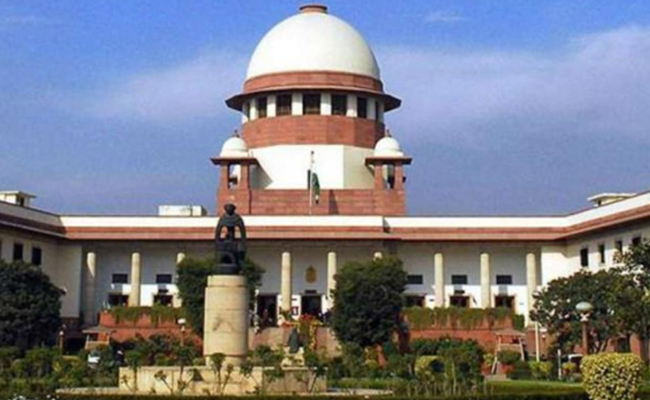
New Delhi (PTI): The government has promulgated an ordinance to increase the strength of the Supreme Court from the present 34 judges to 38, including the Chief Justice of India.
The law ministry notified the ordinance on Saturday, which amended the Supreme Court (Number of Judges) Act, 1956, to increase the sanctioned strength of the top court.
So far, the sanctioned strength of the top court was 34, including the Chief Justice of India (CJI). Now, the number of judges has been increased by four, taking the sanctioned strength to 38.
The top court will now have 37 judges, other than the CJI.
With the apex court having two vacancies at present, and the ordinance coming into force immediately, the Supreme Court Collegium will now have to recommend six names for appointment as judges in the top court.
A bill will be brought in the Monsoon Session of Parliament to convert the ordinance – an executive order – into a law passed by Parliament.
The Union Cabinet had cleared a draft bill on May 5 to increase the number of apex court judges.
The strength of the Supreme Court was last increased from 30 to 33 (excluding the CJI) in 2019.
The Supreme Court (Number of Judges) Act, as originally enacted in 1956, put the maximum number of judges (excluding the CJI) at 10.
This number was increased to 13 by the Supreme Court (Number of Judges), Amendment Act, 1960, and to 17 by another amendment to the law.
The Supreme Court (Number of Judges) Amendment Act, 1986, augmented the strength of judges from 17 to 25, excluding the CJI.
A fresh amendment in 2009 further increased the strength from 25 to 30.
Article 124(3) of the Constitution lists the qualifications required to become a Supreme Court judge.
An Indian citizen who has either served as a high court judge for at least five years, or as an advocate for 10 years, or is a distinguished jurist, can be appointed to the top court.
The strength of the Supreme Court is increased based on the recommendations of the CJI, who writes to the Union law minister. After consulting the finance ministry, the Department of Justice under the law ministry moves the Cabinet with a draft bill.