CM Kumaraswamy lays foundation stone for building houses
Rehabilitation for Kodagu distressed people
Targets to construct 55 houses per month
#840 families to get houses
#Rs 9.85 lakh for each house
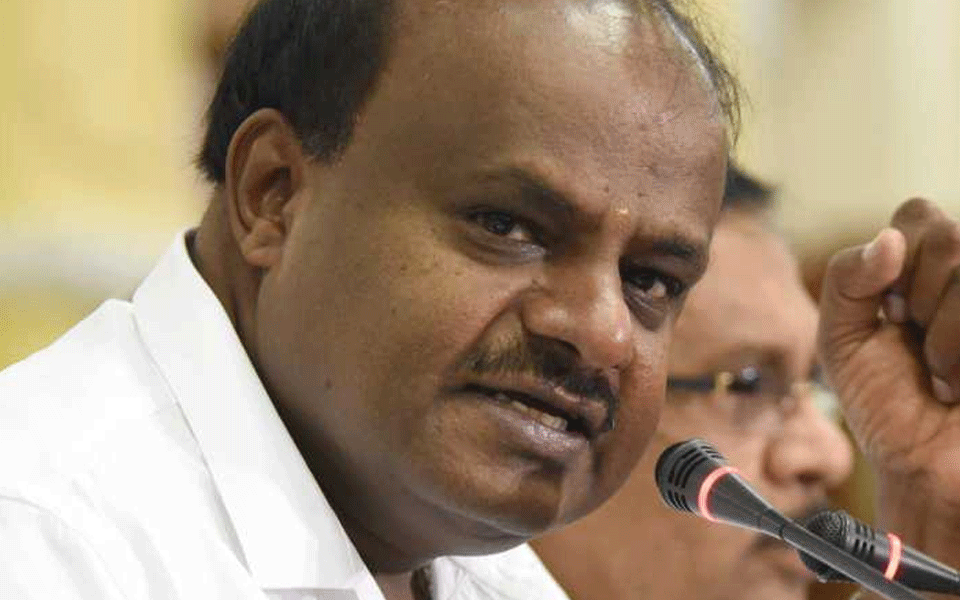
Madikeri, December 7: Chief Minister HD Kumaraswamy and Deputy Chief Minister Dr G Parameshwar laid foundation stone for constructing houses to rehabilitate the affected people in Kodagu natural disaster, at Jambur village in Somwarpet taluk in the district on Friday.
The district administration has organized the foundation laying programme at Jambur village. After laying the foundation, CM Kumaraswamy said that “There were plenty of expectations from the people. But though it was not possible to fulfill all the expectations, the government has honestly responded to the problem.
The Chief Minister’s Fund has Rs 202.23 crore including Rs 100 crore from State Government Employees Association and this amount would be spent for the rehabilitation work. In order to help the affected people, people of the state have responded and cooperated in their own way, he said while thanking all of them.
Keeping aside the NDRF and SDRF norms, the government has given compensation up to Rs 1 lakh and Rs 50,000 for those who lost household things.
In order to construct model houses for the first time in the country, the government has decided to spend Rs 10 lakh for each house, he said.
Out of Rs 546 crore given by the central government, the state government has disbursed the amount to 8 districts including Kodagu which were affected in the natural disaster. As declared earlier, the government has established Kodagu Reconstruction Authority. In the beginning, it was announced to give Rs 100 crore. So, the government has released Rs 85 crore for various departments to take up the relief works, he said.
The government has already waived off loans up to Rs 2 lakh from nationalized banks and Rs 1 lakh in cooperative banks. But the farmers should not dishearten for any problems, he appealed.
The government employees have appealed to cancel the new pension scheme and reintroduce the old pension scheme. He would respect their demand. A committee would be constituted to look into the pros and cons of this demand and placed before the Cabinet to take a decision, he said.
Deputy Chief Minister Dr. G. Parameshwar said that the government would give all support for the development of Kodagu. There was no need to worry about it. Already, the government has constituted Kodagu Reconstruction Authority for the development and the centre has to release more funds, he added.
Housing Minister UT Khader said that the government was always ready to wipe the tears of Kodagu people. With a good intention of constructing good houses, the government was spending Rs 9.85 lakh for each house and it was targeted to construct 55 houses in one month, he added.
District Minister S.R. Mahesh said that the government has taken all steps for reconstruction of Kodagu district.
Lok Sabha Member Pratap Simha said that Rs 546 crore released by the centre was distributed to affected places. Infosys Foundation chairperson Sudha Murthy would give Rs 25 crore for constructing houses and another organization has joined its hands with the government to construct houses, he said.
Rs 100 cr cheque given
State Government Employees Association president H.K. Ramu presented a cheque of Rs 100 crore from the association to the Chief Minister’s Relief Fund. A documentary of natural disaster prepared by the district administration was screened on the occasion. Symbolically, house selection letter was given to a beneficiary.
MLA MP Appachu Ranjan presided over the programme in which MLAs KG Bopaiah, Sunil Subramani, Veena Achaiah, SL Boje Gowda, V. Anbukumar, Mysuru Zone IGP Sharath Chandra, Suman D. Pannekar, and others were present.
Deputy Commissioner PI Srividya welcomed the gathering, while additional deputy commissioner Jagadeesh proposed vote of thanks. Madapura school students sung state anthem on the occasion.
Benefits to be given to affected people?
The government has taken various measures to rehabilitate the affected people and released funds. For temporary arrangements, the government has been giving Rs 10,000 rent per month for those who lost houses in the incident. Till the new houses are constructed, the government would give the house rent. For those who want to construct houses in their own land, the government would give Rs 15 lakh, said CM Kumaraswamy.
The Kodagu Reconstruction Authority has prepared various programmes for the rehabilitation of people. The government has taken all steps to ensure that Kodagu will come back to its previous condition. The entire amount donated to the Kodagu Rehabilitation Funds would be utilized for Kodagu only and it has been utilizing the funds effectively, he said.


Let the Truth be known. If you read VB and like VB, please be a VB Supporter and Help us deliver the Truth to one and all.
4 workers die after being buried under coal slurry in Jharkhand's Dhanbad
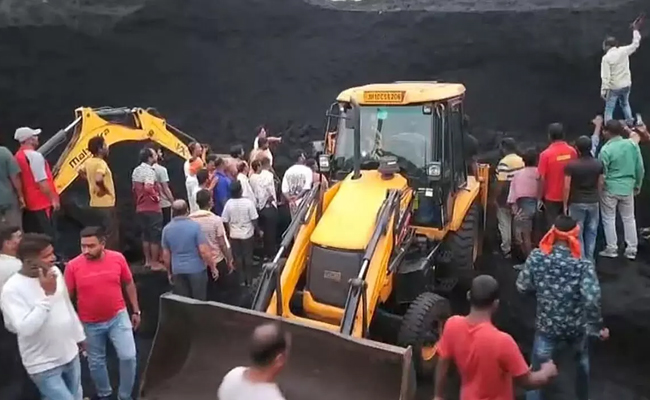
Dhanbad (Jharkhand) (PTI): At least four workers died after being buried under coal slurry in Jharkhand's Dhanbad district on Saturday, a police official said.
The incident took place at Moonidih coal washery in the command area of Bharat Coking Coal Limited (BCCL).
"Bodies of all four workers were dug out of debris during a rescue operation," Putki police station in-charge Waqar Hussain told PTI.
The incident took place when coal slurry was being loaded into trucks by workers, during which a large chunk of slurry fell and trapped several workers underneath, officials said.
The deceased have been identified as Manik Bauri, Dinesh Bauri, Deepak Bauri, and Hemlal Gope.
Meanwhile, the family members of the deceased and local villagers placed the bodies in front of the washery gate and began a protest.
They demanded compensation, jobs for dependents and action against those responsible for the incident.
Police and administration officials are trying to pacify the protesters, an official said.