CM Siddaramaiah defends hike in petrol and diesel prices
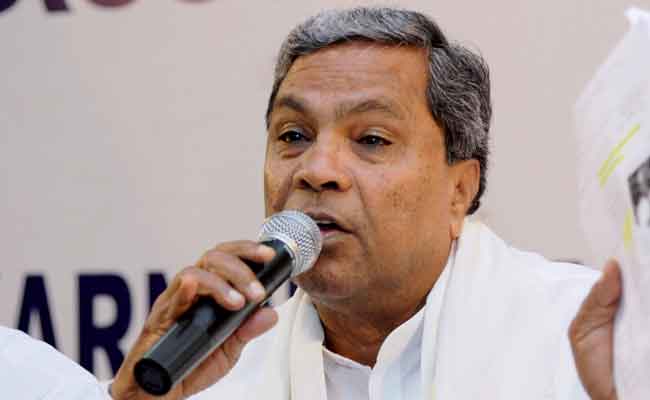
Bengaluru (PTI): Karnataka Chief Minister Siddaramaiah on Sunday defended the hike in petrol and diesel prices saying that it will ensure funding essential public services and development projects.
With the opposition BJP and its ally JD(S) coming down heavily on the Congress government for increasing the petrol and diesel prices by Rs 3 and Rs 3.5 per litre respectively, Siddaramaiah said even after the hike, taxes on fuel remains low compared to most southern states.
"The Government of Karnataka has increased VAT on petrol to 29.84 per cent and on diesel to 18.44 per cent. Even after this hike, our state's taxes on fuel remain lower than most South Indian states and similar economy-sized states like Maharashtra," the Chief Minister said in a statement.
ALSO READ: Scrap NEET, allow states to conduct entrance tests: Karnataka Deputy CM DK Shivakumar
According to him, the VAT on petrol is 25 per cent plus Rs 5.12 additional tax, and on diesel in Maharashtra it is 21 per cent. Karnataka's revised rates are still more affordable, he pointed out.
"Karnataka's VAT adjustment ensures we can fund essential public services and development projects. The state remains committed to balanced and responsible governance," Siddaramaiah emphasised.
Stating that despite the VAT hike, diesel prices in Karnataka are still lower than in Gujarat and Madhya Pradesh, the Chief Minister said, "We remain committed to keeping fuel prices reasonable for our citizens."
He also took a dig at the opposition BJP, which has decided to stage statewide protests on Monday.
"The then double engine BJP government collaborated to divert Karnataka's resources to other states. The state BJP govt kept reducing VAT on petrol and diesel while the Central govt increased its own taxes," the Chief Minister charged.
He alleged that this manipulation by the previous BJP government in the state led to reduced revenue for Karnataka, "while the Central government collected more for its coffers, cheating Kannadigas."
Siddaramaiah said that the Central Excise duty on petrol was Rs 9.48 per litre and Rs 3.56 on diesel before the BJP came to power in 2014. However, during the tenure of the BJP government, the Central Excise Duty on petrol and diesel was steeply increased, reaching a record high of Rs 32.98 and Rs 31.83, respectively, in May 2020.
Subsequently, the Excise duty on petrol and diesel was cut by Rs 13 a litre and Rs 16 litre, respectively, between November 2021 and May 2022, he added.
"Despite the reductions, the current Central excise duty on petrol is Rs 19.9 and on diesel is Rs 15.8. We urge the Union Government to reduce these taxes for the benefit of the people," the Chief Minister said.
Let the Truth be known. If you read VB and like VB, please be a VB Supporter and Help us deliver the Truth to one and all.
4 held for sexually assaulting woman, girl on moving bus after social media alert in UP's Agra
Agra (UP) (PTI): Four people were arrested, after a prompt response by police following a social media alert, for allegedly sexually assaulting a woman and a girl inside a moving bus here, officials said on Tuesday.
According to an official police statement, at 12:27 am on April 27, information was received on the social media platform X about an incident of sexual assault on a bus travelling from Kanpur to Ahmedabad, which was approaching Namner crossing in Agra.
Acting under the direction of Police Commissioner Deepak Kumar, the Agra Police social media team immediately alerted the Rakabganj police station within minutes and coordinated with the victims to confirm the incident and obtain the exact location, it stated.
Police teams launched intensive checking at Namner crossing and intercepted the bus as it reached the spot. The four accused involved in the incident were apprehended on the spot, and legal action was initiated against them, the statement said.
The police said the swift response and coordination between the social media team and field units ensured timely action, bringing relief to the victims and other passengers, who expressed gratitude towards the police, it added.