CM Siddaramaiah slams BJP for ‘false narrative’ on Urdu, Kannada funding
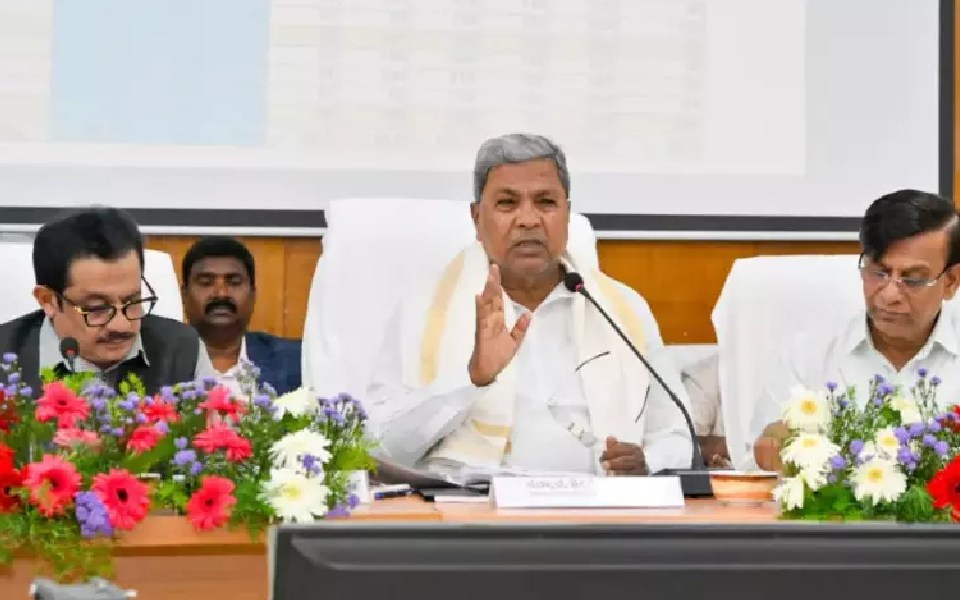
Bengaluru, May 27 (PTI): Karnataka Chief Minister Siddaramaiah on Tuesday accused the BJP of spreading a "false narrative" that his government is neglecting Kannada and allocating more funds for Urdu, calling it not only untrue but a "deliberate attempt" to create communal tension.
His remarks came after the BJP Karnataka posted on 'X' that the Siddaramaiah-led government had allocated Rs 100 crore for the promotion of Urdu in 2025–26, while sanctioning just Rs 32 crore for Kannada.
"The BJP in Karnataka is spreading a false narrative that our government is neglecting Kannada and favouring Urdu. This is not just far from the truth—it is a deliberate attempt to create communal tension. It is unfortunate that a national party is behaving like irresponsible internet trolls, spreading such baseless lies," Siddaramaiah said in a statement.
Listing details of the 2025-26 allocations, the Chief Minister said Rs 34,438 crore had been allocated to the Department of Primary and Secondary Education, and Rs 4,150 crore to schools under the Social Welfare and other departments.
“That’s a total of Rs 38,688 crore—all meant for Kannada-medium education. In addition, Rs 999.30 crore has been set aside to maintain government schools and improve infrastructure. All of this supports Kannada education. So, when the BJP claims only Rs 32 crore was allotted for Kannada, it is a political lie meant to mislead the people," he added.
Siddaramaiah clarified that the Rs 100 crore allotted under the Minority Welfare Department is intended for upgrading Urdu-medium schools with better classrooms, teachers, textbooks, and infrastructure.
“This allocation is not just for promoting the language, but for the overall improvement of schools that serve a large number of students,” he said, adding that linking a language to a particular caste or religion is disrespectful.
“Our government respects all languages spoken in Karnataka. That’s why we have separate academies for Tulu, Konkani, Kodava, Byari, and Arebhashe — each receiving ₹80 lakh annually, along with additional funding for cultural activities,” he said.
For Kannada, Siddaramaiah pointed out, the state has a dedicated Department of Kannada and Culture, which oversees 14 academies, three authorities, and 24 trusts named after Kannada writers—all working to promote the Kannada language, literature, and heritage.
"For us, Kannada is not just a language—it is our identity, our pride, and our mother tongue. Our government has always stood firmly for Kannada, for Karnataka, and for our people. We will never compromise on protecting our land, water, or language. And we will never tolerate disrespect towards our culture," he said.
Siddaramaiah demanded that the BJP immediately issue a public clarification and apologise to the people of the state for its "divisive propaganda" and "attempt to mislead".
Claiming that only Rs 32 crore was given for Kannada is not just a lie—it is a betrayal of Karnataka. We demand that the BJP issue a public clarification and apologise to the people of the state for this dangerous and divisive propaganda, Siddaramaiah added.
.@BJP4Karnataka is spreading a malicious lie that our Govt gave more funds to Urdu while neglecting Kannada.
— Siddaramaiah (@siddaramaiah) May 27, 2025
This is not just false -- it's a deliberate attempt to incite communal hatred.
A national party behaving like internet trolls is deeply shameful. pic.twitter.com/eYSA3lGLbl
Let the Truth be known. If you read VB and like VB, please be a VB Supporter and Help us deliver the Truth to one and all.
Ordinance issued to increase number of Supreme Court judges from 34 to 38
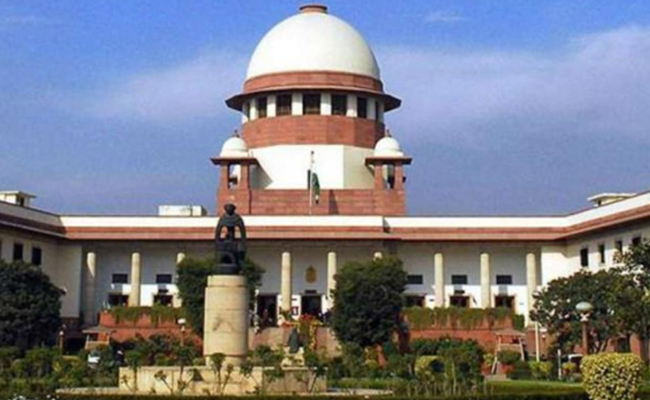
New Delhi (PTI): The government has promulgated an ordinance to increase the strength of the Supreme Court from the present 34 judges to 38, including the Chief Justice of India.
The law ministry notified the ordinance on Saturday, which amended the Supreme Court (Number of Judges) Act, 1956, to increase the sanctioned strength of the top court.
So far, the sanctioned strength of the top court was 34, including the Chief Justice of India (CJI). Now, the number of judges has been increased by four, taking the sanctioned strength to 38.
The top court will now have 37 judges, other than the CJI.
With the apex court having two vacancies at present, and the ordinance coming into force immediately, the Supreme Court Collegium will now have to recommend six names for appointment as judges in the top court.
A bill will be brought in the Monsoon Session of Parliament to convert the ordinance – an executive order – into a law passed by Parliament.
The Union Cabinet had cleared a draft bill on May 5 to increase the number of apex court judges.
The strength of the Supreme Court was last increased from 30 to 33 (excluding the CJI) in 2019.
The Supreme Court (Number of Judges) Act, as originally enacted in 1956, put the maximum number of judges (excluding the CJI) at 10.
This number was increased to 13 by the Supreme Court (Number of Judges), Amendment Act, 1960, and to 17 by another amendment to the law.
The Supreme Court (Number of Judges) Amendment Act, 1986, augmented the strength of judges from 17 to 25, excluding the CJI.
A fresh amendment in 2009 further increased the strength from 25 to 30.
Article 124(3) of the Constitution lists the qualifications required to become a Supreme Court judge.
An Indian citizen who has either served as a high court judge for at least five years, or as an advocate for 10 years, or is a distinguished jurist, can be appointed to the top court.
The strength of the Supreme Court is increased based on the recommendations of the CJI, who writes to the Union law minister. After consulting the finance ministry, the Department of Justice under the law ministry moves the Cabinet with a draft bill.