CM Siddaramaiah slams PM Modi for praising RSS in Independence Day speech
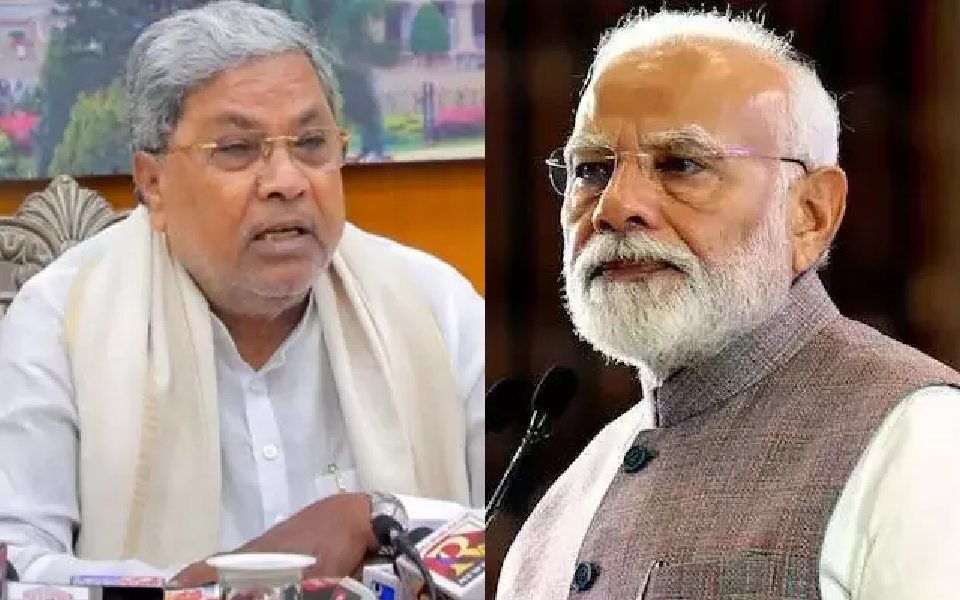
Bengaluru, Aug 15 (PTI): Hitting out at Prime Minister Narendra Modi for describing the Rashtriya Swayamsevak Sangh (RSS) as the "world’s biggest NGO", Karnataka Chief Minister Siddaramaiah on Friday accused him of "speaking as an RSS pracharak from the ramparts of the Red Fort" rather than as the leader of 140 crore Indians.
Siddaramaiah claimed the RSS is "the world’s biggest for-political-profit, for-hate, and most divisive organisation—unregistered, non-tax-paying, and conspiring to pit Indians against each other."
Earlier in the day, Modi had hailed 100 years of the RSS as a "very proud and glorious" journey of the "world’s biggest NGO" and saluted its volunteers for their service to the nation. Addressing the nation from the Red Fort on the 79th Independence Day, he said the country is not built by the government alone but by the efforts of people across society.
Quoting from Modi’s remarks, Siddaramaiah claimed on 'X': "Let’s be clear: the RSS is not an NGO. It is an unregistered, non-tax-paying organisation that thrives on political profit and hate, and conspires to divide Indians."
He alleged the Red Fort was "not a BJP rally stage" but a place of historical significance from where the prime minister must speak for all citizens, not promote his party's parent body.
"By praising the RSS, PM Modi spoke as an RSS pracharak, not as the leader of 140 crore people," Siddaramaiah alleged, calling the remarks a "desperate move to appease the RSS" when Modi was "politically weakened and reliant on its backing."
The chief minister claimed Modi had "lost the moral right" to speak for the whole country by endorsing an organisation that "had no role in the freedom struggle, opposed the tricolour, and worked against the idea of an equal and inclusive India."
Calling the RSS an outfit whose ideology inspired Mahatma Gandhi's assassination and which was banned three times for "spreading hate", Siddaramaiah accused it of twisting Hinduism—"a faith of diversity and tolerance"—into a narrow vision that treats those outside it as second-class citizens.
He alleged the RSS has "engineered and fuelled communal violence for decades" and "corrupted young minds through its networks."
He asked whether the prime minister did not see that its "supremacist vision denies equality, poisons harmony, and contradicts the Constitution."
"Independence Day is a time to honour those who united India," he said, alleging that "instead, PM Modi glorified a force that thrives on polarisation, collaborated with the British, and mirrors their authoritarianism."
"Our freedom was won by people of every religion, caste, and language under the tricolour. No organisation is bigger than that unity or above the Constitution. No Prime Minister can turn Independence Day into a tribute to those who divide India," he claimed.
Let the Truth be known. If you read VB and like VB, please be a VB Supporter and Help us deliver the Truth to one and all.
Real Madrid fines Valverde and Tchouaméni half a million euros each for altercation
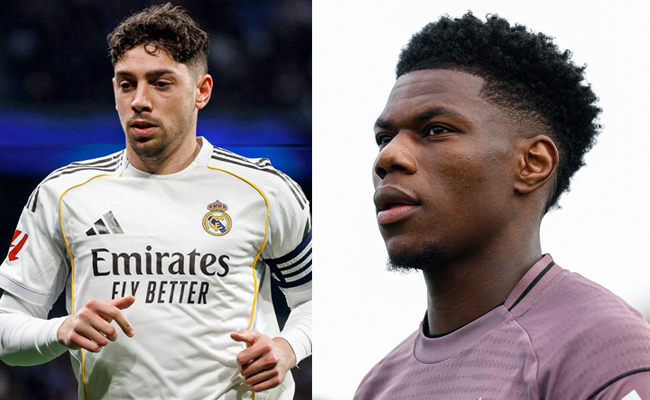
Barcelona (AP): Real Madrid slapped players Federico Valverde and Aurélien Tchouaméni with half-a-million-euro ($588,000) fines on Friday for their altercation during practice.
The massive fines came a day after the midfielders tussled when the team trained. Valverde said in a post on social media on Thursday that no punches were thrown. But Valverde knocked his head on a table and he suffered a small cut that required a brief hospital visit.
On social media, Valverde initially called it a “meaningless fight” with a teammate and said “everything has been blown out of proportion."
His employers, however, considered it a significant enough breach of team discipline to nail both Valverde and Tchouaméni with fines that bite even the bank account of a top soccer player. The half-a-million euro penalties reflect the reputational damage the club was enduring in a chaotic end to a disappointing season.
In a statement, the 15-time European champion said its disciplinary action was concluded after both players expressed to the club “their complete remorse for what happened and apologized to one another.”
Madrid added they also apologized to their teammates, the coaching staff and club supporters, as well as showing their willingness to accept whatever disciplinary action the club deemed “opportune.”
Tchouaméni was back training with Madrid on Friday, two days before they play at Barcelona in a clasico. Madrid has to win otherwise Barcelona will be crowned La Liga champion.
After being notified of the fine, he posted a public apology to the club and its fans on social media.
“What happened this week in training is unacceptable,” Tchouaméni wrote. "I say this while thinking about the example we are expected to set for young people, whether in football or at school.
“Above all, I am sorry for the image we projected of the club.”
Valverde was not at practice due to the head knock.
Both players are set to play in the World Cup next month, with Tchouaméni playing for France and Valverde for Uruguay.
Chaotic end to a poor season
===================
The run-in between the players, who for seasons have played side by side in Madrid's midfield, came after they argued this week in previous training sessions. But tempers boiled over on Thursday. Spanish media was rife with reports that the players previously disagreed over the club's decision to let coach Xabi Alonso go after just months on the job.
It was not the only altercation involving Madrid players during training this week. Álvaro Carreras confirmed he was in a “minor” incident with a teammate. Spanish media said he and fellow defender Antonio Rüdiger got into a scuffle.
Álvaro Arbeloa, the coach who was promoted from Madrid's reserve team when Alonso was fired in January, will face tough questions on what went wrong inside the changing room when he gives a press conference on Saturday ahead of the clasico at Camp Nou.
Madrid is facing a second consecutive campaign without a major trophy amid rumors in the Spanish media that club president Florentino Pérez is considering bringing back Jose Mourinho to straighten out his underperforming team.